
The Palestinian Circus

Founded in Birzeit in 2006, The Palestinian Circus School (PCS) builds artists as well as audiences: an Educational programme that reaches roughly 200 children annually in its Childhood strand, 50 in disability-inclusive ‘Passion’, and 100 in ‘Inhale’ for girls and young women; alongside an Artistic pipeline that has produced 10+ shows (2020–23) and logged 200+ performances. In 2024–25, despite the war’s constraints, PCS-linked trainers in Gaza facilitated 400+ circus sessions for 2,000+ children, proof that technique and craft can carry hope without sentimentality. PCS also stepped onto the global stage at Glastonbury 2025 – and is actively planning a UK return in 2026.
This is circus as language and methodology: strength, timing, risk, ensemble awareness. Or, as Executive Director Mohamad Rabah puts it, the aim is to “use circus as a social tool so people can explore who they are… learn trust, dialogue and co-creation… and bring joy and hope to our communities.” The politics here aren’t performative; they’re embedded in pedagogy, access, and the insistence that Palestinian young people have the right to rigorous training, to stages, and to future touring routes.
For a London readership – and anyone who values the performing arts – this interview looks beyond headlines to process: how PCS nurtures artists, navigates mobility, and keeps creative standards high under pressure. With thanks to Leila Jones, Co-Director of Showponies, for her support in connecting Mohamad to Run Riot (and with Jade Dunbar for bringing the company to Glastonbury 2025!).
We begin at the beginning: the decision that shaped Mohamad’s leadership.
Mohamad, what first compelled you to study an MA in Community and Youth Work at Durham – and how did that training shape your vision for PCS?
I never imagined my path would lead me where I am today. My first degree was in Mechanical Engineering from Birzeit University, where I studied between 2004 and 2010. But even during my engineering studies, my heart was somewhere else with the student movement, with youth groups, with human rights organisations that were blossoming in those years. After the Second Intifada, there was a sense of possibility, a hope that peace might be within reach if we worked for it.
Then came 2007 with the Hamas takeover of Gaza, the deepening division among Palestinians, and the continuation of Israeli violence, apartheid policies, and settlement expansion. It became clear that the world’s support for a two-state solution was more of a slogan than a reality. Violence escalated, and life became even more difficult.
When I graduated, many of my engineering peers dreamed of leaving Palestine to work in the Gulf. But for me, leaving was never an option. I had already lived abroad as a child nine years in Abu Dhabi, and I had convinced my family to return to Palestine when I was 15. Watching the news of the Second Intifada from a comfortable apartment in the UAE while my country burned felt unbearable. I wanted to be part of Palestine’s story, not just a spectator.
Staying, however, came with its own cost. Working as a mechanical engineer in Palestine was difficult, if not impossible, under these circumstances. But I knew I had another calling. I was passionate about working with young people, about creating spaces for hope and self-expression. So, I made a choice to change paths.
I was fortunate to work with an EU-funded international project, the EuroMed Youth Program for two years, which gave me my first real taste of designing programs and empowering young people. At the same time, I was building my skills as a facilitator and trainer, especially in designing and running live-action role-playing games as tools for education and transformation.
I learned about the Chevening Scholarship during this period, and for three years I kept applying. I refused to give up. In 2015, I was finally selected, and my destination was clear: Durham University, with its strong Community and Youth Work program. Studying there gave me both the theory and the practice I needed to design programs that support youth, foster social cohesion, and create safe spaces where children and young people could imagine a different future.
For me, this was never just about a career shift. It was about refusing to give up on my country, refusing to let despair have the final word, and choosing to stay and build something meaningful here.
How do you deal with obstacles – can you give an example?
I don’t just see what we face in Palestine as obstacles, there are dangers that shape every part of our lives. I often think about a 15-year-old growing up here, watching injustice, war crimes, and land confiscation unfold every day for more than 78 years, with no real hope for change. This young person is not only threatened by the violence outside but also by what happens inside their mind. Without support, their thoughts and feelings can turn inward and become destructive.
If we are not present to offer them a safe and collective space where those feelings can be transformed into something creative, we leave them alone with their pain, victims of circumstances they did not choose. This is when despair takes over and when extreme actions can feel like the only answer. In Palestine, there are over 3.6 million children and youth aged 0-29 (65% of 5.6 million living in West bank, Gaza Strip and Jerusalem), and the question that drives my work is how to be there for them, even during war, when there is no protection, when the world is watching but no accountability is enforced, and when international law seems powerless to shield them.
For me, responding to these dangers means creating spaces of hope and expression, even in the darkest times. It means giving young people a chance to feel connected, to find joy, and to believe that they still have a future. This is not simply a professional challenge; it is a moral responsibility that defines everything we do.

What’s your attitude to risk?
I see calculated risks as necessary for creating impact. In June 2025, while tensions were very high between Israel and Iran, we had to decide whether to travel to the UK for our show. Many people advised against it for safety reasons, but we felt strongly that we had to go. Our presence at Glastonbury was not only a performance, it was a statement of resilience. We took every precaution, we didn’t let fear stop us. In the end, being there was transformative for our team and our audience.
One of our artists who traveled with us to Glastonbury in 2025, carries a story that reminds us why our work matters. In February 2025, the 17-year brother of one of our artists was killed by an Israeli army bullet while hiking near their village. At that very moment, our performer was training at our circus tent when they received the devastating news.
The pain was unbearable for them and their family, and yet they made a choice to stay, to keep creating, and to keep bringing life and joy to others even while death and violence surround us every day.
Today, this performer is part of almost every circus show we create. Each time they perform, they turn grief into strength, reminding everyone in the audience that even in the darkest times, we can still resist despair and celebrate life. They are not doing it for money or fame… they are doing it to resist.
What is The Wonderland?
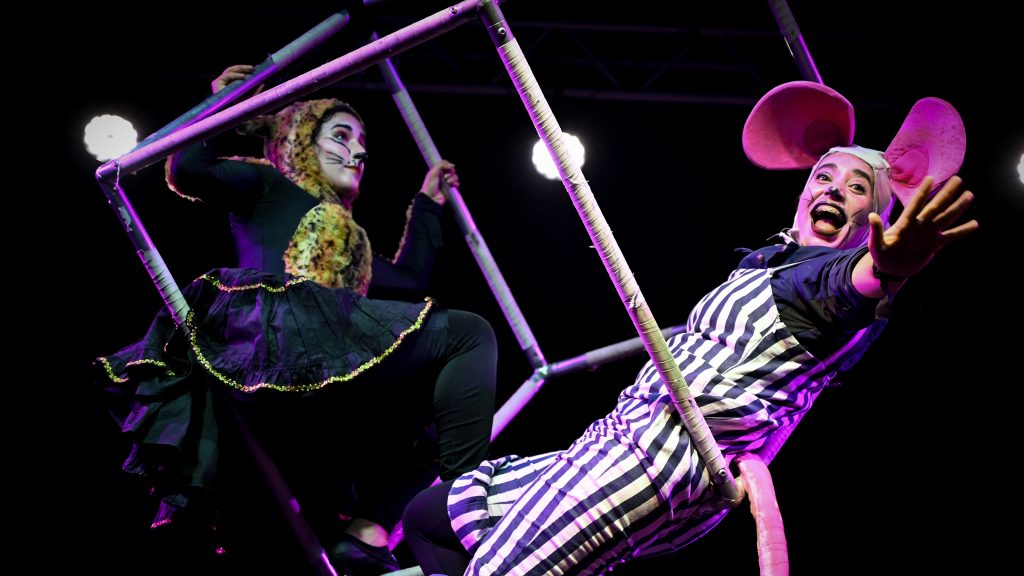
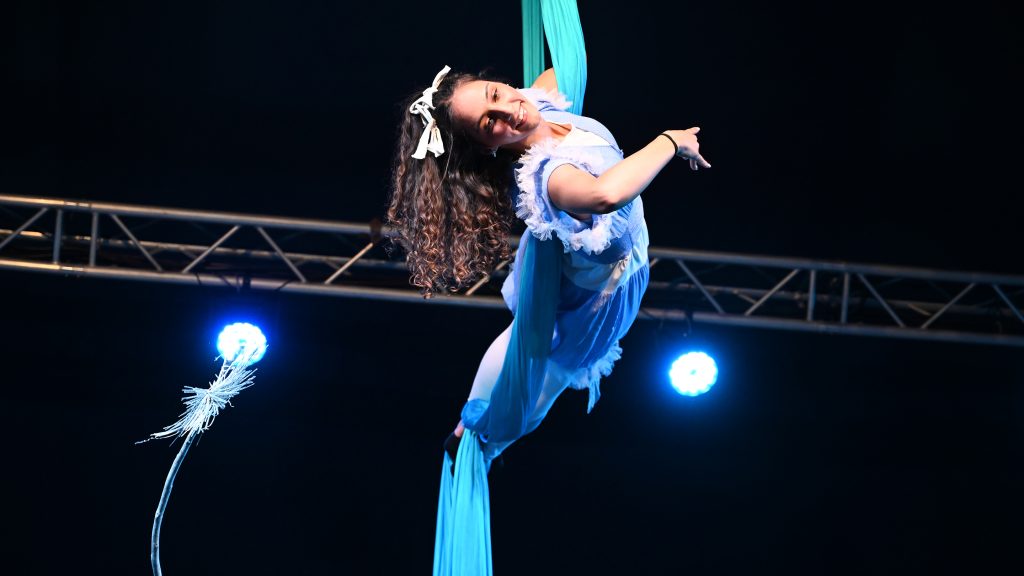
The Wonderland is much more than just a circus show for us – it is the result of years of dreams, challenges, and persistence. Back in April 2022, we had a beautiful coincidence: we collaborated with Incandescence, a circus company from Cornwall in the UK, to bring 13 British circus artists to Ramallah to work with 20 of our Palestinian artists. Together, in just one week, we created a magical show called Cirque Al Farah – “The Circus of Joy” – and planned to tour it across five cities in the West Bank.
But that same period saw a violent escalation by the Israeli occupation, and we were forced to cancel the tour. It was heartbreaking, because it had been such a joyful and collaborative process. Since then, we have been determined to create a production with that same magical element – with costumes, lighting, and a story designed for children that would make them dream.
Incandescence generously offered to donate to us their entire Alice in Wonderland show – including all the props, costumes, and even training our artists on the different acts. After 7 October 2023, despite many attempts, we couldn’t bring their team to Palestine because of the closures and risks. So we made a bold decision: instead of waiting, we took our team to Spain for 18 days, where a creative space was built for us in Galicia (Spain) in just three months with volunteering hands from the Incandescence team. There, we brought The Wonderland to life.
This production is not just a show – it’s a statement that even in the hardest times, we can create joy, wonder, and hope… it is also a statement of how support can happen through creative projects and donating time, ideas and efforts. It carries the spirit of resilience and imagination that keeps us moving forward. We even have a short documentary about the making of this journey, which shows just how much determination it took to make it possible.
What were your three highlights from Glastonbury 2025?
- Performing at Glastonbury – witnessing how our story connected with thousands of people, many of whom had never seen Palestinian circus before.
- Meeting inspiring artists and activists who share our values and who gave us strength to continue our work despite the difficult times.
- Watching our young artists experience freedom – for some of them, it was their first time outside Palestine and it gave them a new sense of possibility for their future careers.
From the artistic program, what are The Palestinian Circus working on now?
We are in a very exciting artistic phase at The Palestinian Circus School. Our biggest focus right now is running The Wonderland show 50 times in our circus tent by the end of 2026. This production is magical and was created with the support of Incandescence from the UK – it has become a centrepiece of our program and a source of joy for children and families across Palestine.
We are also preparing to return to the UK in collaboration with Leila and her team at Showponies and MAPUKin 2026, we also hope to come back to Glastonbury Festival in 2027 with, again with our show, One Step and a Half.
In the nearer term, we are touring SARAB, one of our most powerful productions, which explores themes of displacement and resilience. This autumn, SARAB will be performed in Italy in September, in Ireland in October, and in Belgium in November.
At the same time, we are investing heavily in the future of Palestinian circus. We are building the capacity of 10 new artists who will participate in a professional training program running from September 2025 through June 2026, ensuring the growth of our artistic community and the sustainability of social circus in Palestine.
Where else would you like to tour?
We would love to tour across Europe, North America, and the Arab region. Each performance is not just a show – it’s an opportunity to create dialogue, build solidarity, and give Palestinian artists a platform to be seen and heard.
How do you collaborate with The Freedom Theater?
We have a long-standing and strategic collaboration with The Freedom Theater in Jenin. We exchange trainers and artists, co-host performances, and support each other in building platforms for cultural resistance. This collaboration strengthens both of our organizations and expands opportunities for young people in Palestine to access performing arts. The freedom theatre host circus trainings in Jenin city and we try to support on this.
What do you need to say about The Palestinian Circus in the Gaza Strip?
Our work in Gaza is one of our proudest achievements – and one of our most challenging. In 2024–2025, despite war, displacement, and unimaginable suffering, we collaborated with circus trainers in Gaza delivered over 400 circus sessions for more than 2000 children in Rafah, Khan Younis, Gaza City, and beyond. These sessions were often held in temporary shelters or open spaces, but they gave children a rare moment of joy, safety, and hope. Supporting circus in Gaza is not just a project – it is a lifeline for hundreds of children and their families. The work they do is heroic and a real inspiration.
For more information about The Palestinian Circus visit palcircus.ps
If you’d like to support their work, join their Crowdfund campaign at globalgiving.org
‘Wonderland’ film made by Liam Arthur. Published with permission from The Palestinian Circus School.
Photography by Charles Gervais and Malak Takruri.
