
Professor Daisy Fancourt on Art Cure and Why Culture Is Essential to Living Well
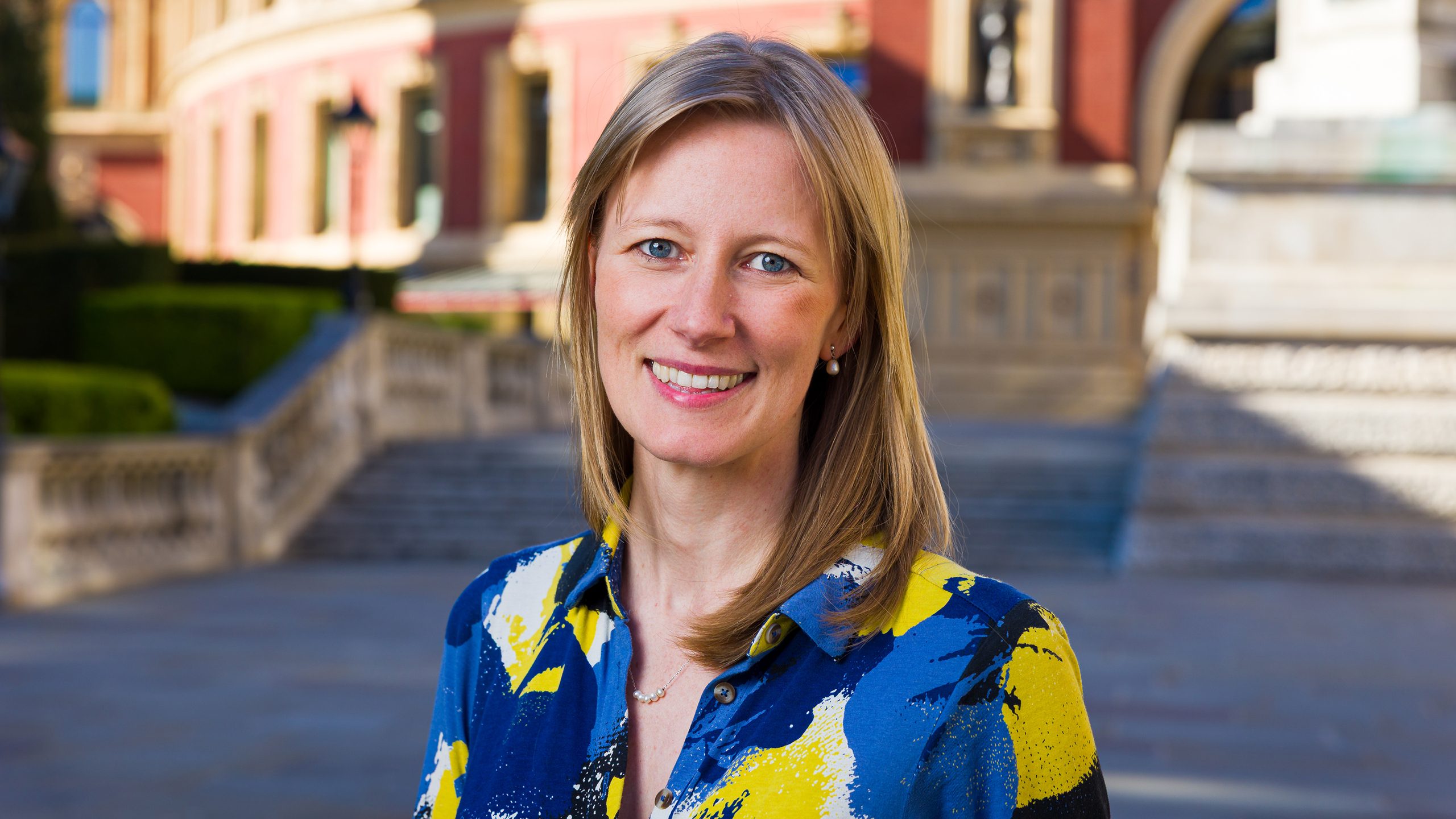
Image Credit: Photograph of Daisy Fancourt outside the Royal Albert Hall.
Professor Daisy Fancourt began her creative life inside music. Growing up torn between the arts and science, she once imagined becoming a professional musician before a university placement with Singing Medicine – bringing creative activity into hospitals – revealed that the two worlds did not have to remain separate. That encounter became the foundation for a remarkable career investigating what culture does to our minds, bodies and communities.
Today, Daisy is Professor of Psychobiology and Epidemiology at UCL, where she leads the Social Biobehavioural Research Group. Her latest book, Art Cure, draws together a remarkable body of scientific research showing how cultural engagement can influence our brains, bodies, emotions, relationships and health – putting evidence behind something artists and audiences have long understood intuitively: culture is not an ornamental extra, but an essential part of living well. Crucially, her argument is not limited to soothing or uplifting art. The sad, frightening, provocative and disorientating stuff matters too – sometimes precisely because it challenges us.
This April, Daisy was also appointed the Royal Albert Hall’s first Associate Scientist, returning to a venue where she once performed in her twenties. Over the next three years, she hopes to weave science into the Hall’s programming, raise awareness of the health benefits of cultural engagement and build stronger connections between major institutions and local communities.
So consider this your invitation to flex your cultural diet. Get off the sofa, leave the familiar behind and try something new this week – a concert, exhibition, library, play, workshop or glorious cultural wild card. Your brain, body and fellow citizens may thank you.
You grew up inside music and once imagined becoming a professional musician yourself. Looking back, was there a particular early experience – artistic, academic or personal – that first taught you not to accept the usual boundaries between creativity and science?
I felt really torn between arts and science across my adolescence, but for me, the light bulb moment came when I was in my first year of university and I got the chance to take part in a programme called Singing Medicine that was bringing arts into hospitals.
And for the first time, I was actually able to see a direct example of how the two, arts and science, could be combined. And this was the realisation for me that I was able to find a career that could bring them together.
Your career is a remarkable argument for changing direction without abandoning who you were. What would you say to a young creative, or simply a deeply curious person, who feels pressure to choose one identity too early?
I would say never feel the pressure to choose one identity. Even if you pick one subject that you decide you want to pursue, we often underrate the opportunities there can be to bring our other passions in as hobbies or side interests, or even other ways that we can get involved, whether that’s through volunteering or through other kinds of work.
Not all art wants us to feel better – some of the best art can disturb, provoke, bewilder or completely knock us sideways. Where does that wilder end of the cultural spectrum sit within Art Cure?
In Art Cure, I’m actually really clear that it’s not just this concept of relaxing or happy arts that help us feel well. In fact, that’s one of the big myths that I bust in the book, by actually showing sometimes it’s the sad or scary or shocking arts experiences that can actually be particularly good for us.
Sometimes these provide a kind of emotional resonance that might help us to understand and feel like our own emotions that we’re going through are understood. Other times, they can also challenge us and give us new perspectives in a way that actually might help us to navigate the world around us more effectively.
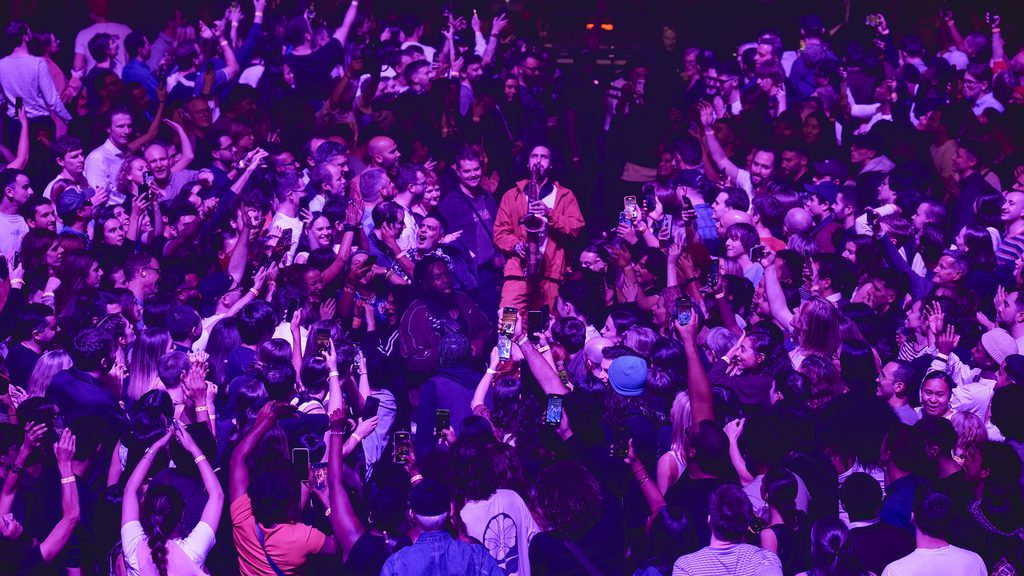
Image Credit: Ezra Collective at the Royal Albert Hall. Photographed by Andy Paradise.
If the evidence increasingly tells us that regular cultural engagement matters, what would you most like government to do differently?
In societies, we very much devalue the role that the arts have. We’ve seen arts being stripped from education in many countries around the world, many arts budgets being cut, artists routinely paid lower than other kinds of careers in society.
I would like governments to change the way that they are viewing the arts, recognising that not only do they provide a huge value for their own sake, but they’re also inherently contributing to many of the societal goals that we claim that we want to achieve, from public health to social cohesion to supporting resilient communities.
If an arts leader reads Art Cure and takes its evidence seriously, what would you hope they might actually change?
Art Cure is structured to try and provide all of the evidence that might support artists and arts organisations. I talk through all of the research findings in the book, but I also provide at the back all of the links to the very specific papers that I’ve referenced throughout.
The reason I’ve written it in this way is to try and ensure that arts organisations are empowered to be able to use this evidence to support their own work, whether that’s in funding applications or making cases to donors, or whether it’s actually in designing programmes that are optimised to try and support health and wellbeing amongst participants.
So my overall goal is that Art Cure can support and enhance the work that artists and arts organisations are doing.
We suspect most Run Riot readers already have a fairly balanced cultural diet (possibly, annoyingly smug about it – ‘here’s looking at you, kid’!) – but they probably know someone surviving on the cultural equivalent of ultra-processed food. What would you prescribe to tempt a screen-bound cultural slob off the sofa and back into the real world?
Something I found quite interesting is actually many people who are already engaged in the arts will actually realise that they’re only engaged in maybe one or two artistic activities.
Some people are avid readers, for example, but when you ask them what arts they do, they’ll actually find it harder to name things. Or people will have got into a routine of going to see certain types of music or shows that they know they like.
One of the things I demonstrate in Art Cure is it’s actually really important to have a very varied cultural diet, because when we’re involved in lots of different arts activities, we’re exposing ourselves to more varied ingredients that can benefit us cognitively, emotionally, socially, physically.
Probably the easiest kind of arts engagement is to watch television dramas. These certainly do bring benefits in terms of emotional experiences, for example, and challenging our views of the world.
But there is a problem here in that these are the activities that are typically the most sedentary, the most solitary, and we’re not activating a lot of the beneficial mechanisms that we get from more participatory arts experiences.
So I would say understand and appreciate the engagement you already have, but consider how you could balance it by diversifying the arts that you’re involved with.

Image Credit: Photo of BONOBO at the Royal Albert Hall. Photographed by Andy Paradise.
You’ve now returned to the Royal Albert Hall, where you once performed, as its first Associate Scientist. Over the next three years, what would you love to discover, change or make possible there – and could the lessons eventually help other cultural institutions rethink their role in public life?
I was actually really surprised to learn that it’s not just the Royal Albert Hall of Arts, but also the Royal Albert Hall of Arts and Sciences.
This is really exciting because it actually offers an opportunity, as the first ever Associate Scientist, to think about how can we highlight that role of sciences within the Hall’s programming? How can we offer additional talks or events or weave science into the artistic outputs that the Hall already has?
The Hall is the most incredible platform because not only is it a concert hall within London, but it’s also a beacon across the whole country for cultural events. And we see that through the sheer number of broadcasts and also the way that the Hall influences activities at local and community levels.
I’m really excited to see how we can use this to raise the profile and awareness about the benefits that the arts have for our health and wellbeing.
And I’m also excited about the opportunities to partner with other cultural organisations operating at local levels, to provide a more joined-up thinking about the role of arts within health across the country.
Away from datasets, policy and professional ambition, what are you personally looking for now – in culture and in life? And finally, which three cultural places in London feel especially important to you, and what is it about each one that keeps drawing you back?
I have young children, so over the last few years I’ve been really loving rediscovering types of culture that I’d forgotten about from childhood. So rereading favourite books, being involved in more crafts and mindful colouring.
I’ve also been amazed at how much museums and other cultural venues have adapted to suit younger audiences.
For my three cultural places that feel important to me, one of them is definitely the Royal Albert Hall. It’s a venue that I have been to concerts at across my whole life, including standing for many hours in queues for the Promming tickets.
I also worked just around the corner, so it’s a place that I walked past for several years every day. And I even performed on the stage there when I was in my early twenties.
Another really important one to me is also the Wellcome Collection. The Wellcome Trust has been one of the biggest supporters of my research over the last ten years, and they have the most amazing art gallery and collection, which is just around the corner from my office, where they do exhibitions that really bring together arts, health and medicine.
So I regularly go in there to see the displays that they’ve got on, and it’s such a nice nexus of the three together.
And then my third one is definitely my local library in Kingston. I really believe that libraries are so undervalued for the role they play within communities, and I’m in our one at least every week, swapping books.
But also, they have such wonderful talks and events, and there’s a little museum attached to our one that has rotating displays with local artists.
Find Daisy at ucl.ac.uk and on Insta @daisy.fancourt
Buy and read Daisy’s book, Art Cure → penguin.co.uk and all other good bookshops.
Stay tuned with what Daisy is doing at the Royal Albert Hall as their Associate Scientist → royalalberthall.com