

Pianka Pärna on Baba Yaga, Queer Identity and the Radical Art of Imperfection
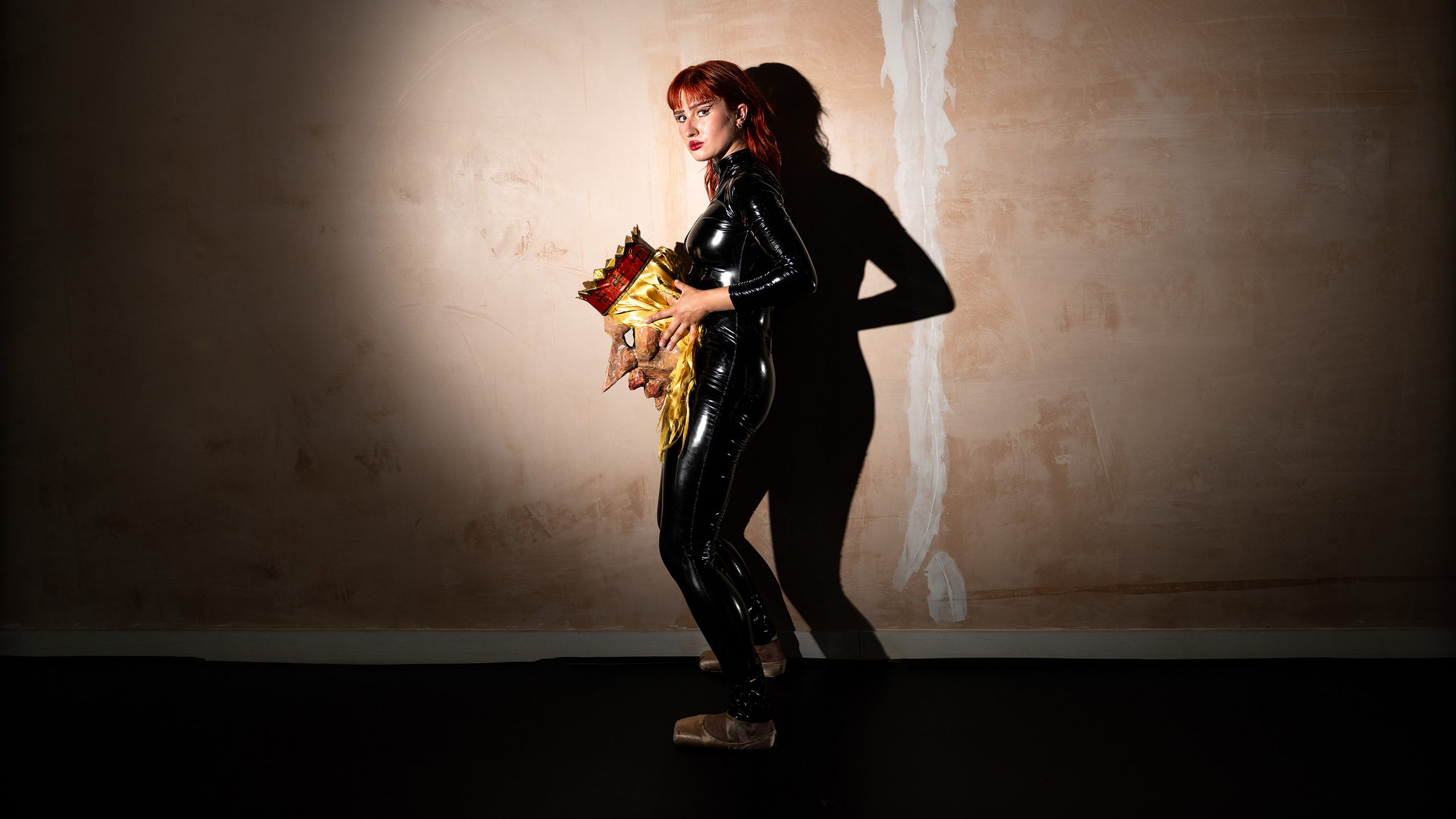
Image Credit: Pianka Pärna photographed by Devika Bilimoria, head piece by Ewan Hindes.
At 17, Estonian-born performance artist Pianka Pärna was told to choose between ballet and walking. After years of rigorous training at Tallinn Ballet Academy and New York’s Broadway Dance Center, a potentially devastating spinal injury ended their ambitions as a professional ballet dancer. But what might have been an ending became the beginning of something altogether more radical.
Now based in London, Pianka has forged a distinctive practice spanning live art, experimental theatre and choreography, with performances at Tate Britain, Whitechapel Gallery and international festivals across Europe. Their work draws on queer identity, post-Soviet cultural inheritance and bodily autonomy to challenge society’s obsession with perfection, conformity and control.
For Pianka, the monstrous can be liberating. In this special feature for Run Riot, they summon Baba Yaga, the feared witch of Slavic folklore, to interrogate expectations of femininity, success and belonging. Between discipline and excess, beauty and grotesquery, Pianka discovers something unexpectedly seductive: “That liminal space – existing between the poised and controlled and the messy and excessive, is juicy, untouched and satisfying as much as it is painful.”
These contradictions come gloriously alive in Curtain Call, a new live-art ballet premiering at CEREMONY Festival, Copeland Gallery, Wednesday 25 November at 7pm. Joined by performers Nando Messias, Claudia Palazzo and Wet Mess, with a live score by Leo Chapman, Pianka collides classical ballet with latex, fetish, queer expression and Eastern European mythology.
In a world demanding constant self-improvement, perhaps liberation begins when we abandon perfection.
Read Pianka’s feature below, then challenge your own ideas of beauty, celebrate the beautifully imperfect, support radical independent art and, better still, join the Curtain Call.
It is believed that she hides in the woods, standing tall on a pair of scaly chicken legs. She is deceiving for her kindness, which perishes as she devours the stray wanderer, bone by bone, her house growing taller as the hunger satisfies. Since she never got married and never had children, she is obscured from society for she has failed to meet the requirements to succeed among humanity. Her solitude has become her anchor, and company is only a reminder of the reason she is alone, so she eats anyone who comes her away, especially children. This is the story of the Baba Yaga, an infamous Slavic folklore tale that nearly every Eastern European child is told growing up, including myself.
My grandma would always remind me that finding a husband was the ultimate path to success and joy. If I wasn’t to marry and have kids, I would end up dishevelled, angry and lonely like Baba Yaga. But what does this folklore really reveal to us about the impossible quest of success, achievement and desire in a heteronormative society, bound by rites of passage? Perhaps it reveals that the hyper-human is more robotic than artificial intelligence itself.
Baba Yaga features in Curtain Call through 4x latex headpieces embodying Baba as botched – her cheeks protruding, lips full of filler, nose exaggerated, jawline sharply angular. However monstrous Baba Yaga may seem in depiction, the ‘monstrous feminine’ trope is one I actively push against in my work.
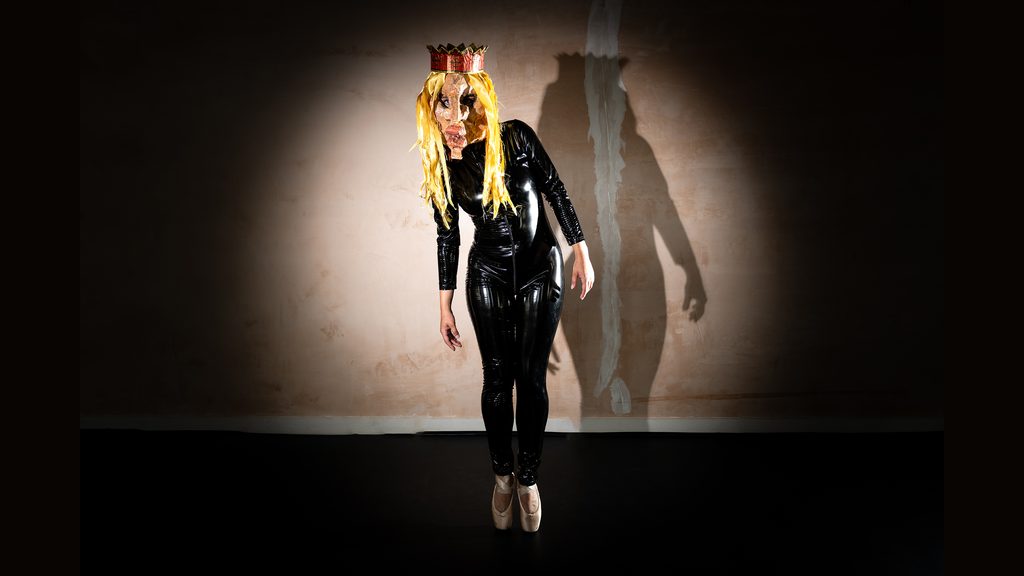
Image Credit: Pianka Pärna photographed by Devika Bilimoria, head piece by Ewan Hindes.
Seen in many modern takes on ballet as a kind of revolutionising of the real desire of the ballerina, the monstrous and messy is presented as a vanquishing of control. Visual images of expulsion and performing excess through the ‘beast lurking inside’ is introduced as the pathway to truly experiencing pleasure. To me, this is a monotonous take on what balletic training really unveils. That liminal space – existing between the poised and controlled and the messy and excessive, is juicy, untouched and satisfying as much as it is painful. Performing the act of peeing while standing up on pink pointe shoes into a toilet, Tchaikovsky’s Nutcracker playing in the background as the audience watched – this was my first attempt at unlocking this very liminality. As the Andante Maestoso piece began culminating, I spread my legs, unzipped the crotch of the black latex bodysuit, and sat into the splits onto a shiny pink dildo served on a pale white plate. The audience watched, gasping in awe while snickering at the absurdity before them. The flutes, horns and trumpets paraded my tense split hold as the pink dildo disappeared further and further in. Baba Yaga has now become an iconography to embody this very space in Curtain Call. Perhaps she is seeking to belong or maybe she embraces solitude as her true place, but even then, what is that place? Do we ever, as humans, really visit those places where pain and pleasure co-exist, and do we embrace when we are there? The only time in life where we do not consciously think is when we sneeze, and I believe that this portal also opens in the transmission between pain and pleasure realities. Whether this can be found, is a question that Curtain Call attempts to discover, explore and answer.
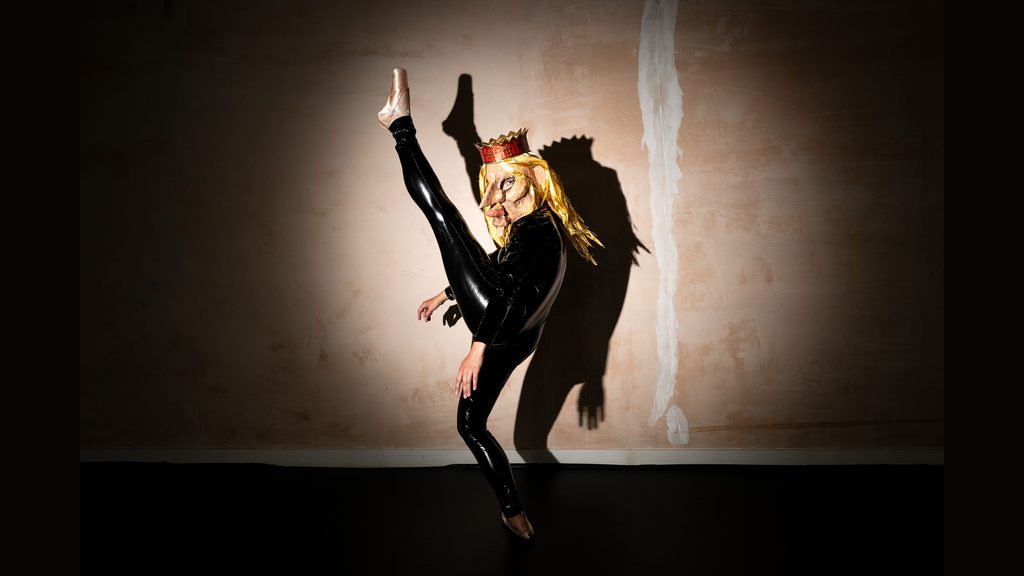
Image Credit: Pianka Pärna photographed by Devika Bilimoria, head piece by Ewan Hindes.
Scaly, deep-clawed, penetrating skin
Raised bumps following a meticulous pattern
Embellishing the outline of the claw
A scream so heinous
The juices erupted from her puffed cheeks,
Bursting with grief, loneliness and isolation.
The sap of her despondency
Glistening, sticky, granular,
Hoping to catch a tender touch
Piercing skin with pointed nose
In fear that the scent of the crackling wood burn
Will never reach to burn her
once and for all.
For then she has to bear the menacing existence
Of a foolish longing
Yearning, forgetting and yearning again.
Never enough to belong
yet too much to be forgiven
And too easy to be forgotten.
Oh to be burned by the sap of your own grief,
once and for all.
Find Pianka on Insta @piankamperformance_
See Pianka’s work IRL → futureritual.co.uk
Pianka Pärna: Curtain Call
with Leo Chapman, Nando Messias, Claudia Palazzo + Wet Mess
CEREMONY Festival
Copeland Gallery
133 Copeland Rd
London SE15 3SN
Wednesday 25 November, 7pm.
Tickets and info → futureritual.co.uk
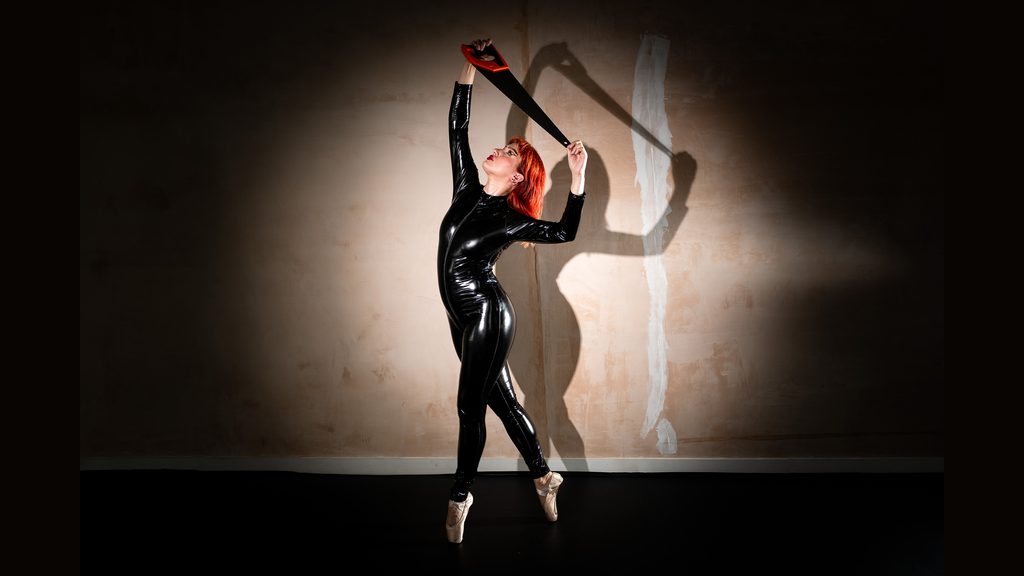
Image Credit: Pianka Pärna photographed by Devika Bilimoria.