

Jane Beese: The Southbank Centre’s Meltdown 2026 hits the road
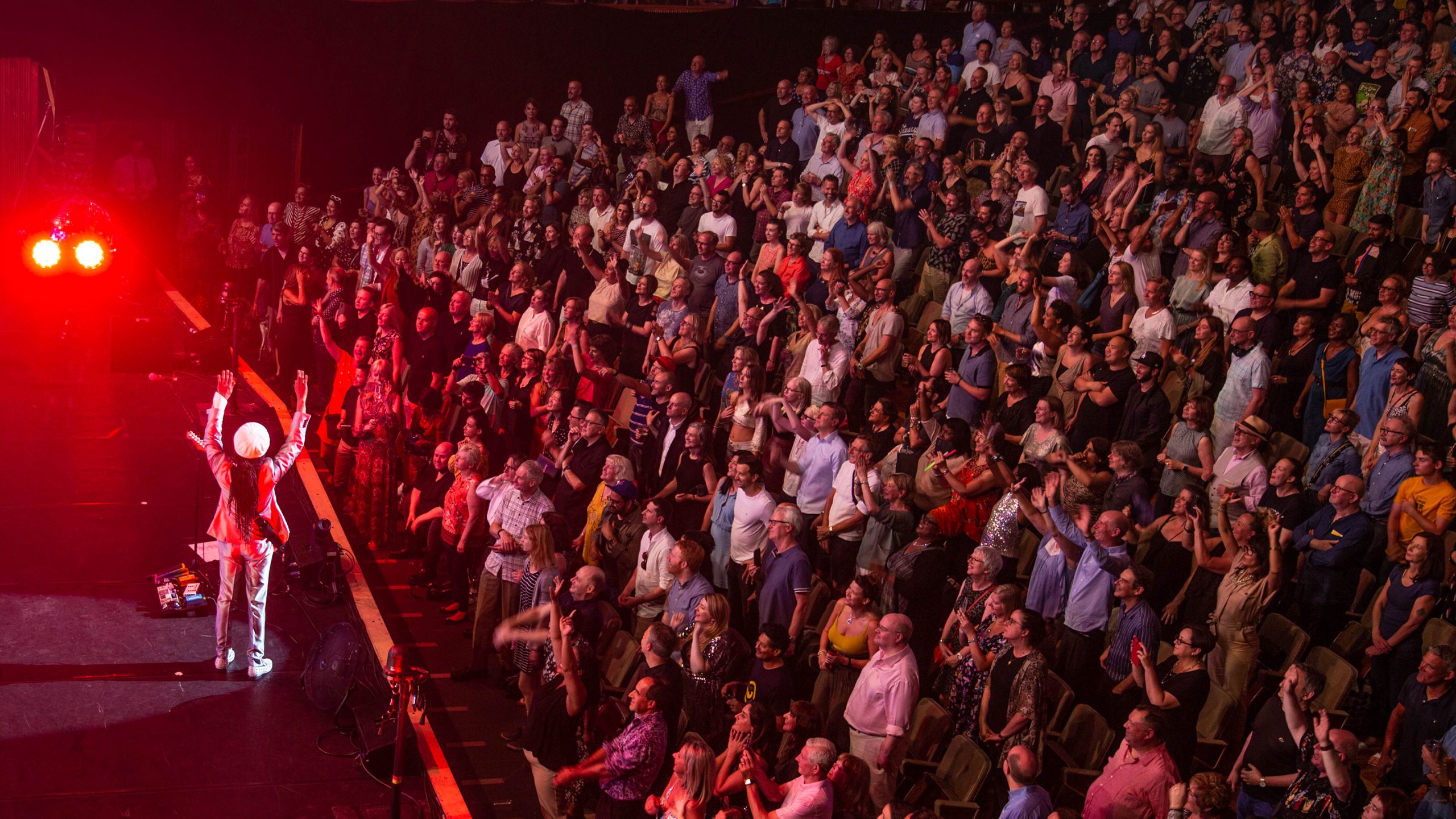
Image Credit: Meltdown curator Nile Rodgers receives standing ovation during 2019’s Meltdown. Photo by Pete Woodhead.
From her teenage years discovering live music in Manchester and Liverpool, Jane Beese has been drawn to the singular, electric communion that only a gig can offer – the anticipation, the collective listening, the sense that something unrepeatable is unfolding between artists, audiences and the spaces that hold them. That early fascination with the machinery of live music – how collaboration, trust and risk combine to create meaning – has never left her.
Today, as Head of Contemporary Music at the Southbank Centre and co-Chair of the Music Venue Trust, Jane sits at a humming intersection in the UK music ecosystem: where flagship cultural institutions meet the grassroots venues that nurture new scenes and emerging artists. Both roles are powered by shared values – culture as a public good, music as a collective endeavour, and a belief that the future of the industry depends on protecting its foundations.
Those values come sharply into focus this June with Hometown Meltdown, a special edition of Meltdown celebrating the Southbank Centre’s 75th anniversary by taking its artist-curated spirit out into grassroots venues across the UK. In a time of profound challenges for live music, Jane remains clear-eyed and optimistic – hopeful that with imagination, collaboration and care, the UK’s music culture can remain resilient and wildly adventurous. If ever there was a year to get out and see more live music, 2026 is it.
If we go right back to the beginning – the young girl with her first record, that formative gig, the first show you ever worked on – what do you think those early moments lit up in you? And how do those sparks shape the work you do today?
I went to my first live shows in Manchester and Liverpool as a teenager and just became immediately addicted to the sense of anticipation, the arrival at a new venue, the communion of being part of that crowd, of belonging to a specific group of music lovers and the ringing ears the next day. I don’t think that any of that has ever gone away. It was always very apparent to me that I didn’t want to be on stage, but I was fascinated by the machinery that created those events.
Working in music now and specifically at the Southbank Centre, there’s always the possibility of that once-only experience for audiences and artists alike that we strive for. I think that’s also the essence of Meltdown – the innate collaboration that appears when you are given the privilege of looking into your curator’s artistic playground. The possibility of a project like Hometown Meltdown fusing together two of my great work passions – Meltdown and the work of Music Venue Trust – is super exciting.

Image Credit: Poster for David Bowie’s Meltdown, (2002). (c) Southbank Centre.
You’ve spent years championing musicians at every stage of their journey. When you’re programming for the Southbank Centre, what are you really listening for – beyond the obvious markers of success? And how do you think about risk: when is it essential to back something that feels unfinished, unexpected or quietly radical?
I’m really interested in how artists respond to opportunity and what we’re doing with our music programme more broadly. At the Southbank Centre, we’re able to offer unusual formats, open-ended invitations to collaborate, and spaces that don’t dictate a single way of working.
Some of the most exciting moments happen when artists really take that offer to try something new and run with it. That might be rethinking how a gig works, or how different artforms can sit alongside one another. Offering our Meltdown curators the opportunity to look beyond the usual music menu into their other passions is always fascinating as we found with Bowie and visual art, David Byrne and performance and dance, Patti Smith with spoken word and poetry and Yoko Ono and her ongoing commitment to a truly democratic space for all of her guest artists.
Despite the challenges of today’s live music scene, millions still step into grassroots venues every year. From your perspective as both Head of Contemporary Music at the Southbank Centre and a co-chair of the Music Venue Trust, what gives you hope right now?
Grassroots venues are under extraordinary pressure, and it’s important not to downplay that: we’ve lost 35% of our grassroots music venues in the past 20 years and over 40% of these venues reported a financial loss in 2024.
What gives me real hope is the resilience and determination across the sector – the people running venues, working the bar, promoting shows, and turning up night after night because these spaces matter deeply to their communities. There are also genuinely encouraging signs of change. The recent six-figure support for the Music Venue Trust from The O2 is hugely significant and very welcome. It sends a clear message that the success of our biggest arenas is directly connected to the health of the grassroots venues, where so many headline artists began their journey.
There is still a long way to go, but that kind of support from the big players does matter. The live music economy is one interconnected ecosystem, and if we want it to thrive in the future, we have to protect and invest in the foundations it’s built on.

Image Credit: Poster for Yoko Ono’s Meltdown, 2013. (c) Southbank Centre.
Hometown Meltdown is a landmark moment – the Southbank Centre taking its iconic festival out across the UK in partnership with MVT. What was the seed of the idea, and why now? What does it mean to you to bring Meltdown “home” to local venues?
Hometown Meltdown grew out of early discussions for the Southbank Centre’s 75th anniversary this year, marking 75 years since the Festival of Britain and the opening of the Royal Festival Hall. The Festival of Britain was outward-looking and ambitious, and brought people together from across the country, celebrating creativity as something national, shared and forward-thinking.
We already have a strong national model for visual art, through Hayward Gallery Touring, and the question became: how might that translate into our music programme? When you start from that place, the UK’s grassroots music venues naturally come into focus, not just as talent pipelines, but as a national network of incredibly important cultural spaces in their own right. As a long-time supporter of Music Venue Trust, it seemed really obvious to me that they would be a great partner on this event.

Image Credit: Poster for David Byrne’s Meltdown, 2015. (c) Southbank Centre
The Southbank Centre has an extraordinary legacy – and Meltdown is its most storied, artist-curated festival. In this special 75th anniversary year, how do you see Hometown Meltdown extending or reimagining that legacy?
The Southbank Centre was founded on the idea of culture as a public good, rooted in a belief that creativity should be shared widely. Hometown Meltdown feels very aligned with that founding spirit.
Rather than concentrating activity in one place, we’re extending Meltdown’s ethos across the UK, creating a series of mini festivals with grassroots music venues from a place that the artists either come from or feel a really strong connection to. Our flagship Meltdown, will turn 31 this year and has seen the likes of David Bowie, Jarvis Cocker and Yoko Ono at its helm. The coming months will see us working collaboratively with Music Venue Trust and venues up-and-down the country, to bring a very special Hometown Meltdown to each town, with each programmed, as usual, by a guest curator.
It’s going to be great fun seeing this new format come to life in these grassroots venues. Though we’re celebrating our 75th anniversary this year, we’re not looking back in a nostalgic way, and are thinking about the Southbank Centre’s importance as something we continue to build upon by supporting the places, people and ideas that will shape what comes next. Working with grassroots venues outside of the capital is absolutely part of that picture.
One of the most moving aspects of Hometown Meltdown is that major artists will curate their favourite local bands in the grassroots venues that shaped them. What do you think happens – creatively, socially, emotionally – when well-known artists return to the rooms that made them?
There’s something incredibly meaningful about that return. Grassroots music venues are launchpads for some of the UK’s greatest artists, but they’re also the driving force behind the entire live music industry. The work of large venues and arenas simply wouldn’t exist without them.
When artists come back to curate shows in those spaces, it’s an acknowledgement of that, and an acknowledgement of those venues’ importance. I also think it reinforces the idea that success is collective – that hometown scenes, communities and venues all play a part in an artist’s professional and artistic development.

Image Credit: Jane Beese, Head of Music at the Southbank Centre. Photo by Pete Woodhead, courtesy of the Southbank Centre.
Looking ahead, what are your hopes for the UK’s wider cultural ecosystem – from London’s flagship venues to the smallest community-led rooms? What would you love to see change, and what do you believe we can build if we get this right?
I’d love to see a more genuinely joined-up venue ecosystem, where success at the top actively supports sustainability at the grassroots. That means fairer economics, better support structures, and a shared understanding that every part of the system relies on the others.
Encouraging moves – like arenas stepping up to support grassroots venues – show what’s possible when that interdependence is acknowledged. If we build on that, we can create a cultural landscape that’s more resilient, more representative and more adventurous.
And finally, for music lovers reading this – could you recommend three London culture spaces (beyond the Southbank Centre), venues or communities that hold meaning for you, and that you’ll be spending time in during 2026?
I’ll always have a deep affection for places like the Roundhouse, which has played such an important role in artists’ development and my own career, as well as Cafe OTO and their commitment to experimental music and their local community.
Grassroots music venues like Windmill Brixton, The George Tavern, or The Lexington are all great examples of places continuing to nurture new scenes, take risks, and remind us of where the future of the industry is being shaped.
Jane Beese is Head of Contemporary Music at the Southbank Centre. Jane is also co-Chair of the Music Venue Trust.
This years special edition ‘Hometown Meltdown’ will take place in London and across the UK during June 2026. Details will be announced in mid-February. Stay tuned via Run Riot and southbankcentre.co.uk
Find out more about the Music Venue Trust at musicvenuetrust.com