

Harriet Reed on Lost Music Venues, Club Culture and Why Grassroots Spaces Matter More Than Ever
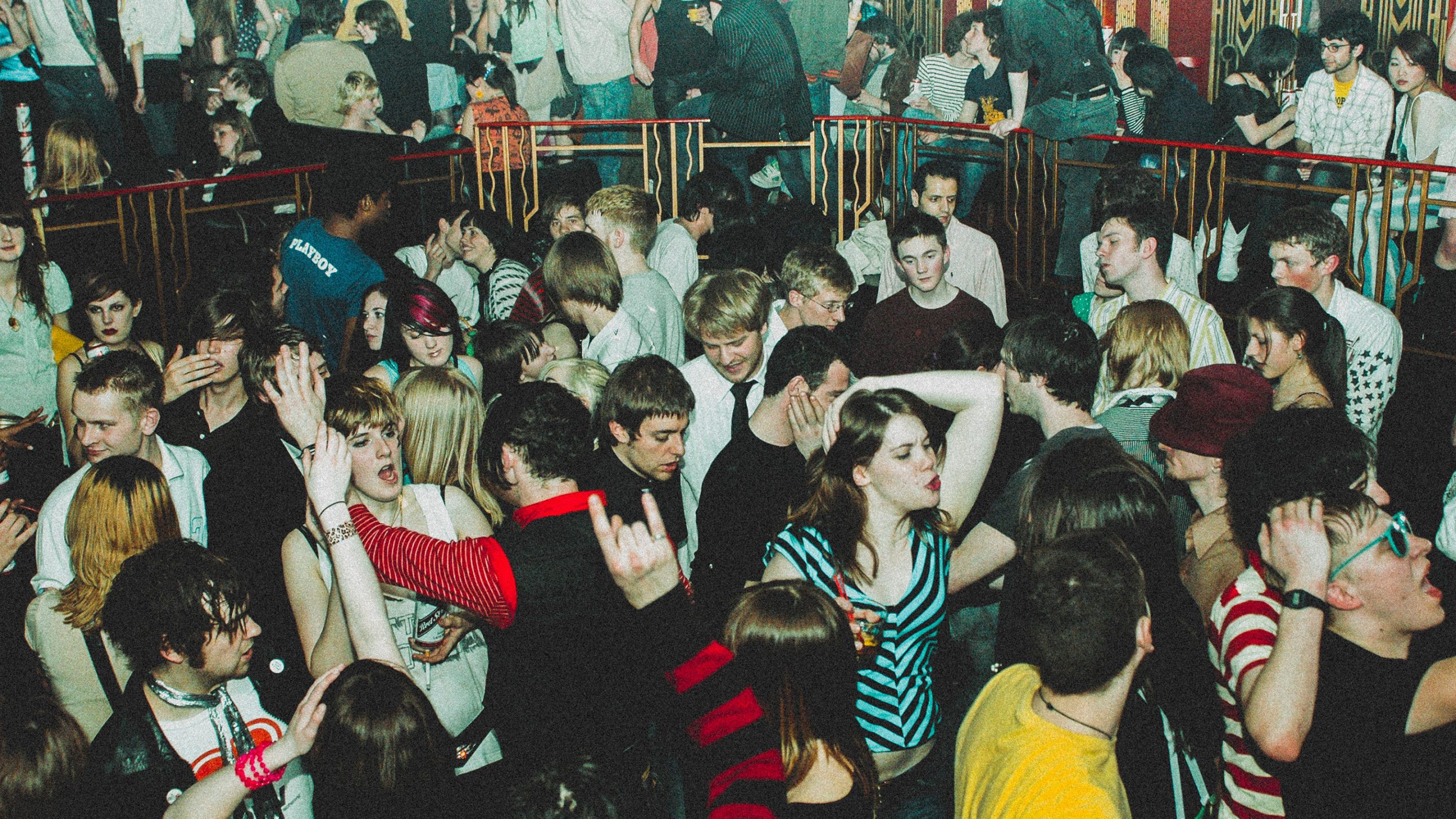
Image Credit: White Heat indie night at Madame Jojo’s. Photograph by Gregory Nolan, 2005.
Long before she was curating exhibitions at the V&A, Harriet Reed was discovering the power of cultural spaces firsthand. Raised on a steady diet of museum visits, theatre trips and a fascination with history, she became captivated by the stories people leave behind – and the places where those stories unfold. Today, as Curator of Contemporary Performance at the V&A, Harriet explores the worlds where art, music, performance and community collide.
We caught up with Harriet to chat about Lost Music Venues, the V&A’s vibrant new free display celebrating the clubs, gig spaces and grassroots venues that have shaped British culture over the past four decades. From sweat-soaked indie venues and queer club nights to legendary institutions like Madame Jojo’s and Plastic People, the exhibition is packed with memories, music history and the objects that witnessed it all.
At its heart, Lost Music Venues isn’t simply about nostalgia. It’s about recognising the vital role these spaces play in helping people find their tribe, discover new ideas and experience those magical moments that can only happen when strangers gather together in a room. At a time when so much of life is mediated through screens, Harriet’s work reminds us of the enduring value of real places, real communities and real experiences.
Beyond the V&A, Harriet’s love of culture extends to South London’s independent scene, from Piehouse Co-op in Deptford and Avalon Café in Bermondsey to the Windmill in Brixton and the community-powered ambitions of Sister Midnight in Catford.
Read on as Harriet reflects on the venues we’ve lost, the communities they created and the future of live culture. Then head to the V&A and explore Lost Music Venues for yourself – it’s free. Afterwards, find your nearest music venue, buy a ticket, step inside and do your thing, baby.
Your work as a curator often explores performance, music, nightlife and the emotional connection people have with cultural spaces. Looking back, what were the earliest moments that opened you up to the value of storytelling through art and cultural history? Were there particular experiences as a child or teenager that sparked the path toward becoming a curator?
I was always interested in history – I read a lot, and my parents took me and my sisters to museums and galleries in London which fired up the imagination. We were also lucky to be taken to the theatre often – that exposure to different cultural spaces was life changing. By the time I got to university, I knew I wanted to work within those dual worlds of history and storytelling.
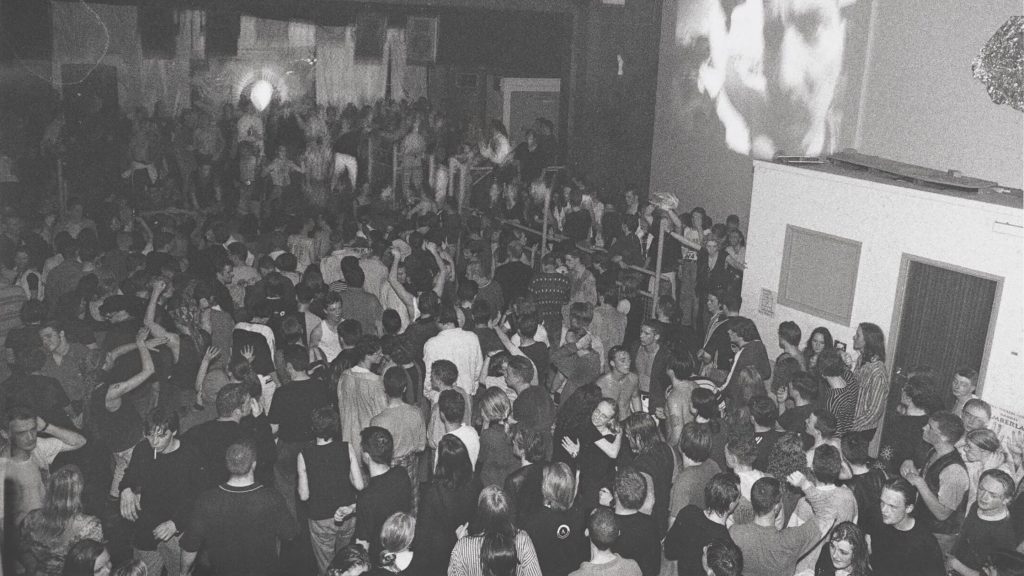
Image Credit: The Art College, Belfast. Photograph by Rick Hall, 1992.
Lost Music Venues feels both deeply nostalgic and incredibly timely. What was the emotional spark behind wanting to create a display about the venues, clubs and grassroots spaces that helped shape Britain’s cultural identity – and why do you think these stories resonate so strongly right now?
The display was primarily inspired by the threat to music venues during and after the Covid-19 pandemic. I was worried about the fate of my local venues and increasingly aware of the campaigning of organisations like Music Venue Trust. It felt important for the V&A to celebrate venues’ cultural contribution at a time when many were under threat of closure.
I think this subject resonates so strongly now not only because most people have a favourite venue, or formative memory of ‘going out’, but because there is a great nostalgia for a simpler technological era. It taps into a need to protect physical spaces and ‘real’ experiences in the face of rapid technological advancement and general societal anxiety.
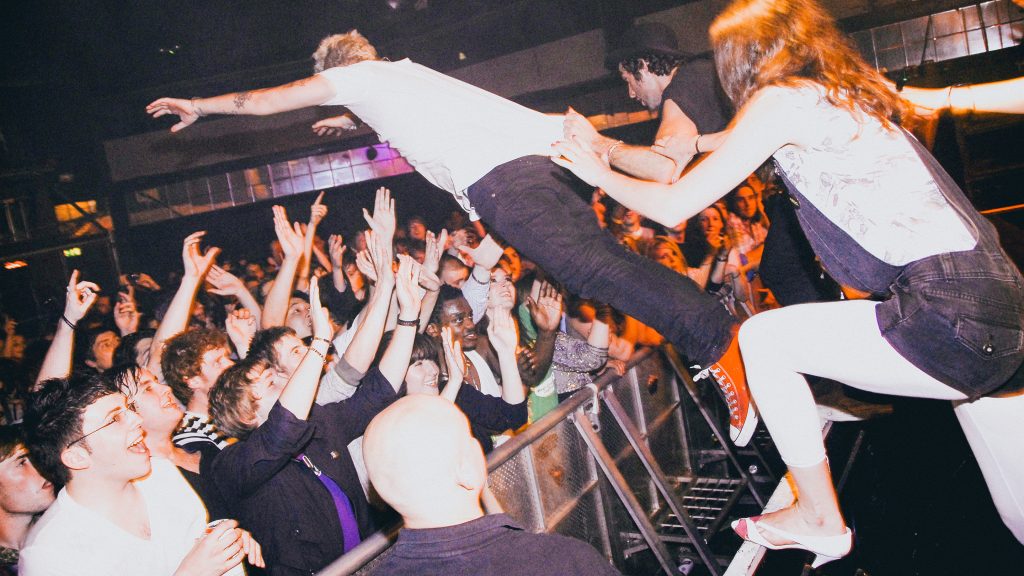
Image Credit: Kid Harpoon performing at The Mean Fiddler. Photograph by Gregory Nolan, 2007.
One of the most moving aspects of the display is how much of it came directly from the public – flyers, photographs, membership cards, handwritten notes, fashion and memories. What did you learn from the response to the V&A’s callout, and did any particular submissions unexpectedly move or surprise you?
We were really impressed with the submissions from the call out – the scale and the variety, but also the support in general for the project. Around half the objects on display are new acquisitions which reflect the generosity of those who donated items.
One of the surprises was a set list from a Blur gig at the Bull and Gate in 1990 (one at which they signed their publishing deal). The owner, Rachel, had been a dedicated gig-goer and had kept the set list as part of her collection of memorabilia as it held huge sentimental value for her. It meant a great deal for her to donate it to the collection and reflected the emotive pull of the whole project. Another item submitted was a pager used at the Haçienda, donated by Rob Taylor. This was used in the 1990s to monitor the sound levels outside the venue. It’s a humble object but tells an important story of those mundane tools which hold enormous responsibility for the safe opening of venues.
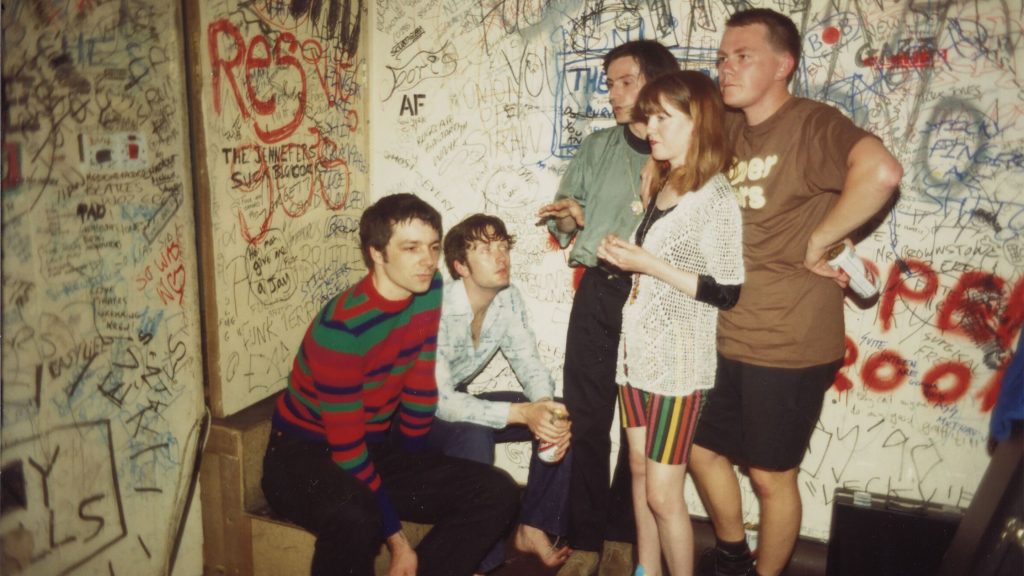
Image Credit: Pulp performing in Jericho. Photograph by Mark Webber.
The exhibition celebrates spaces where creativity, experimentation and community collided – from indie toilet-circuit venues to queer club nights and legendary clubs like the Haçienda and Plastic People. In your view, what is it about these spaces that allows people to feel freer, bolder and more connected than they often do elsewhere?
It comes down to inspiration and safety. Venues provide a neutral ground for strangers to meet, to make new connections and discover new identities. Particularly after dark, there is an element of escapism and of freedom of expression which creates a sort of sacred space. Socially successful venues also come from a strong vision – if the programming and the design reflects the venue’s ethos and artistic intent, it will make people feel like they are part of something.
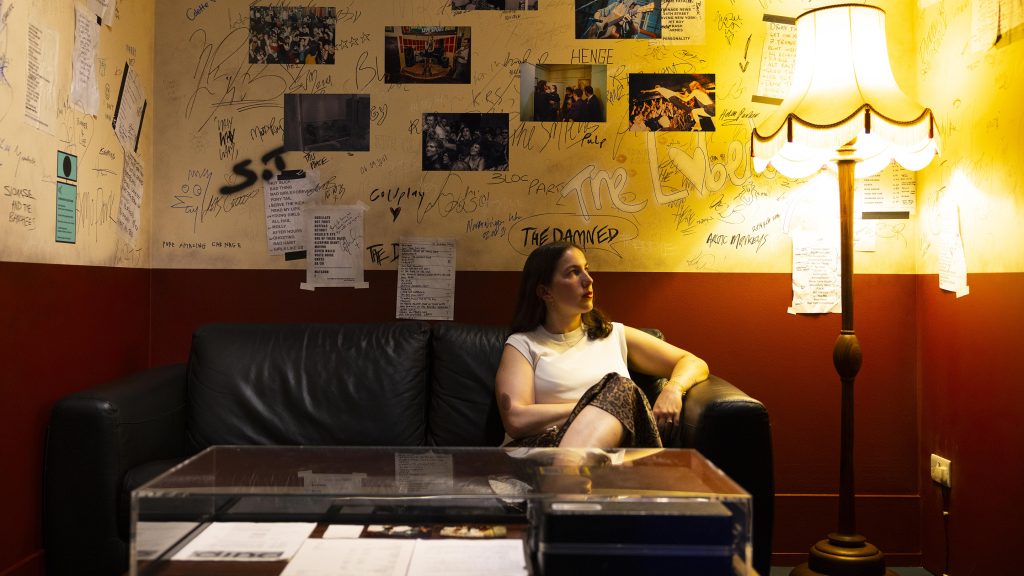
Image Credit: Lost Music Venues – Photo by David Parry for the V&A.
While Lost Music Venues reflects on spaces we’ve lost, it also carries a strong message about protecting the future of live culture. Looking ahead, what gives you hope about the next generation of grassroots venues, club culture and creative communities in London and across the UK?
There are hundreds of brilliant venues across the UK, and I think we need to be careful to not be too despondent, and not to make any assumptions about the current generation and whether they are going out (or not). The data is never going to tell the full story! MVT are also pushing forward with an incredible programme of events and campaigning, alongside their day-to-day support for their membership.
In terms of the display, we wanted it to reflect on a hopeful and active note. We developed an interactive with our AV designers NorthHouse which takes the format of a short quiz, matching you up with your ideal venue – from a choice of Band on the Wall in Manchester, Oh Yeah Centre in Belfast, Le Pub in Newport, the Windmill in London or SWG3 in Glasgow. Of course, not all our visitors will live near these places, so we encourage them to use Music Venue Trust’s gig guide to find a similar space near them. We hope this fun call-to-action reminds visitors of the great work still done by venues today, and what might be happening on their doorstep.
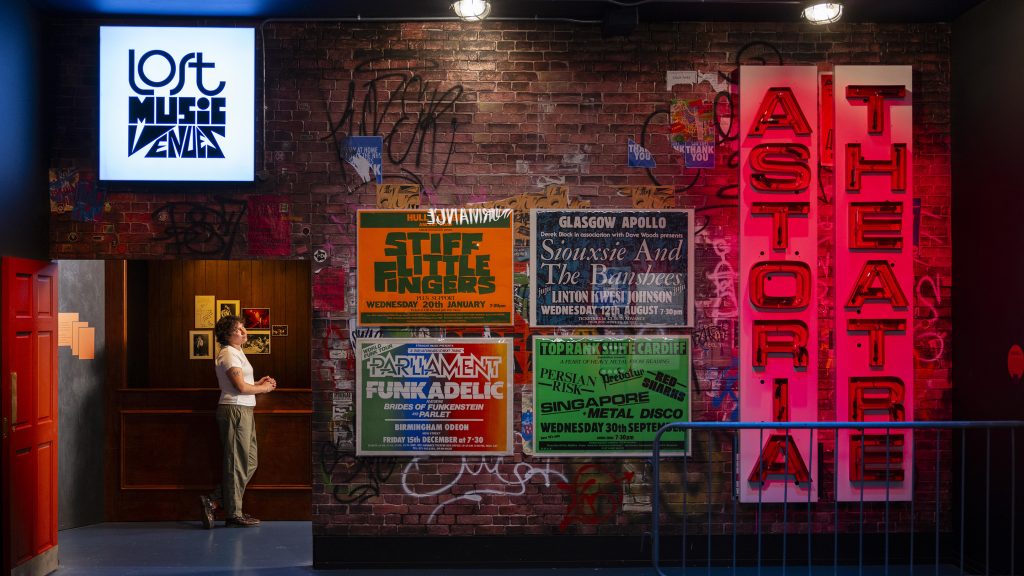
Image Credit: Lost Music Venues – Photo by David Parry for the V&A.
Beyond the V&A, can you recommend three cultural places and/or communities in London that are especially meaningful to you right now – and tell us what makes them feel just right for you?
I live in South London, so I am biased. But there are some brilliant spaces across the area, from the Piehouse Co-op in Deptford to Avalon Cafe in Bermondsey and of course the Windmill in Brixton. One venue which I am really excited about is Sister Midnight, which is a community-owned music venue opening in Catford. It’s local to me, so holds a special significance, but it’s also a really inspiring template for venues which want to be genuinely community-embedded.
Harriet Reed is the Curator of Contemporary Performance at the V&A.
Lost Music Venues
V&A South Kensington
Cromwell Road
London, SW7 2RL
Now until 30 October 2027
Info → vam.ac.uk