

Freddie Opoku-Addaie: It’s simple – artistic excellence is rooted in diversity and curiosity
Freddie Opoku-Addaie, long-time friend of Run Riot and Co-CEO and Artistic Director of Dance Umbrella, steers this year’s festival like a generous host, inviting both first-timers and die-hard dance lovers to meet a vibrant mix of perspectives and tune into our shared humanity.
For DU25, “welcome” is a practice as much as a principle, with guest curators shaping the programme, £10 tickets at every show, and an extended Digital Pass so the experience travels home with you.
Across the month, London moves from Andrea Peña & Artists’ Bogotá to Paiwan stories with Tjimur Dance Theatre, from Elena Antoniou’s playful provocation to Davi Pontes and Wallace Ferreira’s choreographies of resistance, all with curiosity, care, and a wink. It is dance as connection, as conversation, and as a reminder that creativity is the language we already share.
This year you’ve spoken about bringing together “a vibrant mix of perspectives” to help us “tune into the humanity within ourselves and in others.” What human connections, onstage or off, do you hope audiences feel most vividly across DU25?
It’s simple: artistic excellence is rooted in diversity, in widening our curiosity within dance and the arts. DU25 is about discovering new ways of seeing and moving with one another, across ethnicities and borders.
You are opening with Andrea Peña & Artists’ BOGOTÁ at Sadler’s Wells East, a work steeped in Colombia’s political and spiritual heritage. Why was this the door you wanted London to walk through first, and what conversations with the city do you hope it sparks?
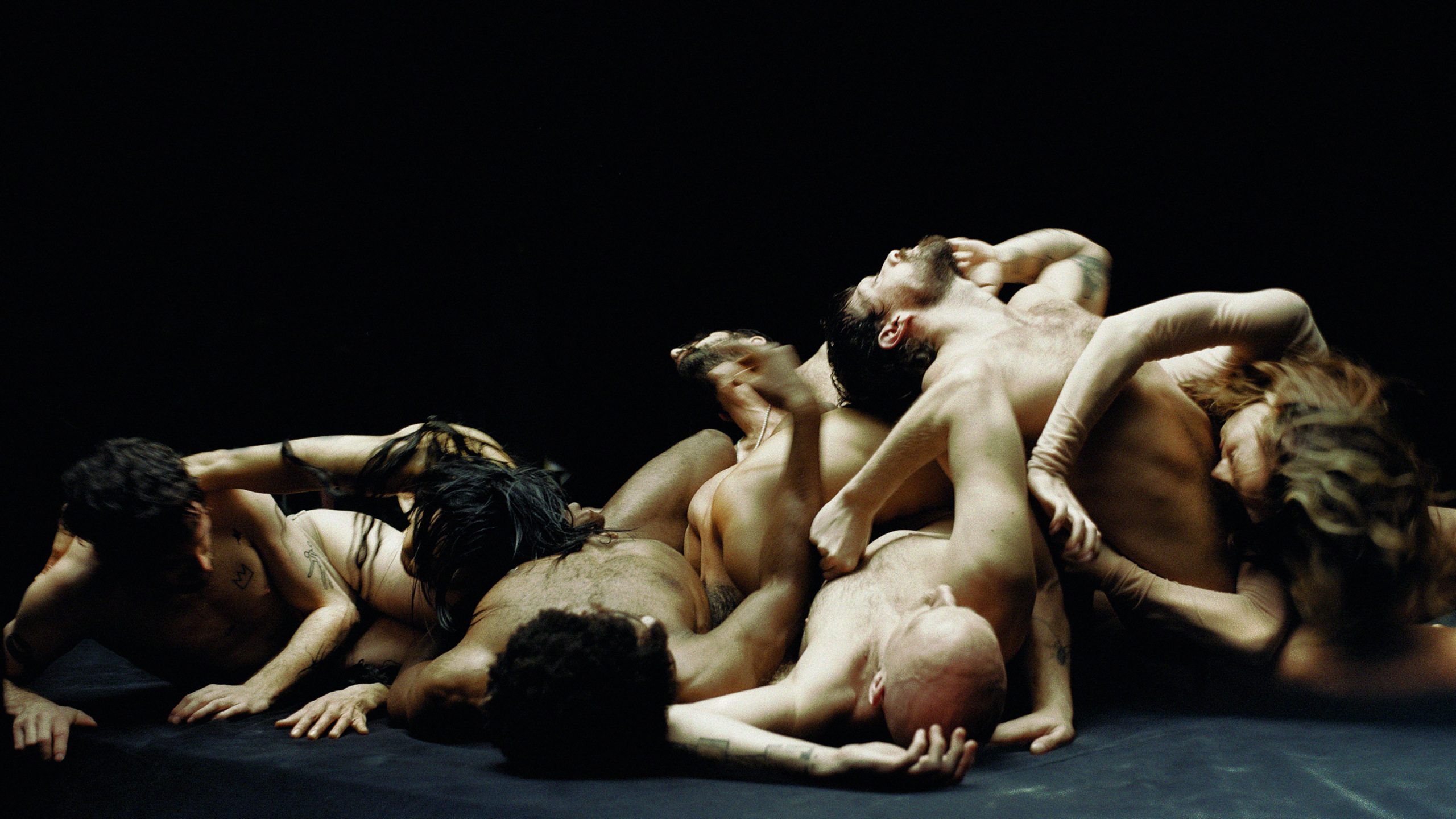
This work powerfully challenges the biases found in single stories. It connects with our global city and especially with East London’s history as a cultural hub past, present and future. Andrea Peña & Artists’ BOGOTÁ reveals a structure for imagining hopeful futures, reminding us of our shared humanity. This spirit runs through the works and the invitation to DU25.
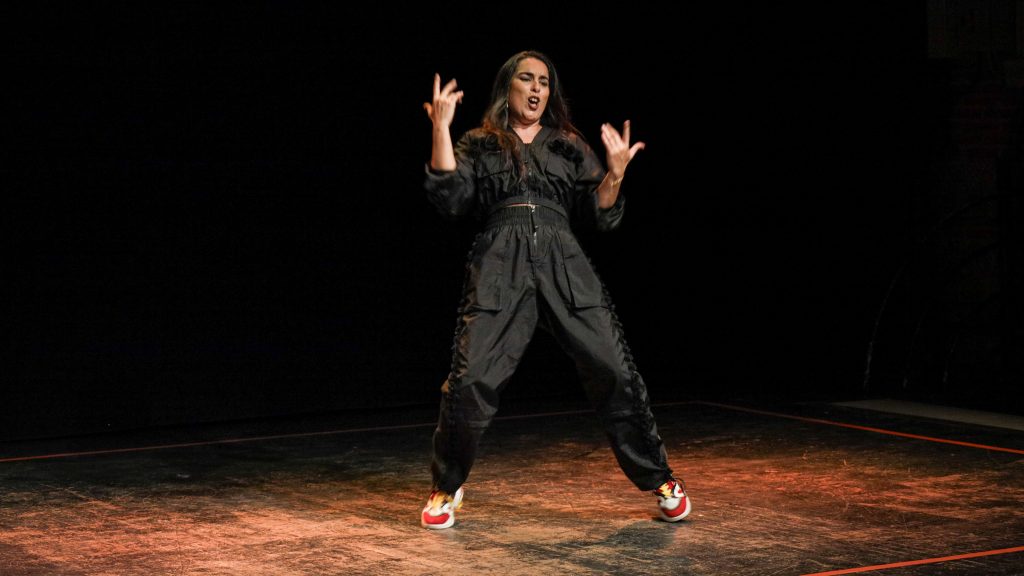
The Change Tempo double bill pairs Lilian Steiner’s Siren Dance of seduction and shifting truths with La Chachi’s irreverent, flamenco-rooted Random Taranto. What dialogue about authenticity, play, and transformation do you see happening between these two works, and between performers and audience?
Change Tempo is about introducing previously unseen artists to London audiences and so what excites me about this double bill is the way both works refuse to sit still inside a single definition of authenticity. Lilian Steiner lures us into a constantly shifting world where truths melt and reform, where the performer’s presence is both seductive and slippery. By contrast, La Chachi plays with flamenco’s deep-rooted traditions – sometimes mischievously, sometimes reverently, questioning what happens when heritage meets irreverence and humour.
Together, they open up a space where performance becomes a live negotiation: between the past and the present, the serious and the playful, the expected and the unexpected. For the audience, it’s less about receiving fixed answers and more about being invited to shift with the performers, to feel how transformation itself can be a form of truth.
From Gesualdo Passione, Baroque voices meeting contemporary movement, to Ben Duke’s Artist Encounters on “Making Text Move,” this year brims with choreography in conversation with language and music. What excites you about dance as a translator between art forms and eras?
Artists are once again reinforcing movement, dance and choreographic or compositional practices as a primary language and as a gateway for how we connect, and rightly so. As a festival, we are providing access points through both audience and active participation, across in-person and online programming.

Tjimur Dance Theatre’s bulabulay mun? / how are you? brings Paiwan stories and coastal memory to The Place. How do Indigenous narratives travelling to London reshape the room, our sense of place, care, and kinship with nature?
What’s so powerful about bulabulay mun? / how are you? is the way it carries with it the textures of lived experience from a very different landscape and community. When Indigenous narratives travel to London, they don’t just add new stories to the mix – they open up a multiplicity of perspectives, reminding us that there are many ways of living, caring, and being in relation with the world.
Choreographer Baru Madiljin’s decision to take the dancers out of the studio during the creation and into the natural environment in Pingtung was transformative. Their bodies shifted: moving with a freedom beyond the daily grind, yet also more rooted, more attuned to the earth. You’ll be able to see that sensibility coming into the room with them in London. It reshapes the space, inviting audiences here to feel that kinship with land and water, and to imagine what it means to be both grounded and connected across distance.
Elena Antoniou’s LANDSCAPE dances with the contradictory social politics of the gaze and being gazed at, the nuances, cravings, pleasure and pain. What kind of self-aware complicity do you hope the audience leans into?
Elena Antoniou’s LANDSCAPE asks us to notice the politics of looking – how desire, power and vulnerability are bound up in the gaze. It plays with that tension between pleasure and discomfort, inviting the audience to feel both implicated and aware in the act of watching. That’s why presenting it at Shoreditch Town Hall feels so potent. This isn’t just a stage, it’s a site where women like Helen Taylor and Sylvia Pankhurst once stood, demanding visibility, demanding to be seen and heard on their own terms.
In that sense, the audience’s complicity becomes double-layered. They’re not only engaging with the dynamics of the performance itself, but also sitting within a room haunted by a history of women fighting to control how they were represented, legislated and looked at. My hope is that this makes audiences lean into a sharper kind of self-awareness, recognising that every act of looking carries weight, and that even now, the politics of visibility and voice are still being negotiated.
Davi Pontes & Wallace Ferreira’s world premiere, Repertório N.1, explores a choreographic repertoire of self-defence and strategies of resistance. How can dance rehearse ways of meeting violence without reproducing it, and what might audiences carry back into everyday life?
The body, in its truest sense, can rehearse itself – developing strategies to navigate what works against us, for us, or with us as human beings. For Black, Brown and Global Majority bodies in particular, this becomes an honest and progressive dialogue about how we can genuinely do better by and with one another. Davi Pontes & Wallace Ferreira’s world premiere Repertório N.1 embodies this, as do many of the artists and works you’ll encounter across the festival.

From limited £10 tickets at every show to an expanded Digital Pass, plus community-minded moments like Brixton House Takeover with CASA and the Arts & Class discussion at BAC, what does “welcome” look and feel like at Dance Umbrella this year? How are you widening the circle of who gets to belong?
For us, “welcome” isn’t just about access – it’s about changing the narrative of what dance looks and feels like on London stages. This year we’ve invited guest curators to shape parts of the programme, bringing in work that reflects their own tastes, communities and lived experiences. That means audiences encounter perspectives that are broader, bolder and more diverse than a single curatorial voice could offer.
At the same time, we’re widening the circle through practical steps. Our £10 tickets make it easier for people to take a chance on multiple shows, discovering artists they may not yet know. And after hearing calls to keep the Digital Pass available longer, we’ve extended it to the end of November, so people can return to the films, share them with friends and connect with the programme in their own time.
In all these ways, welcome is about opening doors: not only to more people, but to more stories, more voices and more possibilities for belonging.
Quick fire (because joy matters):
One track that never fails to get London moving in October?
I can’t really speak for London as a whole, but I do have a few inconsistently consistent tracks I return to, depending on the vibe. I also find it grounding to create space for myself when shifting from one artist’s world to another and quite literally from one venue to the next. Shine by Cleo Sol is one of those tracks for me.
Your backstage “dance emergency kit” item?
Back/Front/Center Stage it’s a ginger shot – it’s immune system support for London in October! 🙂
A London spot you escape to for 10 minutes of headspace mid festival?
I can’t share this with you otherwise I can’t escape to it. Maybe in future festival we’ll do something there, and we can ALL escape there.
The emoji that sums up DU25 energy?
I would say 2x purple hearts, cos its twice as nice!
Dance Umbrella
2 – 31 October 2025
London-wide and online
danceumbrella.co.uk