

Ekleido’s Faye Stoeser and Hannah Ekholm on FEMINA: Reclaiming Femininity Through Dance, Ballroom and Club Culture
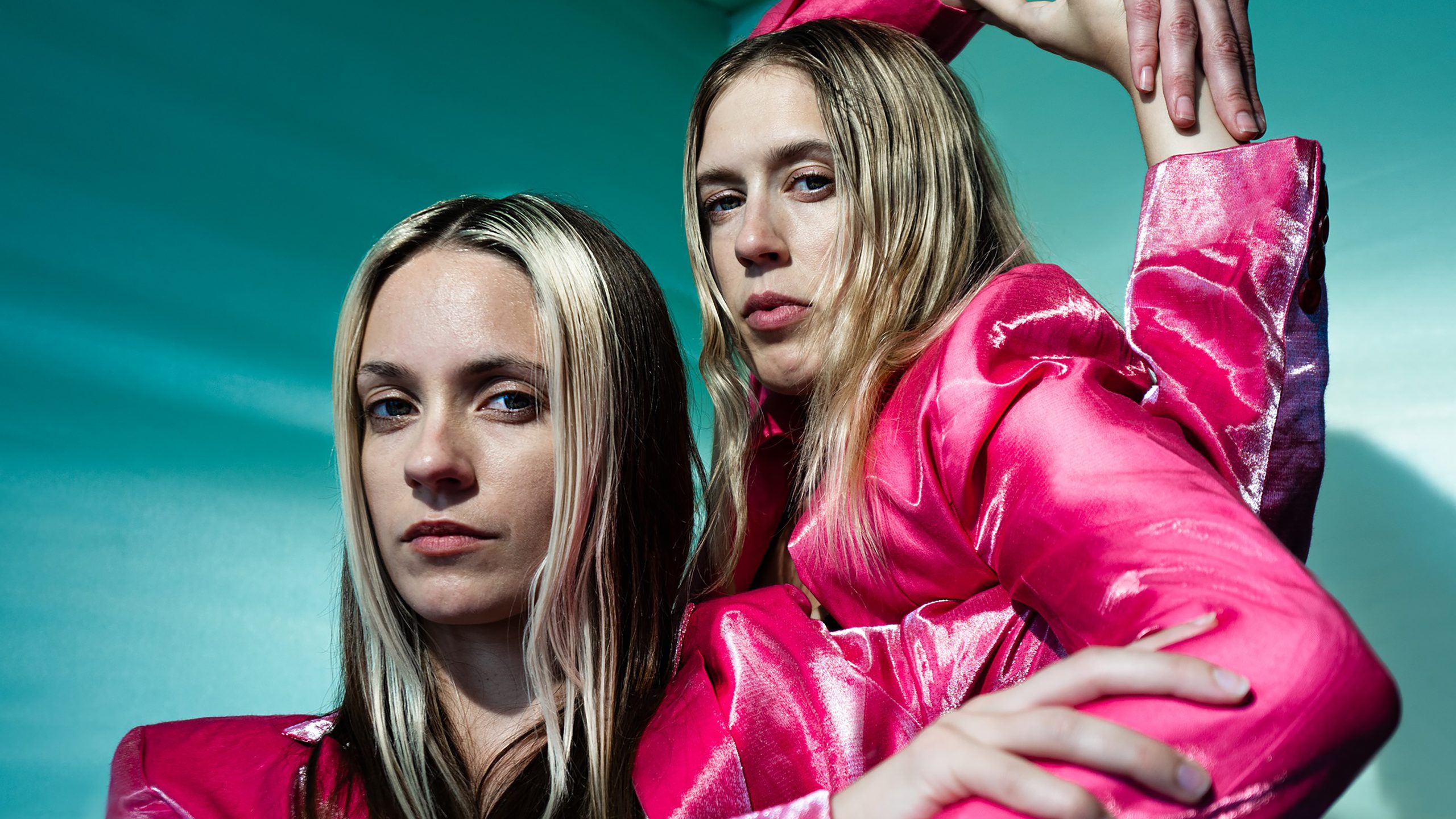
Image Credit: Ekleido. Faye Stoeser (left) and Hannah Ekholm (right) photographed by Jack Thomson.
From the ballet studios of Sweden to the underground Ballroom scene of London, Hannah Ekholm and Faye Stoeser have built careers that refuse to stay within the lines. Hannah, a former competitive ice skater, trained in classical ballet before working across contemporary dance, fashion and music. Faye grew up surrounded by soul music, thanks to her father’s career with The Foundations, before training at London Studio Centre, performing with Rambert2 and discovering the liberating world of Voguing.
Between them, their credits span Sadler’s Wells, Glastonbury, RAYE, Kylie Minogue and Floating Points. As co-founders of Ekleido, they’re creating a thrilling collision of contemporary choreography, underground club culture and electronic music, championing individuality, collaboration and the freedom to challenge convention.
Their latest production, FEMINA, takes inspiration from historian Janina Ramirez’s recovery of women erased from medieval history. Six performers draw on House, Waacking, New Way Vogue, gymnastics and contemporary dance, accompanied by original music from Floating Points, Ela Minus and Stella Mozgawa. At its heart lies a deceptively simple provocation: who decides what femininity looks like?
For Faye, Ballroom revealed the power of embracing femininity beyond the male gaze. Hannah recalls wanting to perform ballet’s traditionally masculine steps. As she explains, the intention isn’t necessarily to provide answers, but to “open them up and keep the discussion going.”
FEMINA plays the Gulbenkian, Canterbury, 29-30 October, before its London premiere at The Place, 5-7 November 2026.
This week, take their lead: support an independent dance space, discover a club night outside your usual orbit, or simply dance without worrying who’s watching. Better still, experience FEMINA and bring your own questions to the floor.
Let’s start with Faye
Your father was a musician with The Foundations, so music was part of your world long before Rambert, Ballroom or Ekleido. What do you remember absorbing from that environment as a kid – and what would you tell a young creative who hasn’t yet found the scene, training or people where they feel they belong?
I feel very lucky to have been surrounded by music from a young age, our house was full of musical instruments, we had live music being played all the time at home and was learning piano from my dad as well. At the time I was more interested in dancing to the music rather than playing the music, spending much more time practicing dance moves rather than practicing for my piano exams, although I was very proud to tell my school friends that I had a cool musician dad! At the time I didn’t realise how lucky I was to be surrounded by music, but it has had a huge impact on my career as a dancer and even more so as a choreographer – having a musical ear directly feeds into how I choreograph putting musicality at the forefront of how I create.
I would tell a young creative who hasn’t found their scene yet to keep pursuing what interests them even if you’re the only one doing it – I have found the most progression in my learning has come from self-practice, and having a niche skill can make you a one of a kind artist, and eventually the scene will find you.
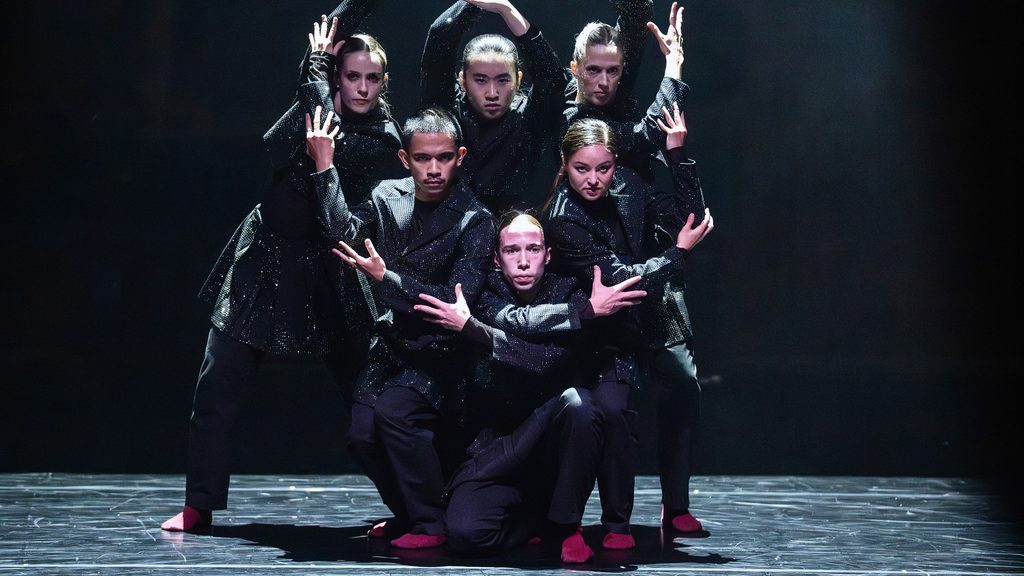
Image Credit: Shots of Femina by Ekleido, photographed by Deborah Jaffe.
You entered Ballroom in 2016 after years of formal dance training and eventually joined the House of Revlon. What did Ballroom teach you about femininity that the studio hadn’t – and how has that found its way into FEMINA?
Ballroom absolutely played a huge part in me unlocking a side of femininity that didn’t exist in me before. As we are discovering and questioning in FEMINA there are so many different expressions and understandings of what femininity is and can be, but within the Ballroom Scene femininity and masculinity are often expressed within societal stereotypes i.e. femininity associated with beauty, extravagant and decorative outfits, soft and ‘cunt’ movement and masculinity with ideas such as muscular appearance, Calvin Klein model like walks, dominating masculine attitude. This was born out of survival as at the time the Ballroom Scene was created (and also still now), being a femme queen (trans woman), a butch queen (gay man), or trans man presented a literal danger to the individual due to discrimination in the outside world, so the Ballroom Scene offered a place where you could practice presenting as a straight cis man or woman through Realness categories. The Ballroom Scene also serves as a place where individuals could express themselves freely of gender norms i.e. a butch queen walking vogue fem which is a highly feminised style.
As a cis woman entering the Ballroom scene, I don’t hold the same need of having to learn how to present as a cis woman to survive in day to day life. For me prior to the Ballroom Scene I shied away from presenting overly feminine in both my day to day life and how I dance, as I viewed highly feminised behaviours or ways of dressing to be a way of sexualising women and presenting a potential threat. The Ballroom Scene allowed me to embrace more highly feminine movement, behaviours and ways of dressing as the Scene is free of the straight male gaze. I found power and confidence through embracing and owning these aspects of myself that I had previously hidden.
These discoveries and understandings from my journey in the Ballroom Scene are absolutely present within FEMINA. We look at highly feminine ideals such as high heels, handbags, soft movement qualities, as well as masculine stereotypes in movement. We were also interested in how these stereotypes are perceived on different genders, and it was important to us from the beginning to have a cast of different genders to oppose the idea that femininity belongs to women alone. Throughout the process we have been questioning what feminity is and why those ideals exist – the work doesn’t necessarily answer those questions but rather presents the ideas on the floor and leaves the audience to question their perception, which will likely be different for everyone based on their own bias.
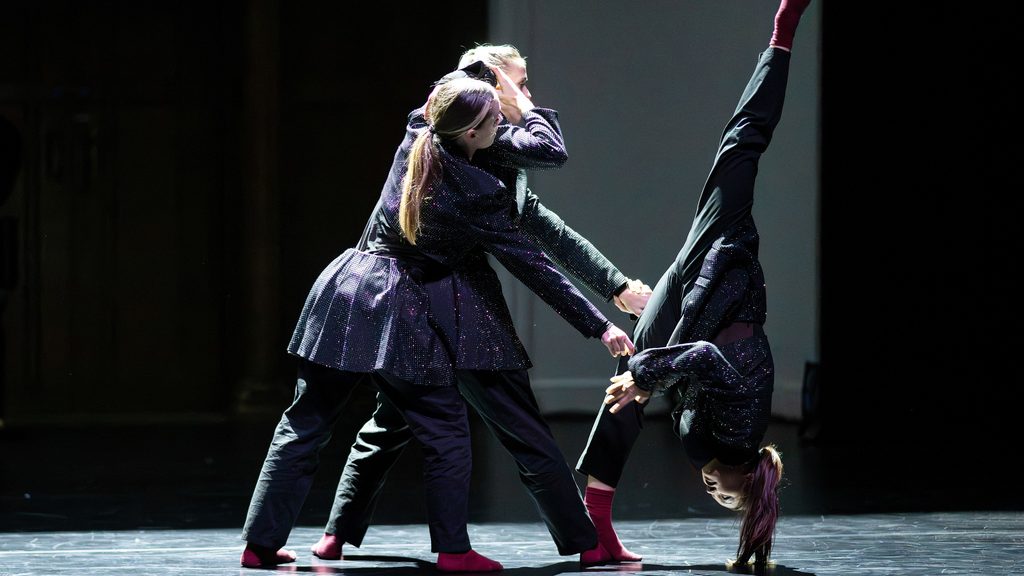
Image Credit: Shots of Femina by Ekleido, photographed by Deborah Jaffe.
The starting point for FEMINA was Janina Ramirez’s book about women whose lives were written out of medieval history, but you’ve brought that idea into a very contemporary world of gender, queer culture, electronic music and dance. Was there a particular story, conversation or discovery during the making of FEMINA that shifted the work somewhere neither of you had expected it to go?
After reading Ramirez’s Femina we went off doing a lot of research into medieval history looking at prominent women and queer men during that time, speaking to Medieval researchers, visiting an exhibition at the British Library, which was super interesting and we were drawn to figures such as Joan of Arc, Birka Viking Warrior, and in particular Hildegard of Bigen who was an Abbess, mystic and polymath who founded her own monastery where women were safer and more liberated there than the outside world. We started to draw parallels between Bigen’s monastery and club spaces of today – both places of liberation, transcendence, freedom for self-expression, and providing a safe place. These conversations arose naturally given our work being influenced by club dance styles working with dancers with backgrounds in club dance styles, and our collaboration with electronic musicians. These parallels between the club space and a place of ritual, as well as Hildegard of Bigen are still very much present in the work.
During the research and development phase in the studio whilst we were trying to unravel what the work was and how to portray our ideas and research, we kept coming back to the simple questions: What is feminine? What is masculine? What is neutral? We then would question why those ideals exist in the first place which took us back into historical research. We found these simple questions opened up so many deeper questions about society, personal experience and bias, and the topic felt aligned to us as artists as women leaders, as people within the Ballroom Scene, as directors working with a cast of different genders connected to femininity in different ways, and as choreographers with influences of both masculine and feminine movement languages.
And we’d love your alternative cultural guide to London: choose three places that genuinely mean something to you – they can be grand, underground, beautiful, scruffy or completely unexpected. What are they, and why have they earned a place in your London?
Chinatown – this is where Jay Jay Revlon (my ballroom father) would always suggest to meet up to get food. We had many a buffet there with the Revlons, and with other Ballroom Scene members, usually followed by a night out in Soho, G-A-Y was a go to. I hold great memories there!
Royal Festival Hall Cloakroom Foyer – this is an open space where dancers train, and was my first introduction to street dance and the idea of self-training. When I first started to train New Way Voguing I was here several times a week, sometimes on my own, sometimes with people from my House, sometimes with street dancers from other styles. I would feel so nervous at first dancing in front of the other street dancers, but this is where I really developed myself as a freestyler and whenever I go back there now I feel a great sense of joy.
The Book Club, Shoreditch ‘4 to the Floor Collective‘ events – 4 to the floor collective used to hold monthly club nights at The Book Club where dancers of all different styles would gather and dance together to house music. There would be UK jazz dancers, house dancers, Voguers, street dancers, hustle dancers, contemporary dancers all under one roof. It was magical, definitely shaped who I am as an artist during these nights.

Image Credit: Shots of Femina by Ekleido, photographed by Jack Thomson.
Enter Hannah…
Before dance, you were a competitive ice skater in Gothenburg, then trained in ballet before your career took you through contemporary dance, fashion, music and Ballroom. Looking back, what did the young Hannah understand instinctively about being an artist that you’ve had to rediscover as an adult?
I’m not sure I’ve necessarily had to rediscover it, but I think that same openness, excitement and curiosity to try new things has become particularly important since starting to create work with Ekleido. It’s not just about exploring new possibilities in choreography, but also about who we collaborate with, how we approach a project and what the work can become. I think maintaining that curiosity, and being open to not knowing exactly where something might lead, is a really important part of the creative process.
FEMINA asks what makes movement appear feminine, masculine or neutral. Having moved between ballet, contemporary dance and New Way Vogue – worlds with very different ideas about bodies, gender and presentation – when did you first begin questioning what you’d been taught “feminine” movement should look like?
I trained in ballet from a young age, and it teaches you quite binary ideas of what is considered feminine and masculine movement. Towards the end of class, you even practise separate steps depending on your gender. I remember really clearly always wanting to do double tours, which were considered the more masculine movement, rather than whatever the “feminine” alternative might be.
Working across different professional environments, and being part of the Ballroom scene, has meant that this has become an ongoing question and reflection for me. It’s something I continue to find really fascinating. Creating FEMINA has allowed us to delve much deeper into what makes movement appear feminine, and why we perceive it that way. I don’t think the intention is necessarily to answer those questions, but rather to open them up and keep the discussion going.
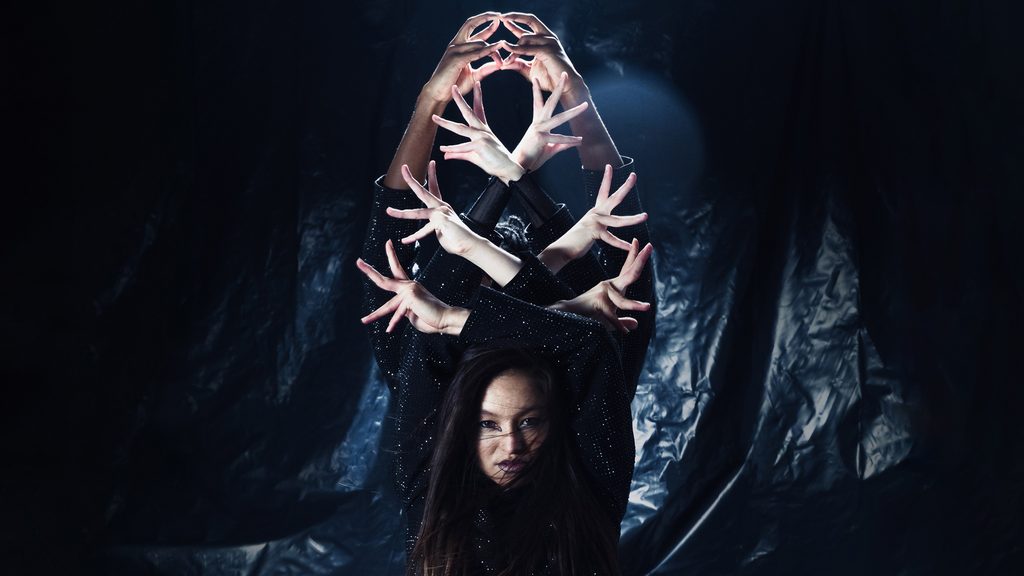
Image Credit: Shots of FEMINA by Ekleido, photographed by Jack Thomson.
FEMINA brings together six performers and movement languages including House, Waacking, New Way Vogue, gymnastics and contemporary dance. When you’re creating with artists who have such distinct physical histories, how do you preserve their individuality while building that unmistakably precise Ekleido language – and has anyone brought something into the room that completely changed your thinking?
A lot of the exploration around individuality happened during the research and development period, when we spent time learning about the histories of different movement styles and getting to know the performers as artists. Faye and I create much of the material before entering the main creation process, while leaving the solo sections more open to collaboration. This gives the performers space to bring in their own movement language and individual artistry.
I think that balance is key to maintaining Ekleido’s distinct choreographic identity while allowing each performer’s individuality to thrive. We’re interested in creating something that feels very precise and cohesive, without losing the richness that comes from having different bodies, histories and perspectives in the room.
Finally, give us three places in London that belong on your personal cultural map – somewhere you return to for inspiration, pleasure, escape or a brilliant night out. Where are you sending us, and what makes each one special to you?
Rio Cinema: On a day off I love to watch a movie to relax or to be inspired, Rio is my local cinema and they show everything from independent films to mainstream ones. We even premiered Ekleido’s Splice film there. [Enjoy our interview with Rosie Greatorex, RIO Cinema’s Exec Director]
Umut 2000: My local Turkish restaurant that’s so good and it’s open late which is a plus.
OM: My friend opened this club in Dalston last year. It’s got a “no phones on the dance floor” policy which it’s the perfect place to go dance, bump into friends and lose yourself in the music.
Find Faye at fayestoeser.co.uk and on Insta @fayestoeser
Find Hannah at hannahekholm.com and on Insta @hannahekholm
Together, they are Ekleido → ekleido.co.uk @ekleido
See their work live →
FEMINA
Gulbenkian, Canterbury
29th & 30th October, 8pm
Tickets and Info → thegulbenkian.co.uk
FEMINA (London Premiere)
The Place, London
5th, 6th & 7th November
Tickets and Info → theplace.org.uk