

Bea Taylor-Searle: Peckham Digital and the Art of Taking Back Technology

Image Credit: Bea Taylor-Searle, co-founder of Peckham Digital, photographed by Pete Woodhead.
For Bea Taylor-Searle, technology isn’t simply something we use. It’s something we can question, dismantle, reinvent and, crucially, make our own. The London-based cultural producer and co-founder of Peckham Digital is helping shape a more open, imaginative and democratic future for digital art.
We first spoke to Bea in August, tracing her journey from studying Fine Art at Central Saint Martins to discovering creative computing and establishing artist-led spaces. For newcomers, [our first interview] offers a brilliant introduction to her story, influences and values.
Now she’s back with something to celebrate. Having secured Arts Council England funding, Peckham Digital returns with Festival of Creative Computing 2026: The 5th Takeover, taking over Copeland Gallery and The Hub from 22-25 October. Expect experimental performances, robotics, algorithmic slime mould, video-game art, live coding and hands-on workshops. Fourteen artists will exhibit across two shows, with ten receiving their first paid exhibition opportunity.
For Bea, the festival is about more than technological experimentation. “At Peckham Digital, we are not saying tech is good or bad,” she explains. Instead, the ambition is to empower audiences to think critically, embrace open-source alternatives and imagine new possibilities beyond Big Tech.
With London’s digital-art scene gaining institutional recognition, Bea is optimistic, but clear-eyed about the challenges. “What the scene still needs more of is sustainable infrastructure.”
So, here’s your invitation: head to Peckham this week, catch a performance, get your hands dirty in a workshop, meet the makers and discover what happens when technology becomes a shared creative playground. Curiosity encouraged. No coding credentials required.
Congratulations on securing Arts Council funding for this year’s Festival of Creative Computing. After the uncertainty around funding when we last spoke, that must feel significant. What has the support allowed you to do differently this year, and what will someone walking into Peckham Digital 2026 experience that they wouldn’t have encountered at previous editions?
It is huge! We are so lucky to have secured an Arts Council England Project Grant at last, as it opens up many more opportunities than we would have been able to deliver with only the crowdfunding campaign. No two festivals are the same, as we are privileged to receive hundreds of applications through our open call, which allows us to take a much more experimental approach rather than a mainstream one.
This year, the additional funding means we can expand our programme with a second exhibition dedicated to Video Game Art— or Game Art (we’ll find out a definition at Elliott Burn’s debate on Sunday 25th October at 5pm). We have selected a total of fourteen artists across the two exhibitions; for ten of these artists, this is their first paid opportunity. In addition, we have a series of experimental performances that vary from wearable technologies to combinations of more traditional instruments and live coding.
This year’s workshop programme is 90% based on open-source technology, meaning that visitors will be able to easily replicate the skills they have developed at the festival and develop them further. On top of it all, we are also celebrating the 25th anniversary of Processing Foundation by collaborating with the Creative Computing Institute, UCL Art + Technology, Goldsmiths, Considerate Digital and SpokeBoard providing 18 to 25 year olds who are not in employment or education free workshops.
There is really something for anyone who is interested in the subject!
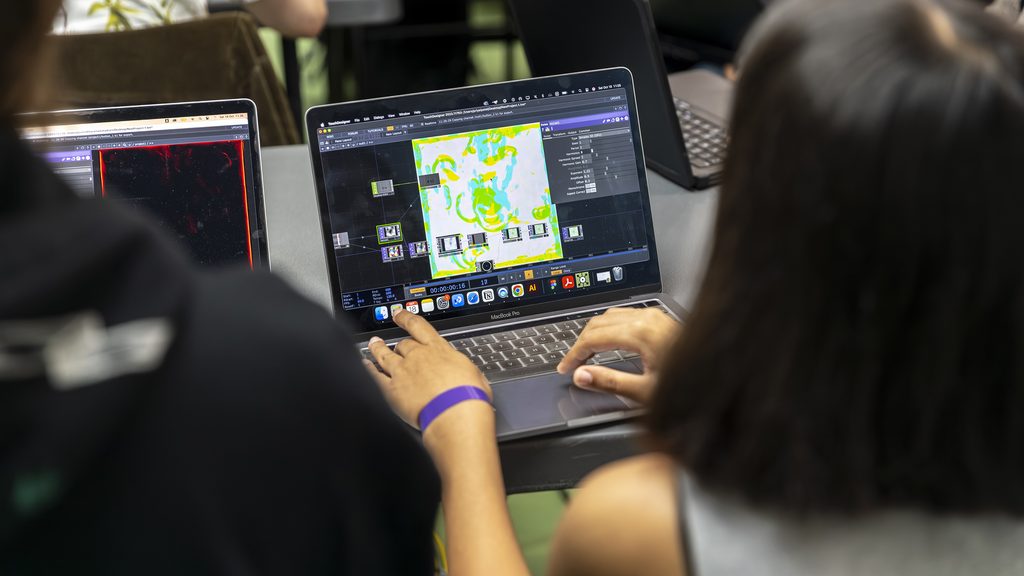
Image Credit: Peckham Digital. peckhamdigital.org
The programme feels wonderfully unruly: slime mould, robots, bonsai, witchcraft, anti-games, XR, live performance and a debate asking What Even is An Art Game? What connects all of this for you? And if someone still thinks “creative computing” means sitting behind a laptop writing code, where would you send them first?
We have always operated with “creative computing” being an umbrella term. Each year the programme is selected with the following question in mind: “Is this pushing the boundaries of what creative computing is and can be?” I am also very interested in looking at how this programme could help expand digital literacy by providing multiple different lenses on computing, or ways computational tools can be used. For someone who thinks “creative computing” is just sitting behind a laptop, I would recommend attending the following:
→ Untitled (Robot Story) by Conscript Theatre – a UK theatre premier that questions: “What do we do when our technology catches up with our fiction?”
→ SLIME CITY: Grow your own algorithmic slime mold anti-surveillance mask using Scaniverse and Blender facilitated by Fran Hayes – merging speculative thinking to anti-surveillance tactics,
→ Automation and Us presented by Lu Wilson – looking into what is automated and what isn’t and why there might be misunderstandings.
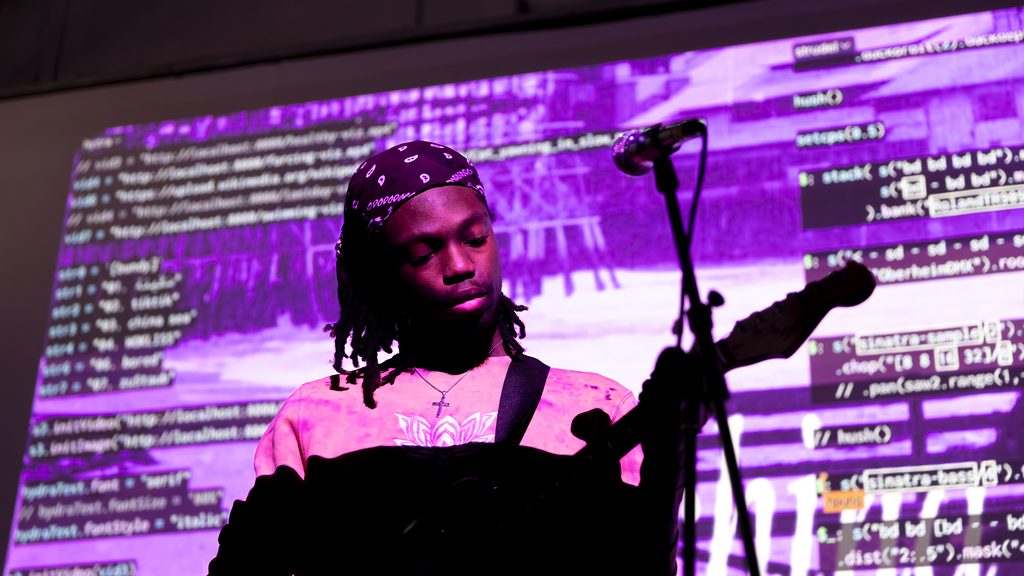
Image Credit: Peckham Digital. peckhamdigital.org
Last time we spoke, you said conversations about AI had become too binary – swinging between “worship and fear”. Looking across this year’s programme, you’re exploring much bigger questions about automation, artificial life, ownership of our tools, representation in XR and our relationship with technology. What do you think artists are able to ask about our digital lives that the mainstream technology conversation isn’t asking?
Artists have the ability to ask important critical questions as part of their practice. To try and reach an answer there are hours of research and going down rabbit holes that provide radical perspectives. Within the context of digital culture, these perspectives provide alternative narratives to that of tech for the optimisation of capitalism.
During my BA, I was reading an essay about the disappearance of “however paragraphs” in journalism. I feel like the disappearance of these methods of presenting two contrasting but complimentary perspectives has put us in a position where we only think in binary terms of right and wrong. This polarisation is destabilising, as it means that we are stuck in our ways and thoughts. We either use ChatGPT without considering the consequences because “we are keeping up with the current times and trends,” or we exist in a state of doom that the datacentres that keep these models alive will kill us all. Neither of these states provides for critical ground to ask how we want this technology to be used, or what legislation we want in place. This is where art plays a key part as it allows us to demystify tech being only for people with computer science degrees.
At Peckham Digital, we are not saying tech is good or bad. We present audiences with the tools to develop their own understanding. Providing a platform of how artists are reimaging new pathways for us to use as roadmaps. Allowing audience members to decide if they want to become subscribes of proprietary software or feel empowered by open-source practices. Essentially to create a community that supports one another in quite a complex digital landscape.
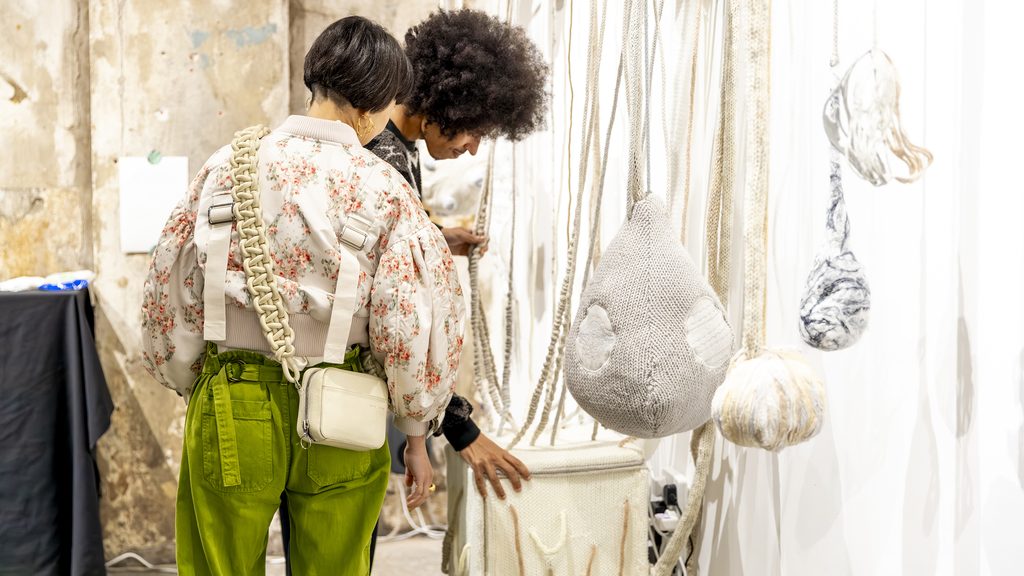
Image Credit: Peckham Digital. peckhamdigital.org
Between Peckham Digital, the podcast and your London Digital Art Map, you’re documenting a scene as well as participating in it. Who or what is making London’s digital-art culture particularly exciting to you right now – perhaps an artist, collective, space or movement our readers should know about – and what does the scene still need more of?
London’s current computational art ecosystem is very varied but also very sparse. Larger institutions already have archival practices in place to ensure the important work they are doing is not lost. However, smaller grassroots organisations often do not have the same capacity. Both Artists and Computer podcast and London Digital Art Map function as a “photograph” of the current landscape. I hope that this capture provides both a route map for people starting in the field today and for researchers in the future who might be able to find some use in understanding what the scene is like.
To return to the question of what is making London’s digital art culture exciting, it is the appetite for collaboration and the opportunities that are opening up across the sector. In just the last three years, we have seen significant investment and recognition across the sector. The V&A launched its biennial Digital Art Season in 2024, arebyte moved into a larger and more central home in 2025, and Somerset House launched n-Space. This year, Serpentine Arts Technologies introduced its R&D fellowship and Southbank Centre expanded its commitment to the field through Creative Intelligence. Alongside this, Arts Council England’s recognition of Digital Arts as an artform marks an important shift, signalling that the sector is no longer operating at the margins but is becoming an established part of the UK’s cultural landscape.
I am particularly excited by organisations and collectives that are creating new pathways into the field. MOTH is developing quantum computing tools for artists, V Buckenham has recently released Picodevil a free and open source browser-based tool for livecoding visuals and the London Live Coding group provide the most inclusive access point for folks who want to learn how to make music with code.
What the scene still needs more of is sustainable infrastructure. There is no shortage of talented artists, curators or organisers, but access to affordable long-term space remains a challenge. More permanent resources would allow organisations to focus less on survival and more on supporting artists, taking risks and building lasting communities.
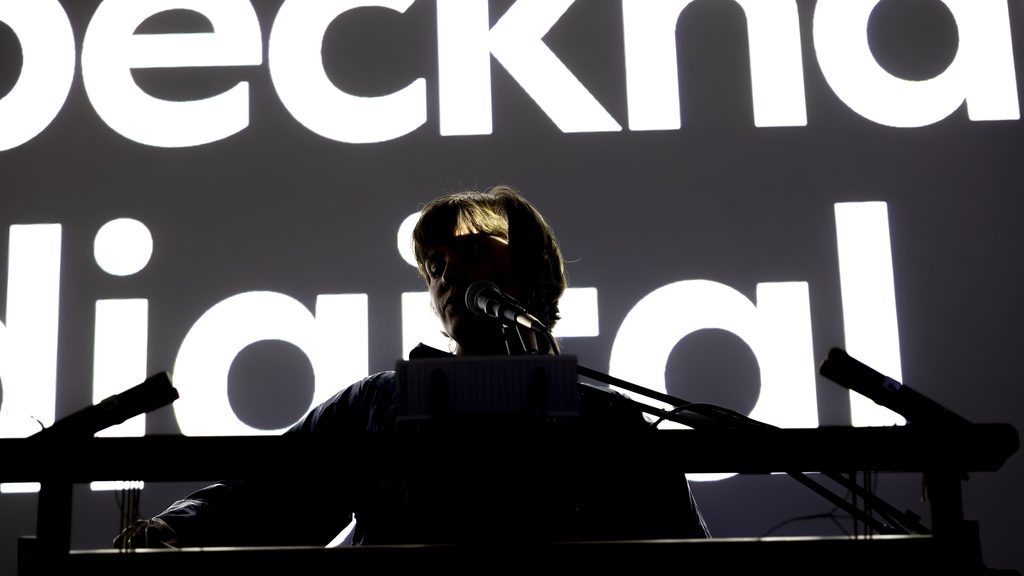
Image Credit: Peckham Digital. peckhamdigital.org
Run Riot always asks our guests to share a few cultural recommendations. If you were introducing someone to the London that inspires you, which three galleries, venues, creative spaces or neighbourhoods would you send them to – and what makes each one so special through your eyes?
Permacomputing Club is a weekly meetup where you can “share your skills, explore regenerative and low tech computing, and practice hands-on maintenance and repair”. I am a big fan of Permacomputing as it brings permaculture practices within computing as a ways to provide solutions to Big Tech problems.
London Community Laptop Orchestra is a space for everyone who is interested in making sound with their laptops. They practice guerilla performances in various London institutions and actively break down the stereotype that sound art spaces are exclusionary.
London Pattern Club brings together coding, knitting and weaving practices to explore algorithmic art. They provide workshops and for the month of August are running a summer school which I would highly recommend attending.
Find Bea at bats1996.github.io and @bats1996
Peckham Digital Festival Of Creative Computing 2026: The 5th Takeover
22–25 October
Copeland Gallery and The Hub
Info & Tickets → peckhamdigital.org @peckhamdigital