
Rosie Wilby on Conversations We Should’ve Had, Queer Identity, Comedy, Heartbreak and the Power of Difficult Chats
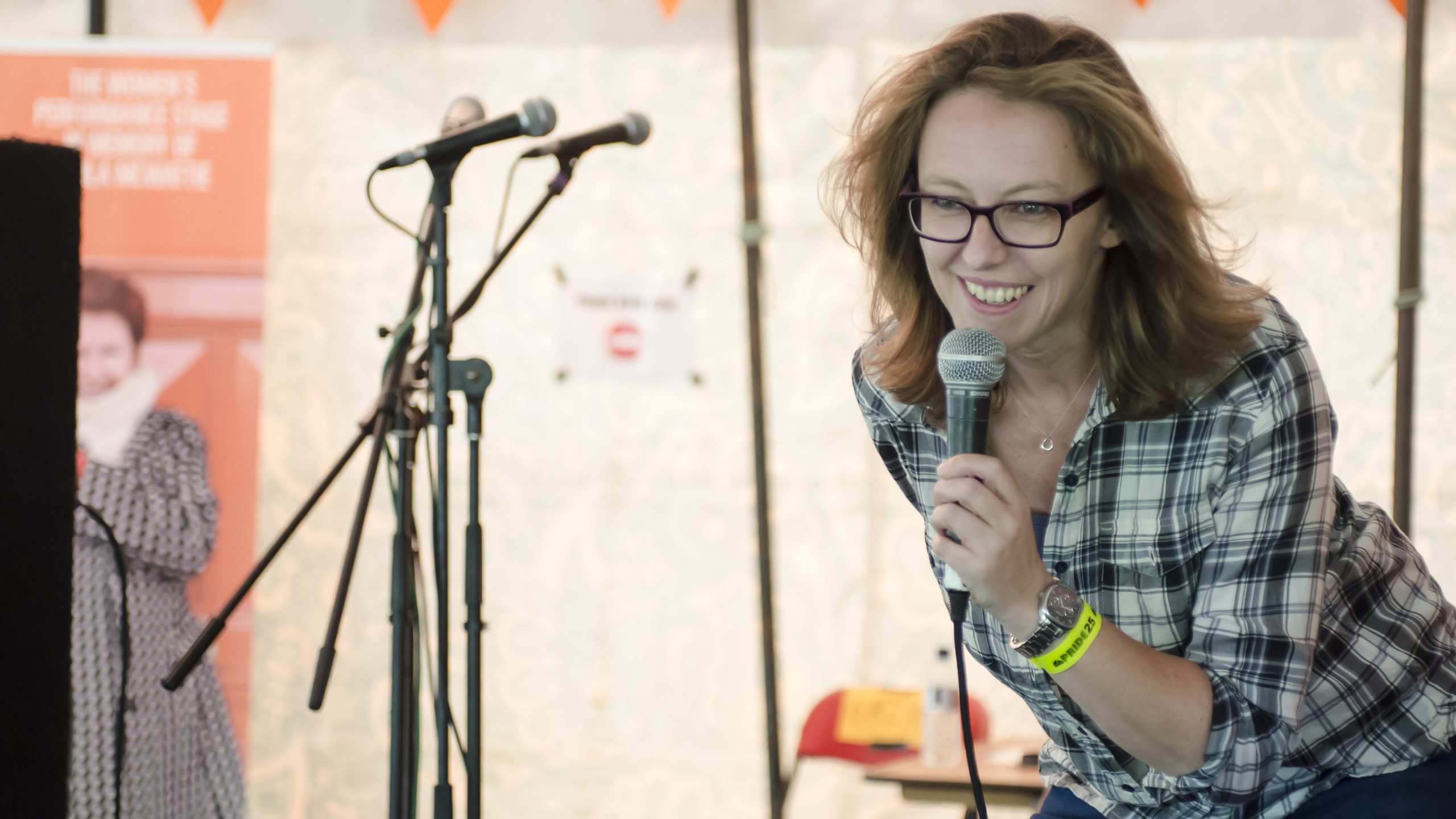
Image Credit: Photograph of Rosie Wilby performing at a Comedy Event.
Award-winning comedian, author, broadcaster and self-described “recovering comedian” Rosie Wilby has spent much of her creative life exploring the fragile, funny and often deeply complicated ways humans connect with one another. Long before podcast culture turned emotional honesty into a mainstream currency, Rosie was already weaving together comedy, music journalism, queer storytelling, psychology and memoir into a body of work that feels uniquely her own. Growing up gay during the deeply homophobic climate of 1980s Britain, creativity became both refuge and release — from writing songs and forming bands as a teenager to crafting comedy sketches and eventually building a career from asking difficult emotional questions with warmth, wit and curiosity.
Her latest live show, Conversations We Should’ve Had, may be her most vulnerable work yet. Part comedy set, part autofiction, part emotional excavation, the show explores trauma, identity, language and the lingering ache of conversations left unresolved. Inspired by real experiences of homophobia, sexism and emotional miscommunication within both comedy and queer culture, Rosie interrogates how words can heal, wound, connect and erase us — and what happens when the conversations we desperately need never quite arrive.
When she’s not writing, podcasting or performing, Rosie finds comfort and inspiration in London spaces that reflect her world: the gloriously camp intimacy of The Poodle Club in Sydenham, the restorative calm of Brockwell Park and its Lido, and the shelves of indie bookshop Libreria in East London.
Read on for our full conversation with Rosie — then go and experience Conversations We Should’ve Had live at Omnibus Theatre, Clapham on 3 June.
You’ve moved fluidly between music journalism, broadcasting, singing, comedy, writing and podcasting – long before the modern “multi-hyphenate” thing became fashionable. Looking back to your childhood and teenage years, what were the earliest moments that made you realise creativity could become both your calling and your graft?
Yes I have done a lot of different things! I was always creating cartoon characters as a young child, then writing songs and forming bands as a teenager and later writing comedy sketches for school entertainment evenings. I think growing up gay during the 1980s, a horribly homophobic time in the U.K., made me very aware of feeling different. And any child who feels different seeks out ways to express themselves and feel seen. If I could get up onstage at school and be funny or sing a cool song, I temporarily felt I had some agency.
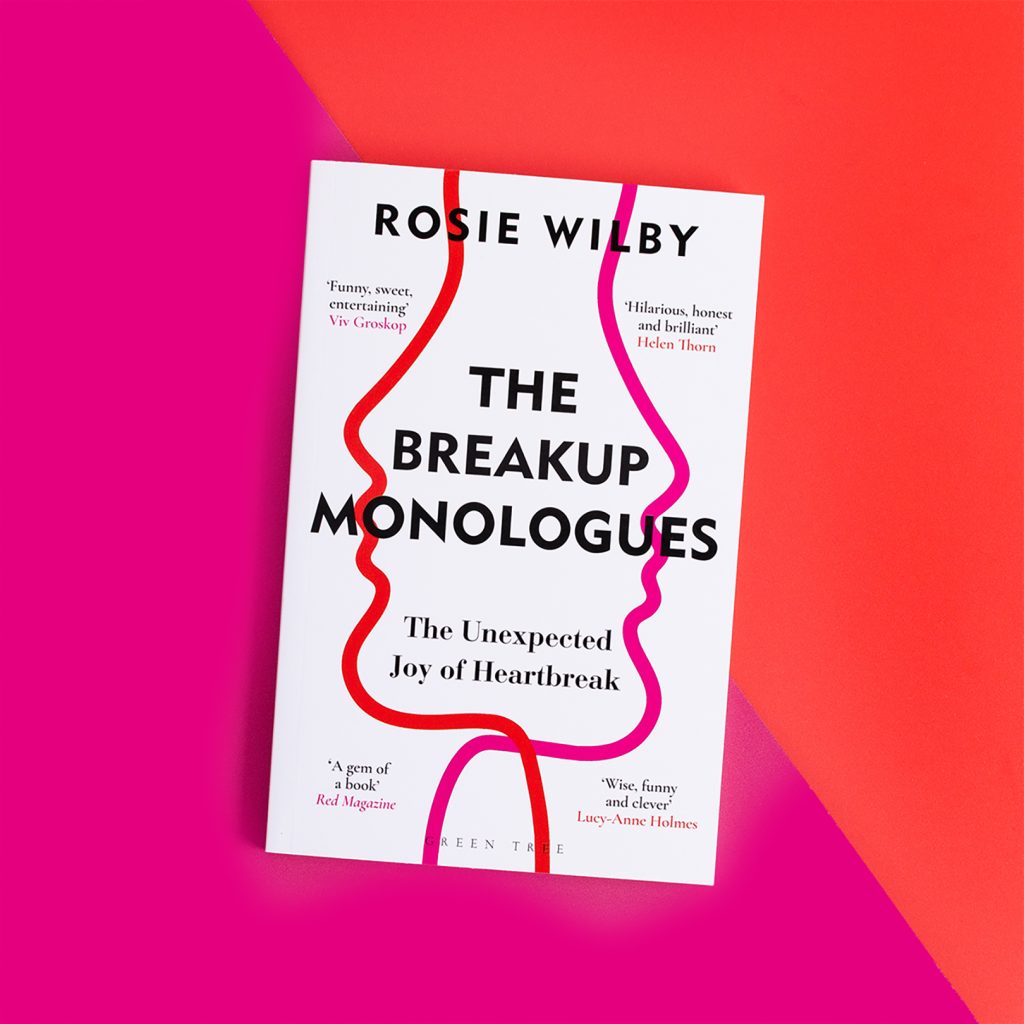
Image Credit: The Breakup Monologues by Rosie Wilby – available in all good bookshops → uk.bookshop.org
Your new show Conversations We Should’ve Had feels deeply personal, but also politically and culturally resonant – especially in a moment where the comedy world is being challenged to confront misogyny, homophobia and audience behaviour. What made you decide that now was finally the time to tell this story publicly?
It’s only now that the conversation about misogyny in comedy has opened up more and is being taken seriously in parliament that I’ve really reflected on how much I had minimised the experiences I’d had – particularly one serious incident where a guy in the audience actually followed me home and started to attack me (it stopped when he was spooked by a noise). And I think it feels particularly important to speak up about how my experiences felt especially toxic because the sexism always went hand in hand with homophobia and men completely disrespecting and erasing my sexuality. I don’t know how many times I’ve heard the words, ‘but you’re not really a lesbian are you?’ Something about this combination felt even more painful and personal – like it was targeted at me for speaking this vulnerable truth. Coming out had been hard enough. Now living as a lesbian was proving deeply dangerous too.
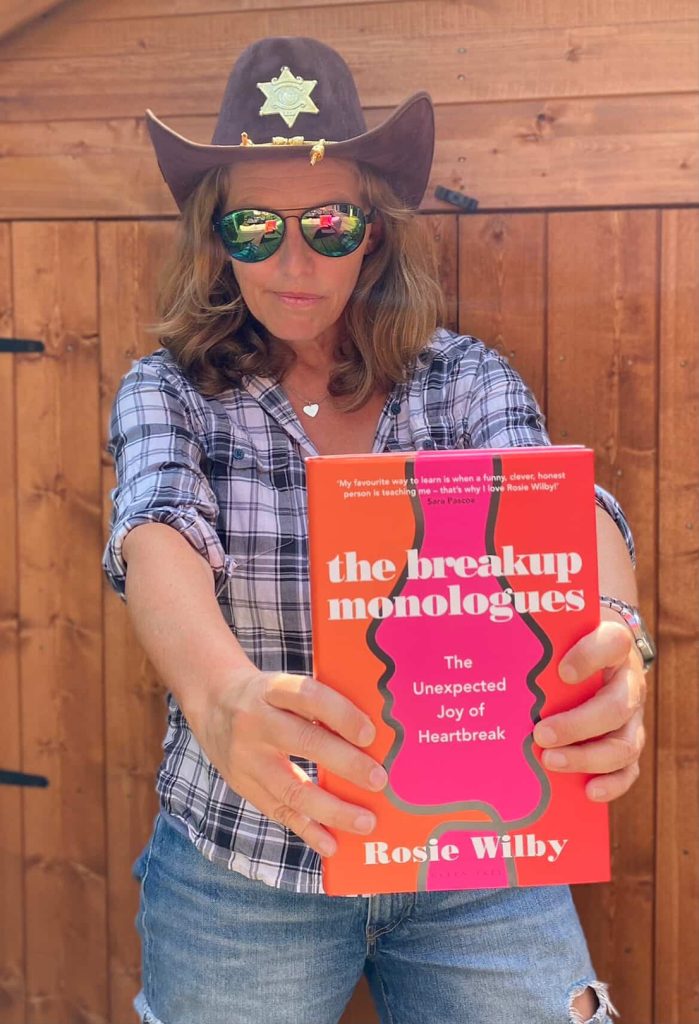
Image Credit: Rosie holding a copy of The Breakup Monologues.
One of the most striking ideas in the show is your exploration of language – how words can heal, wound, connect or isolate us. You’ve said the work is “all about how words matter.” Has writing this show and novel changed the way you communicate in your own relationships and creative life?
I have had to think very deeply both about my own use of language and my responses to the language that other people use. The lingering trauma from the past attack only really hit home and came to the surface when I briefly dated a fellow female comedian. She was bisexual, had predominantly dated men and had a completely different history and perspective on identity to mine. Sometimes it felt a bit like dating in a foreign language because we had such a different set of cultural expectations. But I so desperately wanted to get it right. I thought she was awesome. And it was the first time I’d felt reawakened since the attack. I was alive again after an incredibly vulnerable part of me had been dead for a long time.
When our fling fizzled out I just assumed we would stay close friends. This was all I’d ever known in the queer community. But then when she used some language in her set and on social media that I found upsetting, I tried to carefully and compassionately message her about it to ask if we could chat it through over coffee. I wanted to better understand where she was coming from. And I hoped that by sharing some of my past trauma with her, she might better understand where I was coming from. It’s not that her material was inherently wrong in any way. I don’t get to decide that. But I just thought, given our history of working together, briefly dating, then becoming friends, it would be a conversation worth having. She was somebody important to me. And I suppose that her rejection of my request for a conversation actually compounded my sense of hurt and erasure. Although it wouldn’t have been her intention, it felt like everything I’d been through was being dismissed.
There’s a fascinating tension in the work between truth and fiction, memoir and performance. As someone who’s spent years turning emotional experiences into comedy, podcasts and books – how do you personally navigate the line between catharsis, storytelling and self-protection?
This is such a fascinating and complex question. Even when we write nonfiction, the ‘truth’ we present is subjective. The writer chooses which memories to include and which to leave out. And a narrative is shaped. My novel is autofiction, as in it takes inspiration from some real-life events and then draws on a greater degree of artistic licence than nonfiction would, in theory, allow. The comedy show about the process of writing the novel gives me a vehicle for the ‘truth’ of why I’ve had to create this story and a way to explore my responsibilities as a writer. I love the meta nature of a comedian doing comedy about writing a novel about being a comedian.
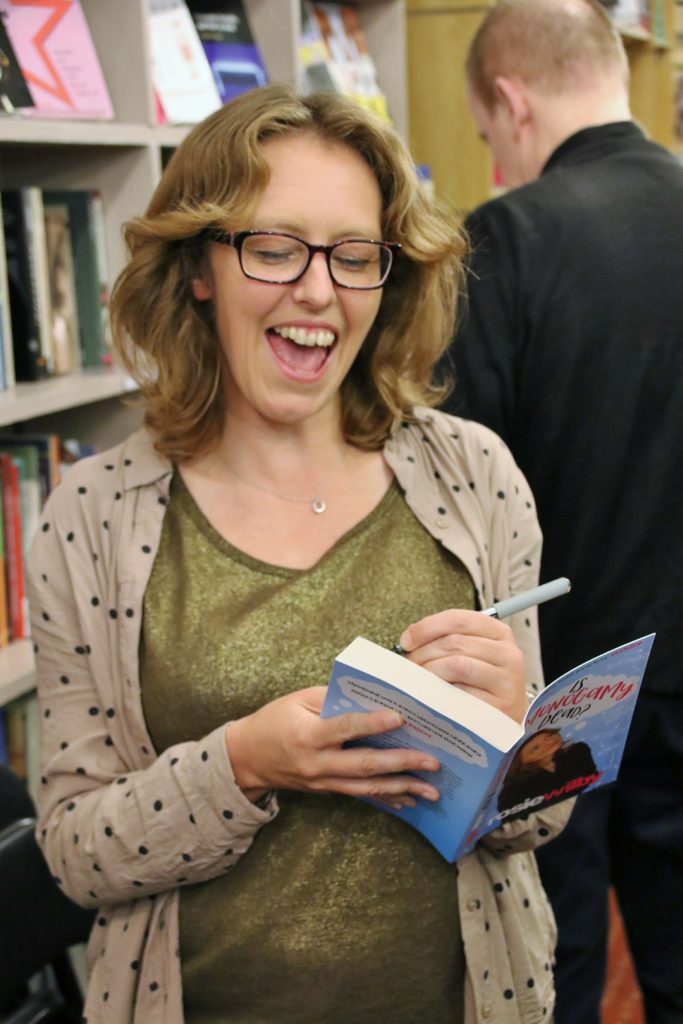
Image Credit: Rosie at a book signing event for her debut book, Is Monogamy Dead?
The title Conversations We Should’ve Had instantly taps into something universal – those unresolved moments, missed emotional connections and things left unsaid. In the age of therapy language, ghosting, DMs and hyper-digital communication, do you think we’re actually getting better or worse at having honest conversations with each other?
Face to face conversation has been replaced in large part, as you say, by digital communication. So we are losing a lot of the nuance – body language, tone of voice and so on. I believe we are becoming harder and more ruthless as a society and fear that behaviours like ghosting allow us to avoid difficult conversations and not do the necessary emotional work. That said, you can’t force someone to have a conversation they don’t feel able to have. I was desperate to have a conversation with my colleague because she had been so incredibly important to me. And she must have thought I was being very intense and weird by requesting it so passionately in long messages I’d spent hours composing. I hope one day we do have that conversation. But I also realise it’s just not nearly as important to her as it is to me.
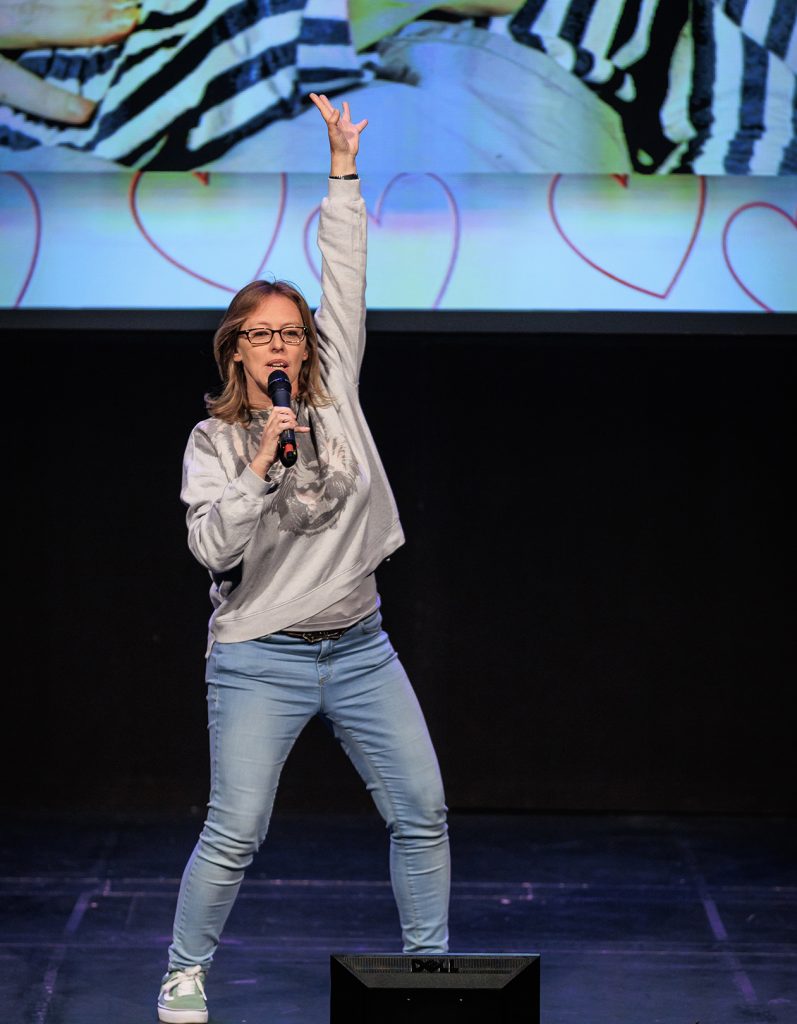
Image Credit: Photo of Rosie onstage, doing her thing.
We know you’ve mentored fellow writer and comedian Liz Bentley. Mentorship can be such a powerful thing in creative industries – especially for people finding their confidence or voice. What has supporting and encouraging other creatives meant to you personally, and did you have people who played a similar role in your own journey?
I absolutely loved mentoring Liz, during the early stages of writing her memoir The Suicidal Therapist. I’d gigged with Liz many times and had a good sense of her creative voice and spirit. So I hope that my advice on structure and language showed real respect for her authentic voice combined with that more pragmatic outside eye. I’ve had a few wonderful periods of being mentored here and there as part of specific projects, grants and courses over the years. But am looking for that very special person who really gets the sound of this current project about language, identity, homophobia, compassion, creativity and heart. If there’s someone out there who can help me get this show on tour and this book published, I want to hear from them!
Finally – please recommend three of your favourite cultural places, communities or recurring happenings in London. They could be venues, bookstores, queer spaces, comedy nights, cafés, parks, institutions or hidden corners of the city. What makes them special to you?
My first recommendation is The Poodle Club, an inclusive and intimate comedy club in Sydenham. It has campy decor and toilets with Elvis and Liberace themes, a super friendly hostess and, of course, a resident poodle. Fans of the venue may recognise some aspects of The Poodle Club in the fictional comedy club Fancy Pants which appears in my novel. I couldn’t possibly comment.
Another favourite London space is Brockwell Park. I lived nearby while writing my first book Is Monogamy Dead? In it, I describe experiencing a transformative moment of hope while noticing the beauty of some golden Autumn leaves trapped in the fencing around the tennis courts, each one hanging there, glinting in the morning sun like trophies of old past love, still something to be celebrated. Hardly Wordsworth’s daffodils. But, still, it was something. It’s no accident that the protagonist in my novel, Lou, also lives near Brockwell Park and thinks of it as her safe space, in particular the Lido.
I love all of London’s indie bookshops. But a special mention just now goes to Libreria, who recently invited me to interview Michelle Tea for them, an event which took place on the gorgeous rooftop at Second Home across the road from the shop. Libreria should still have some signed copies of my book The Breakup Monologues available, along with lots of other great stuff like Michelle Tea.
Find Rosie Wilby at rosiewilby.com and on Insta @breakupmonologues
Buy Rosie’s book, The Breakup Monologues from all good bookshops → uk.bookshop.org
See Rosie IRL →
Conversations We Should Have Had
Omnibus Theatre
1 Clapham Common Northside
London SW4 0QW
Wednesday 3 June, 7pm (dur. 50min)
Tickets and info → omnibus-clapham.org
