

Nandita Shankardass on Dance, Belonging, Welcome Movement® and Finding Your Way Back to Self
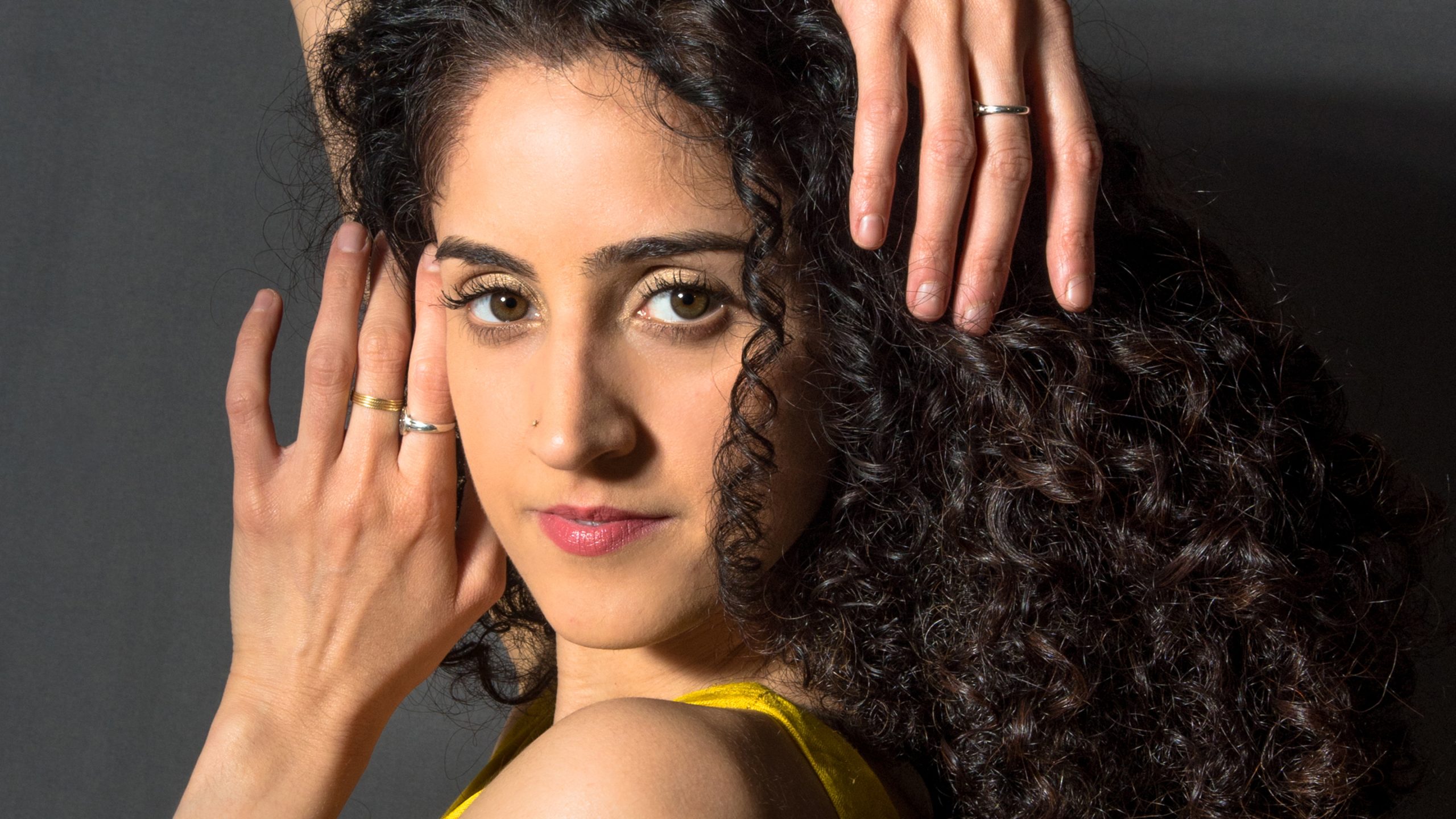
Image Credit: Nandita Shankardass photographed by Pierre Tappon. @tappon.photography
Born in London to parents of Indian heritage, Nandita Shankardass discovered movement early – first through ballet classes in North London, then through music, painting, poetry and the quiet instinct to create. From training at The Royal Ballet School to performing with world-renowned ballet companies across Europe, her path has been both groundbreaking and deeply personal: one of the first women of Indian heritage to forge a professional career in ballet and contemporary dance while continually questioning what it means to truly belong – in the industry, in the body, and within oneself.
Today, Nandita’s practice feels expansive and beautifully holistic. Through choreography, facilitation, teaching, design and her platform Welcome Movement®, she creates spaces for people to reconnect with themselves through movement, creativity and collective experience. As she tells Run Riot: “Returning to the ‘self’ time and time again and understanding my nature encouraged me to value belonging to myself first.”
That spirit flows through everything she does – from the outdoor dance work Roots to Rise to workshops with communities, students and professional artists alike. There’s a grounded generosity to her work: an invitation to slow down, listen inwardly and move with greater intention.
When she’s not creating, you’ll likely find her wandering Hampstead Heath, reading at Wellcome Collection, or sketching and soaking up the atmosphere at OmVed Gardens.
Read on for a conversation about identity, intuition, creative evolution, community, and learning how to move through the world – softly, honestly and fully alive.
Your story begins with a kind of inheritance – your mother being denied dance, your father immersed in music – but what’s something from those early years that isn’t in the official version of your story, and only revealed itself much later in how you move or create?
In my childhood, I remember enjoying time alone to focus on one craft and getting into all its details, whether that was dancing, painting, learning music or crafting. During those moments of being absorbed in an activity of making art, the feeling was deeply meditative.
The comfort of what felt safe when creating in childhood needed to find a balance with sharing creativity with others to broaden my mind and challenge my perspectives. When these moments became more frequent in my dance training and during my career, I began to appreciate that creating art with company and in community was just as fulfilling and a spiralling evolution of the act of experiencing it alone.
Performing, once I became a professional, was initially nerve-racking, till I could reach that place within myself of feeling like I did as that child immersed in a creative act, as if no one was watching. It became apparent that movement was essentially an outlet for my expression. In honouring this, and when the work has a purpose and message you can embody and connect with, any sense of performance and nerves fade into the background. This is my inner compass to align with environments and work which resonate with me and bring me back to those first primal, instinctive connections – expressing through movement with music and the joy in making. I recognise the blessing of how dance has been the best way for me to get to know myself and connect with others.
Tuning into the self and into collective discovery and joy with community feels like a breath, the inhale and exhale of living in the world. The power of the collective has been steadily revealing itself to me at every stage of my life and has been a welcome and necessary power in my development as an artist and as a person. In co-creation, collaboration and exchange, we can feel the magic of what unfolds in shared spaces, and the relief in not having to hold it all on your own.
I began to recognise the power of my cultural inheritance, born into a South Asian family within the U.K. diaspora. As I learnt to accept myself, I found myself returning to explore Indian rituals and practices in my own way. Our cultural practices encourage you to sit and be with yourself, attuning with mind, body and soul, which supports me to both ground and elevate, not only as a dance artist and maker, but in many dimensions of my life.
Creating movement is not always inspired by the forms and techniques I have trained in, but through what still lives in me and in the people I work with. I often wonder if what transpires in movement is carried over from previous lifetimes, or energetically inherited by ancestors, whose voices come through us. I believe this could be true of many artists’ journeys across all art forms, music, art, and the beauty and mystery of manifesting what lies within.
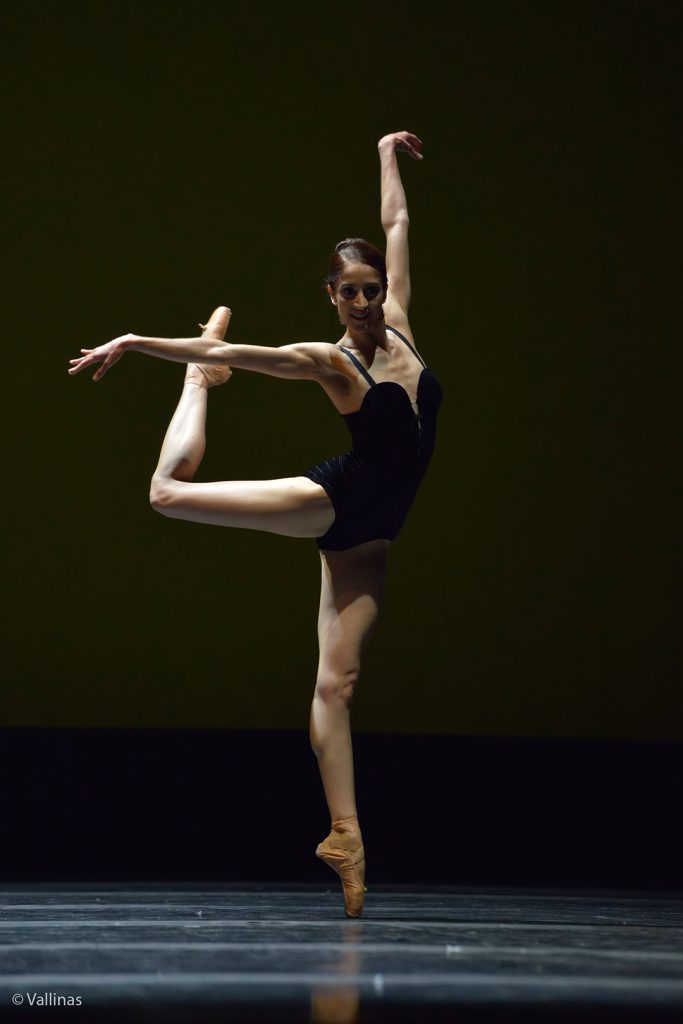
Image Credit: Nandita Shankardass photographed by Jesus Vallinas. @jesusvallinas
You were one of the first women of Indian heritage to train at The Royal Ballet School and go on to dance with major companies across Europe. Looking back, how did that shape your sense of belonging – both inside the industry, and within your own body?
As a student and young adult, I was trying to make sense of my British and South Asian cultural identity within predominantly white environments. It felt, again, like something I instinctively wanted to figure out, whilst as a young person I also desired to fit in.
My teens marked a return to private ritual, carving out solitude not as withdrawal, but as a way to recalibrate. Retreat became a space to reconnect with myself and explore ballet not just as a formal technique, but as something deeply personal, shifting from external instruction toward embodied authorship. Technique became less about replication and more about translation, through my own physicality and inner world. Where movement accompanies you as a reflection and evolves from practice into personal expression, it was essential to keep listening to my body during my career, when it wanted to move more intuitively and in contemporary ways. Returning to self, is what kept me going.
Once I graduated and landed my first job, I was moving through my career as an anomaly, no one in my community or family pursued the arts professionally, let alone in dance. Embracing my identity became something I consciously reckoned with, where excitement, joy and grace followed, in being who I am. There was a sense of freedom in the unknown, in not following in anyone’s footsteps to forge my own path, of not dwelling on feeling different in the spaces I found myself in and staying focused on the craft. When I became a freelancer and began connecting and collaborating with the community of South Asian Artists here in the U.K, belonging felt like coming home. In all the spaces I’ve had the privilege of training and working with other artists, belonging has been generated through the shared love for the art forms and the challenges we face and support each other through. Camaraderie, solidarity and friendships are what I look back on most fondly and with deep gratitude.
Without a blueprint for the trajectory of being a South Asian female in ballet as a performer and creative, I did feel a need to prove myself in order to belong. This didn’t always keep me in alignment with myself, and injuries occurred when I had lost a sense of direction and purpose.
One can recognise that in chasing belonging in the industry, you may no longer belong to yourself. The lessons arrived in not accepting unhealthy sacrifice, but choosing what makes sense holistically – what literally invigorates your senses, what feels organic, generative and sustainable.
Returning to the ‘self’ time and time again and understanding my nature encouraged me to value belonging to myself first and show up to share what I love as I am, belonging within the industry was then of less consequence.
Cultivating this sense of belonging to self and agency is something I am passionate about supporting and empowering within the South Asian artistic community. I’ve been envisioning and planning this next step… Watch this space!
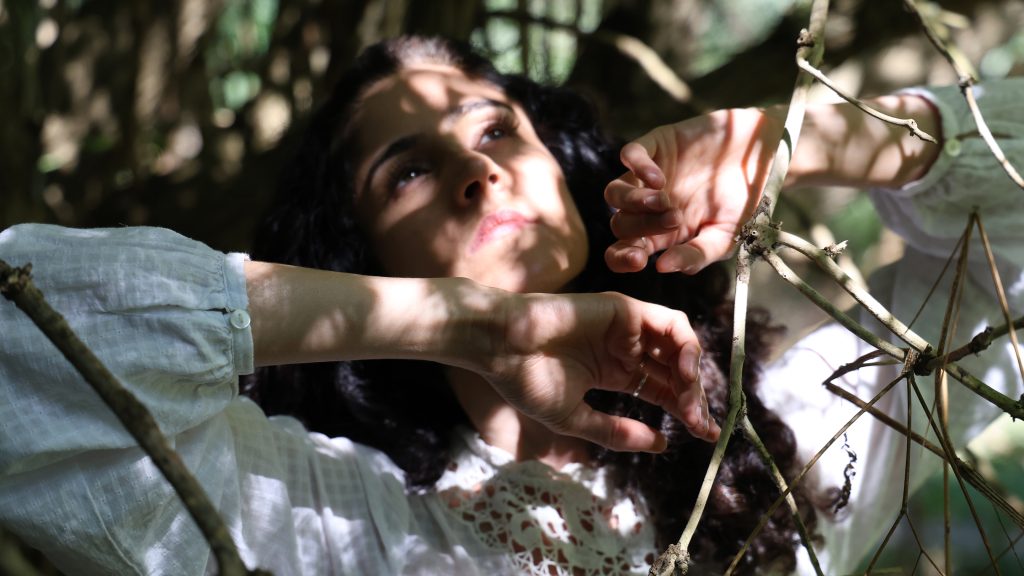
Image Credit: Nandita Shankardass photographed by Thom Seaman. @thom76a
During the pandemic, many artists turned inward – some through structured practices like The Artist’s Way, others in more instinctive ways. Did that period shift how you listen to your creative voice – or how you trust it?
The most instinctive move for me was to go outside, firstly to our garden and then to green spaces. The turning inwards happened for me here in quieter outside moments, in flux with moments at home, writing, painting, cooking and baking too! It brought me back into my feminine energy, which I found I had lost a little in being a freelancer in a city like London.
A grounding happened, which took me back to the soil, the trees, the grass. I began moving outside instead of indoors and connected with a way of moving I had not fully embraced before. I accepted gravity, without a pressured sense of time and performance and productivity that can keep you on your toes and in a repetitive loop of movement style stimulated by the overwhelm of a busy city, moving on autopilot. It was a period of deep listening to intuition, inspired by nature and reconnecting with my own.
My time flowed between time alone and with community online, in meeting global souls to move through The Artists Way together and teaching my students. As we emerged, the challenge was balancing residual online presence at home with resuming activity out in the world. I reconsidered how I could balance being quiet enough to listen to myself and be inspired to be back in the world in new ways.
Trusting my creativity came with much less influence and stimulation, letting go of what either didn’t really belong to me or resonate enough to stick. I realised planning and preparation would take me only to a certain point, and found trust in becoming present to the moment.
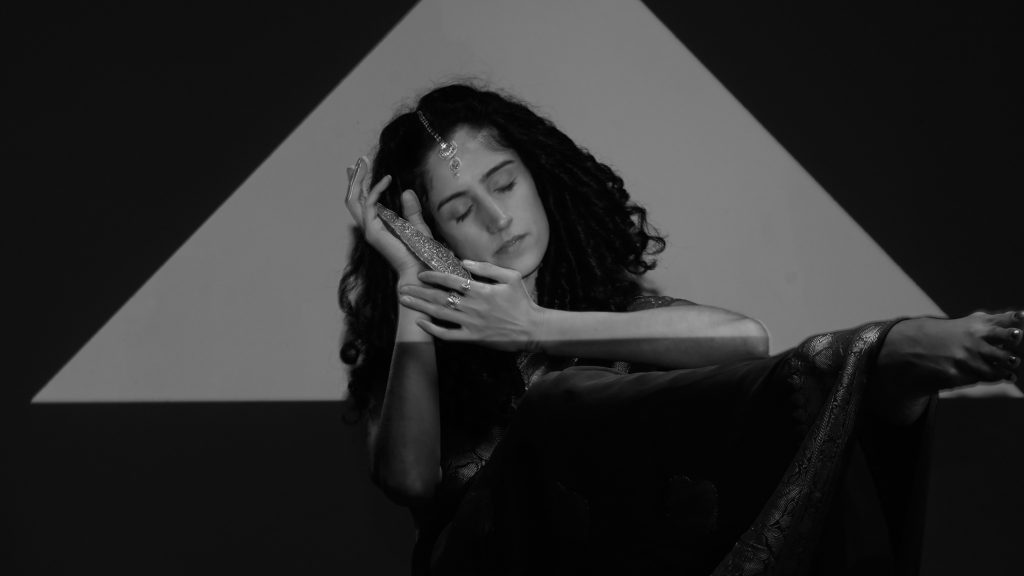
Image Credit: Nandita Shankardass photographed by Ravi Chandarana. ravichandarana.com @ravi.chandarana
You founded Welcome Movement® during a time when people were physically apart, yet craving connection. What need were you really responding to – and how has that idea evolved now that we’re back in shared spaces?
There was a sudden void in our lives and social calendars, which propelled a recalibration of the patterns/structures and routines we had created for ourselves. This welcome break, also felt like we were entering a cocoon to reevaluate and find a way to belong to ourselves again first! What will stay, what needs to go, a refining process and where possible, space and time to create what we could with less distraction. Welcome Movement®️ came in these moments to offer experiences to support wellbeing, stimulate creativity and empower freedom of expression through movement, dance and meditative ideas.
Lockdown created space for this tuning in to reconnect to ourselves at home in a more intimate setting without distraction. I feel that distancing was not all bad. It allowed us to go deeper within, to access our own inherent resources. I could notice and sense through the screen how much more focused my students were without a studio mirror and many people around them to compare themselves with whilst learning.
Coming back to shared spaces, I feel this awareness of self was heightened, and we had a deeper respect for sharing space with others. Now we have more optionality in how we choose to engage, online or in person. These options work well for me to find a balance between periods of research, distillation and clarity in the early parts of a creative process and being in shared spaces with others to collaborate and work collectively.
Film Credit: Trailer for Roots to Rise by Nandita Shankardass. nanditashankardass.com
With Roots to Rise, you’re taking dance out of the theatre and into public space – inviting audiences to experience it differently. What does being outdoors unlock for you that a traditional stage never could?
I enjoy performing and creating for both indoor and outdoor spaces, they bring about different approaches to creative thinking in making and sensation in performance.
Indoor traditional stages offer a certain level of intimacy which feel contained and sacred. The intimacy and closeness you find outdoors is much more visceral, where without walls, artists and audience feel like they are in a creative act together.
The focus shifts, the audience is privy to every movement of the show and vice versa. The experience feels heightened on both sides, and the collective energy that builds is simultaneously being diffused into a more infinite space. It feels more fleeting and precious, in conversation with the environment and absorbed by it too. The space is entered into and held differently in both spaces. In the outdoors, the vibrations of the experience fly into the air, in indoor spaces, it reverberates. Outdoors, there is no lighting, wings or backstage to hide or rest behind, and there is a rawness in this exposure.
Taking up space in the outdoors with Roots to Rise, and leaving the security of the indoors behind, the themes of the work met and merged with the nature of our surroundings, the dynamics of the elements, and the energy of our audiences. Here, we experienced the co-creative energy which the outdoors offers and the unfolding of a new entity in each place on our tour. Being outdoors offered us an immediate and accessible way to explore, we could invite and engage with audiences, with no barriers to join us in the performance space. In just a moment, audiences were by our side in movement. On the road with Roots to Rise I succumbed to spontaneous decision-making and embracing that which you can’t control in the outdoors.
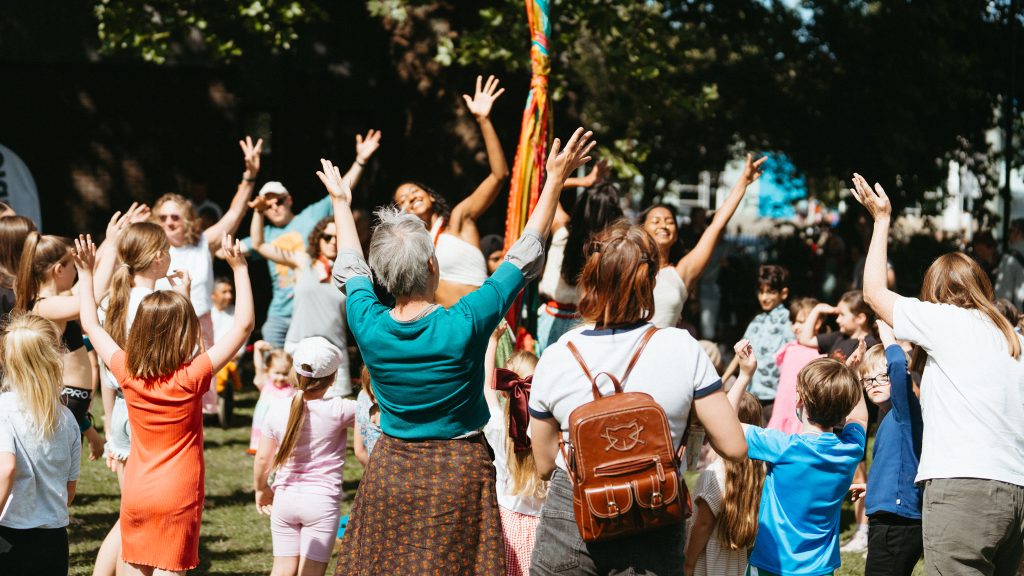
Image Credit: Roots to Rise, in Stockton, UK.
Your freelance teaching and choreographic practice and consultancy work spans collaborating with Rambert, English National Ballet, Royal Ballet & Opera, Akademi and Central School of Ballet in their learning and participation work, and your independent work with public and community spaces and beyond. What have your students – or participants – taught you that you didn’t learn during your years as a professional dancer?
With teaching and in facilitating space for others to explore, I’m drawn to the opportunity to create conversation and collaboration in these shared spaces.
Teaching brings a deeper layer of understanding to whatever you teach. When I was coming back from an injury during my career, my best ballet teacher, Renato Paroni, asked me to cover for his classes with the promise I would dance even better once I started teaching. He was right! Facilitating is another kind of practice, you’re holding space for the room to explore and discover. This practice develops you as a person and seeps into all areas of your life and even in your behaviour towards yourself – to take more time, to listen, to breathe, to wonder.
Both teaching and facilitating remind me of the beauty of continually learning and process, to be in an evolving creative pursuit and not move towards perfection as an end game, means to an end, but to be immersed in the process. Sharing space with participants and students gives me insight into how others process, which offers me a multitude of ways to engage and share information and ideas.
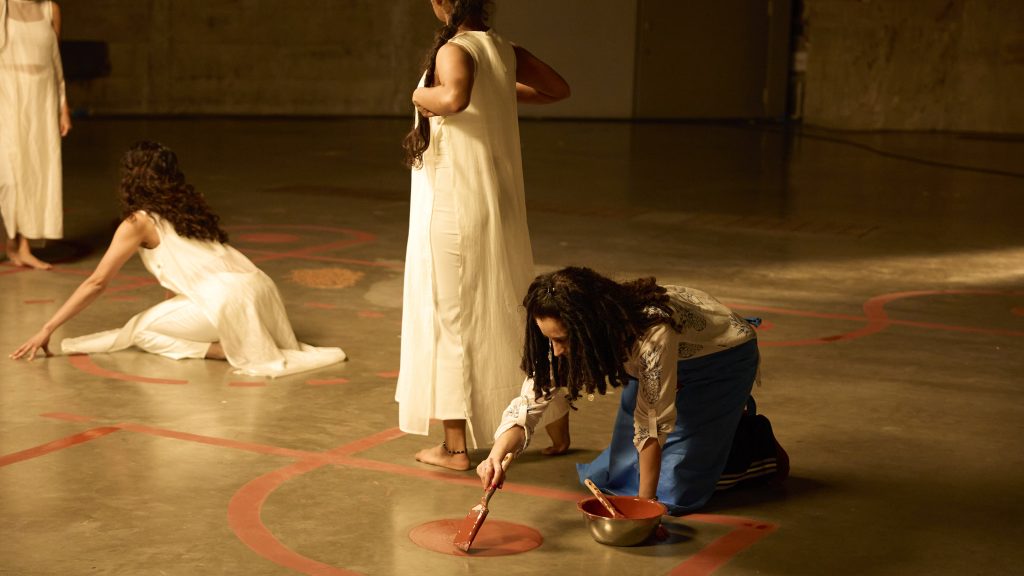
Image Credit: Nandita Shankardass creating set design in collaboration with artist Anjana Bala
You’ve started experimenting/moving into set and stage design, alongside choreography and film. Does that feel like an expansion – or a return to something that was always there in your practice?
These other outlets for my expression are a return and an expansion of my childhood passions! Which now I find I can weave into my artistic practices and collaborations. Multidisciplinary practice shape shifts into interdisciplinary practice where it needs and is invited to, in both facilitation and creative practice
Preparing the set for Roots to Rise between rehearsals and before tours, and immersing myself in painting became a healing and grounding meditation within the project. I would add, brighten and embellish just one more element on this mandala that accompanied us in each performance. This made producing, choreographing and directing sustainable for me.
The next exploration was working on the visual art and set design for an upcoming dance film Labored envisioned by my peer and dear friend Anjana Bala, filmed earlier this year at The Tate Modern.
I never thought when I was a child, focusing on one thing after another, that my artistic practice could become so layered. I am grateful for the experiences to play with these passions across different projects and collaborations.
When you’re not working – no rehearsals, no teaching – where do you go in London to feel inspired, grounded, or just have a really good time? Give us a few ‘culture’ places, spaces or communities you genuinely love.
Hampstead Heath is a gem of London, I will always return to and cherish this wild place, as the best escape within the city.
I love lounging in The Reading Room at The Wellcome Collection and their exhibitions are fabulous.
Life Drawing classes with 2bornot2b Collective that take up space in many cultural spaces across London are a blast!
OmVed Gardens is a hidden oasis and sanctuary in North London, a garden exhibition and learning space, where you can explore a range of activities inspired by and rooted in nature.
Mother Canteen has incredible food and is a super comfy and intimate place to catch up with friends or enjoy alone. They often have markets throughout the year to celebrate cultural highlights of the diverse communities found in the city.
Find Nandita at nanditashankardass.com and on Insta @nandidevi
See Nandtia’s work IRL (for FREE) →
Roots To Rise
Bell Square
Hounslow High Street
Hounslow
London TW3 3HH
Sat 16 May, 1pm & 3pm (35 mins)
Info → bellsquarelondon.com
