

Bishi on Art, Activism & Autonomy: Inside MAYA: The Birth of a Superhero and a Life in Music
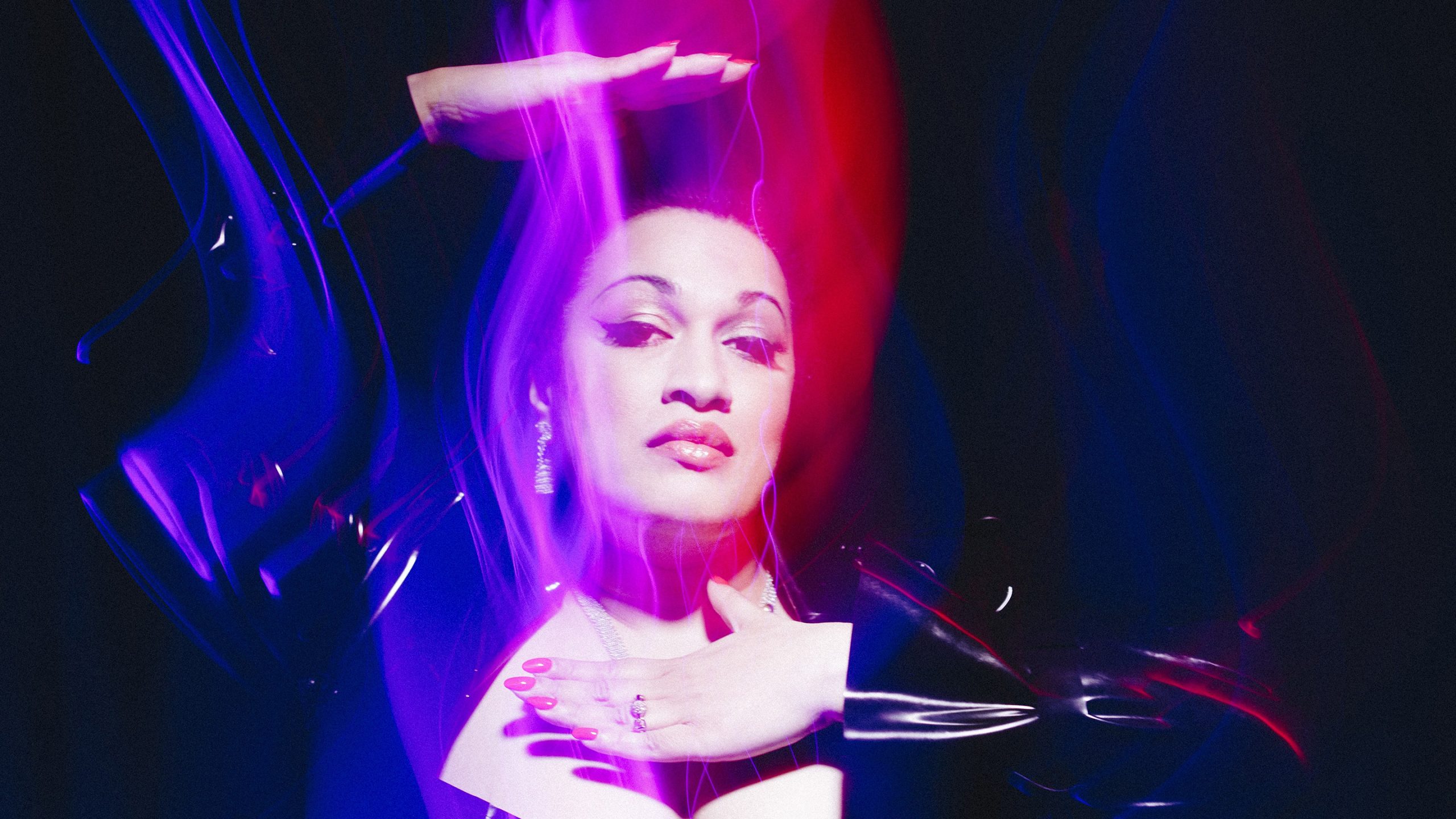
Image Credit: Bishi, photographed by Fiona Garden. fionagarden.com
Let’s just say: if Run Riot was an artists’ collective, we’d definitely want Bishi to be leading the way. This is her fifth interview with us since 2013 (we know, we know), including that iconic moment when our pal Miranda Sawyer declared: “Bishi is Art.” No pressure.
And honestly? It tracks. Bishi is a bona fide legend – an independent artist who’s carved out total creative autonomy through sheer graft, resilience, and an unshakable vision. She’s the kind of artist who doesn’t just make work – she mobilises it. Whether amplifying global movements, shaping conversations around identity and technology, or mentoring the next generation, her practice lives at the intersection of culture and change. As she puts it, creativity is her “mental health practice” – a force threaded through everything she does.
Her latest credentials read like a cultural power map: Artist Advisory Board member at In Place of War, part of Brian Eno’s Hard Art collective, and now lecturing in Global Popular Music at City St George’s, University of London.
We catch up with her ahead of her fourth album, MAYA: The Birth of a Superhero – a powerful original score to an immersive VR film – heading out on tour this June, including Rich Mix. Before that, catch her at Southbank Centre (24 May), performing The Age of Consent alongside an all-star cast.
If you’re not already tuned into Bishi’s world – now’s your moment. Join her mailing list, buy the music, and see her live. Go!
The renowned writer and broadcaster Miranda Sawyer famously wrote “Bishi is Art”. No pressure, right? On a good day, what does this mean to you?
Ha! Miranda is a music journalist hero of mine, so that was a MASSIVE compliment. If I’m really honest, I’m scoring a BBC documentary series and in the full throes of an album campaign. Creativity is the energy that flows in amongst the evolving to-do list, beholden to every DIY musician. I’ve learnt the art of switching into the creative mode very quickly. I think it’s because creativity of any kind is my mental health practice.
MAYA: The Birth of a Superhero sits at the intersection of art, activism and lived experience – exploring menstrual stigma, shame, and the journey toward self-empowerment. Who do you feel this work is really for, and why does telling this story feel important in today’s cultural and political climate?
I think this work is ultimately for people who want reflection in a chaotic world. Our politics are so bitterly divided that art is a great place for reflection and allowing people a communal experience. Interestingly, so is sport. Musically, it can be read on two levels: conceptually and politically. Personally, I feel that as women and gender minorities, we cannot take our bodily and reproductive rights for granted. We cannot take our safety for granted. But if people just want to absorb the music, then that’s fine by me.
Film Credit: Trailer for MAYA: The Birth of a Superhero.
You’re taking MAYA out on a UK tour with immersive visuals, live strings, electronics and community workshops alongside the performances. What can audiences expect from the live experience – and how does performing this score in a shared space transform the story compared to the original VR film?
The original VR film is an immersive experience, where one requires a headset to experience the artwork co-directed by Poulomi Basu and CJ Clarke. My musical live experience is inspired by watching people like The Kronos Quartet collaborating with Phillip Glass, Cornelius, Flying Lotus, Bjork, Imogen Heap, Arca and Rosalia – musicians who invite you to step into their world, at the intersection of music, live art and technology. The musical experience is more abstract. It’s a soundtrack to underpin a narrative but also work in its own right.
Film Credit: Showreel by In Place of War. inplaceofwar.net
You sit on the Artist Advisory Board for In Place of War, working with creative communities in regions shaped by conflict and inequality. From that vantage point, what have you learned about the real-world power of art – and how has it challenged or expanded your own practice, particularly when it comes to balancing aesthetics with impact?
Through sitting on the board of the Featured Artists Coalition and the Artist Advisory Board for In Place of War, I’ve learned that I have a small hand in creating change and how impactful that decision-making can be on musicians and artists in the wider community. Rather than balancing aesthetics, stepping into these decision-making roles feels like a natural step in my own evolution as an artist. I draw from my own experiences, having never been on a traditional record label and knowing what it is to be in the trenches as a DIY musician.
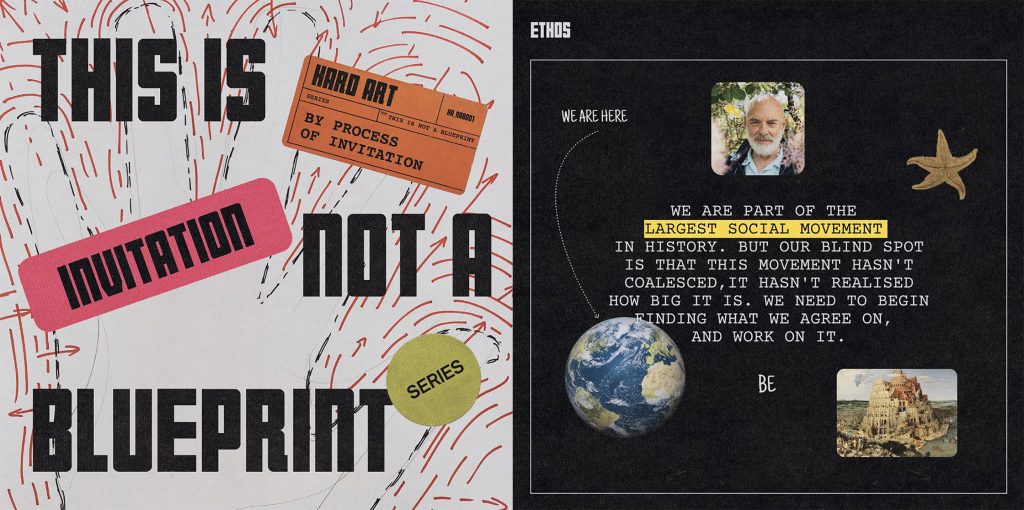
Image Credit: Samples from Brian Eno’s Hard Art collective. hardart.metalabel.com
As a member of Brian Eno’s Hard Art collective, you’re part of a conversation about what art becomes when it can be endlessly reproduced, remixed, and even generated by machines. In that context, what do you think gives a piece of work its value now – and how are you personally rethinking authorship or originality in your own practice?
I’m very interested in art as a generative practice. Several of the genres that are at the core of my work are generative musical forms, for example, North Indian Classical ragas, folk music, choral music and performance art. These are either written down as instructions or passed down orally. I’ve collaborated on an AI choral piece with ila an experimented with AI voice models with Neutone AI, an ethical AI company. Who knows, I may release it at some point? I’ve spoken about AI training & the legal need to remunerate the artists whose work is being used to train AI.
Being able to spend time with Brian Eno and Hard Art has been a powerful synthesis of activism, collective change and creativity as something free flowing and unfussy, which has been deeply liberating.
You recently said ‘The Diva and the Nerd finally unite’ when announcing that you’ll be teaching Global Popular Music at City St George’s, University of London – working directly with the next generation of artists and thinkers. What does “giving back” look like to you in that context, and what are the key ideas or values you feel are most important to pass on to emerging creatives navigating today’s cultural landscape?
There’s so much at people’s fingertips that everyone feels overwhelmed. Teaching and mentoring are ways to create context around art, music and ideas. My first music release coincided with the iPhone’s release into the marketplace. It was not that long ago that it was considered desperate for a musician to be on social media. Now, artists are only signed off the back of their virality. It’s been an interesting time period to create a musical back catalogue. We are in an era hungry for stories, and being able to teach is an opportunity to create cultural context, tell fascinating stories and inspire curiosity.
Photo and film credit: Bishi playing live at The Age of Consent. Photo by Pete Woodhead. The next concert will be at the Southbank Centre on Sun 24 May 2026. It’s a tribute to Bronski Beat’s debut album with Bishi performing alongside Beth Ditto, David Hoyle, David McAlmont, Planning To Rock, Tom Rasmussen and The Pink Singers. southbankcentre.co.uk
You’re teaming up with a powerhouse line-up to perform Bronski Beat’s 1984 debut album The Age of Consent at the Southbank Centre in May – what makes this concert feel personally significant to you?
I started illegally clubbing in the late 90s and watching late-night VH1, where I learned about Bronski Beat and Jimmy Somerville. ‘Smalltown Boy’ continues to be a massive queer dancefloor hit. The album, it’s anthemic songwriting, heavenly vocals and political stance are timeless and ubiquitous. It’s a classic because you can connect with the album regardless of your background. I also get to share an inter-generational stage with musicians & performers who I have so much respect for.
Our readers are always on the lookout for arty-farty places, très-chic culture spots, and hush-hush club dives to check out. Which three places or communities tickle your fancy right now – and what makes them special to you?
As a born and bred Londoner, I continue to be amazed by how London evolves. I’ve been to some amazing parties at Algha’s Plantroom in Hackney. I love Sessions Arts Club for a special evening, The Divine for its queer community and performance art and the warehouses of Tottenham. Also, the Mandrake Hotel for a healing and killer martini.
Find Bishi at bishi.co.uk and @bishiofficial
MAYA: The Birth of a Superhero – Original Score, released May 15 on Gryphon Records → bishi.co.uk
Bishi – MAYA: The Birth of a Superhero – UK Tour:
4 June 2026 – Howard Assembly Room, Leeds
10 June 2026 – Rich Mix, London | Tickets & info → dice.fm
15 June 2026 – Strange Brew, Bristol
16 June 2026 – The Poetry Club, Glasgow
Also, see Bishi perform as part of the tribute to Bronski Beat’s debut album:
The Age of Consent
Sun 24 May 2026, 8pm
Royal Festival Hall
Southbank Centre
London SE1 8XX
Tickets & info → southbankcentre.co.uk
From the Run Riot archive:
11 October 2021 | Bishi in conversation with Leslie Deere: Bishi’s album Let My Country Awake is a call to empathy
13 October 2020 | Bishi in conversation with Miranda Sawyer: ‘Don’t Shoot The Messenger’: Bishi talks about her Tony Visconti collaboration
18 April 2018 | Bishi in conversation with Jamie McLaren: From The Chart Show to the 100 Club with Wolfie
31 October 2016 | Bishi writes for Run Riot: Get your WITCiH on: Why we need to celebrate women in technology
28 October 2013 | Bishi in conversation with Katie Antoniou: New Album – Albion Voice
