

The Future of Images in a Post-Truth Era: SORI Collective on AI, Reality and What We See
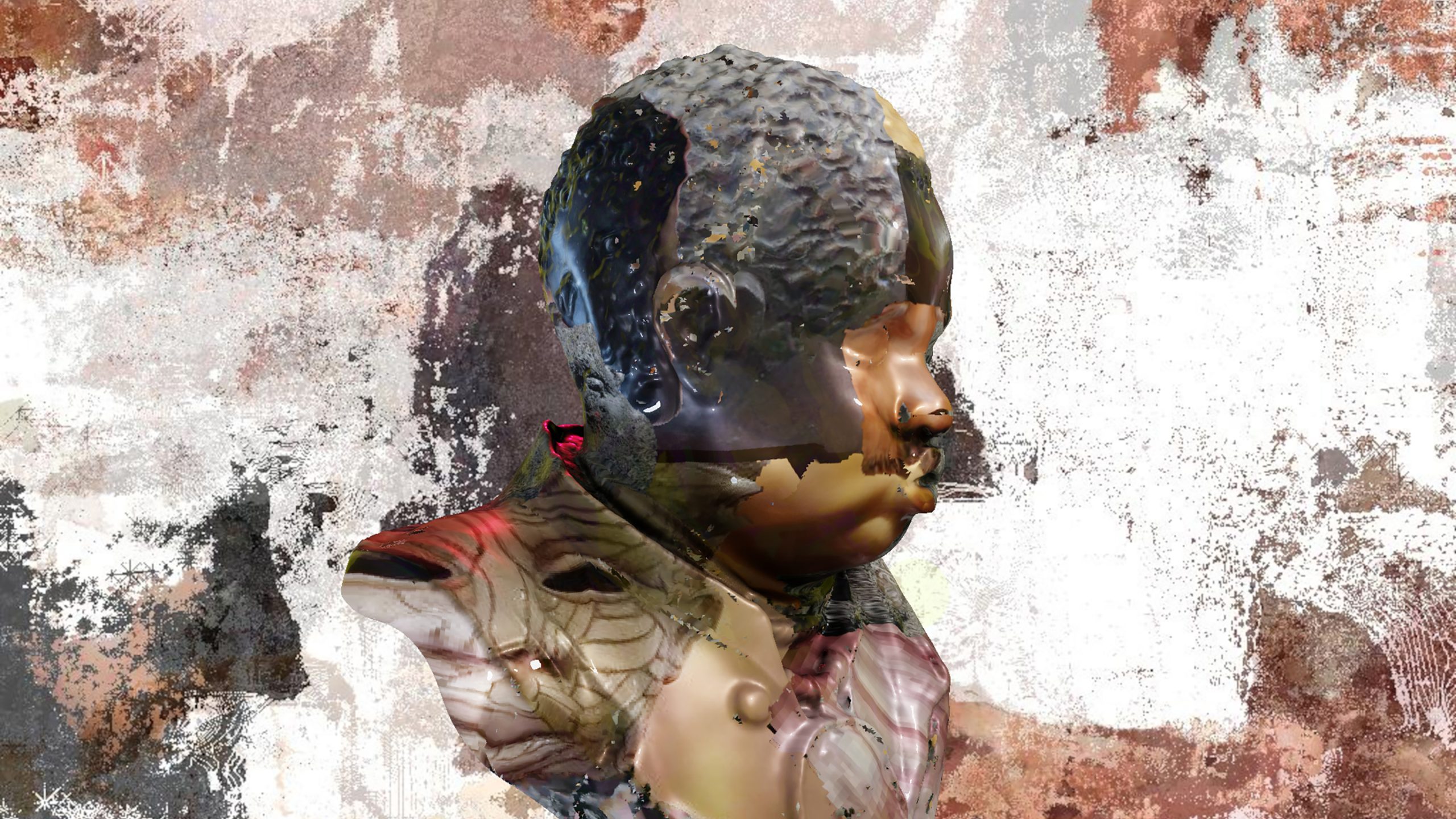
Image Credit: Titled ‘Bust of a Young Boy’ by Antonio Roberts.
Emerging from the Southbank Centre’s talent development programme, SORI Collective is a new generation of nine curators and cultural programmers aged between 21 and 32 – self-starting voices carving out their own routes into the arts. As part of the Southbank Centre Presents initiative, the cohort has been given space to experiment, collaborate and shape live ideas into public-facing work.
In this feature, the collective reflects on one of the defining questions of our time: how images shape truth. Drawing from their own lived experience of growing up online, they unpack the shifting role of visual culture – from evidence to algorithm, from documentation to manipulation – setting the stage for their upcoming event, The Future of Images in a Post-Truth Era (20 September 2026).
Part of the wider Letters to the Future series, the event brings together artists, thinkers and audiences to interrogate how images influence identity, politics and perception today.
This piece, written by SORI Collective – is an invitation into their thinking, their process, and their provocation.
Set your sight on truth, read on – and book your tickets.
Letters to the Future is a weekend of talks and conversations hosted at Southbank Centre as part of its 75th anniversary programme, bringing together a new generation of voices to reflect on the conditions shaping our present and the futures we are moving toward. The series centres young voices in entertainment, activism and culture who will address urgent social, cultural, and political questions, offering space for critical discussion, reflection and new perspectives.
Contributing to Letters to the Future as curators alongside Rebecca F. Kuang, Amelia Dimoldenberg, Olly Alexander and Mya‑Rose Craig is the Southbank Centre Presents cohort: SORI Collective. We joined Southbank Centre last July (2025) as a cohort of nine curators and programmers with a wide range of specialisations: from spatial design to film, others in music and theatre and further creative technology and visual arts.
We are a group of self-starters, who have come to programming and curating due to a lack of traditional pathways. In the face of limited entry‑level opportunities to the arts, we’ve built our own routes into programming, following our own terms and allowing them to be shaped by the localised communities we serve. Together we are able to cover all the creative practices (and beyond) that are hosted under the roof of the Southbank Centre. Through this process, we’re learning how institutional politics function at scale, while bringing in community‑led perspectives that extend the centre’s reach and relevance.
Image Credit: “pics or it didn’t happen” – a phrase once frequently used as a way of requesting factual evidence is now coming into question. Source: meh.substack.com
In August last year, during a residency in Coombe Farm (an intensive week where we got to know each other and get comfortable with discussing our plans for the future), we were given the brief of Letters to the Future. It was an exciting prospect to delve into any topic of our choosing and have that central point as a theme to explore freely, with intellectuals, thinkers, and workers of our choice. As a cohort we have had a lot of discussions about why we are here (in the Southbank Centre) and the things we’d like to see changed by way of institutions and how that might bleed into wider society. A lot of our approach stems from a position of what we care about and want to change first, so this brief was a really promising place to exercise those ideals into one place.
We began by mapping what mattered most to us: community, activism, access, food security and housing. From these conversations, two central themes emerged: Reimagining Shared Spaces: The Future of Housing, and The Future of Images in a Post Truth Era.
The process to get to these two panels was an amalgamation of conversations that really honed in on the things we noticed changing the most around us and at really fast rates. We’re all adults who have lived in London for years and have watched it change drastically, having endured first hand the impact of the changing landscape and inability to be housed properly. We rely on spaces like Southbank Centre as more than an Arts Centre, but also somewhere we can convene because there isn’t the same offer in the home anymore, and we wanted to interrogate that.
Image Credit: This Person Does Not Exist was launched in 2019 by software engineer Phillip Wang. It uses technology developed by Nvidia, specifically a neural network model called StyleGAN. The widget above draws from the site, generating a new face each time you press the button – none of these are real people. Created as a simple but striking demonstration of how far AI-generated imagery has come, the project highlights just how convincingly machines can now fabricate human faces, raising questions about identity, authenticity, and what we choose to trust online. Source: thispersondoesnotexist.com
Alongside this, many of us have grown up online and witnessed how the role of imagery has changed exponentially. From phrases like “pics or it didn’t happen” to “is that AI?”, those of us working in image‑based practices experience this shift as both personal and professional. We are constantly negotiating how much we can trust what we see, share and produce, while questioning how networked images shape public opinion, identity and political understanding.
We are at a critical point where images are no longer representations of the world we live in but are active forces shaping how we understand truth, identity and reality. As a generation whose social, cultural and political lives are mediated through image-based platforms, we are required to interpret and respond to visuals that are more abundant and ambiguous. As AI technologies develop, forms of witnessing once associated to photographic truth are increasingly being questioned. At the same time, the circulation of the image has been radically transformed by networked platforms, which shape our perception of news media, the cultural cycle and attention economies. To address the future of images is to address the conditions of the present.
Recent decades have seen a rapid acceleration in imaging technologies: from the camera obscura, to digital photography and smartphones to surveillance systems, drones, medical imaging and, more recently, generative AI. Roughly 34 million AI-generated images are created every day, and we are facing unprecedented challenges identifying the authenticity of images as its results become more photorealistic. As the politics of image-making continues to shift immensely, we are learning new ways of processing the ever-changing visual languages that affect us in our daily lives.
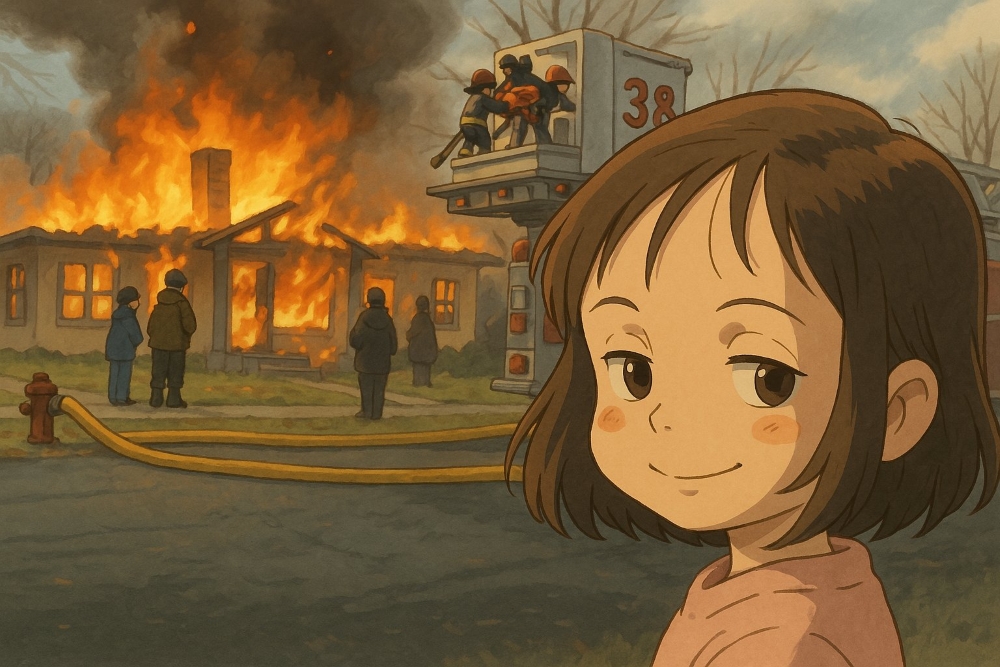
Image Credit: OpenAI’s 4o image generation is being used to create “Ghibli style” images based on classic films, world events and internet memes like “Disaster Girl”. Source: animationmagazine.net
Images now operate within systems of surveillance, forensic evidence and algorithmic governance. They remain deeply entangled with structures of race, gender and class, reproducing and amplifying existing biases. At the same time, new technologies are reshaping both how images are made and how they circulate; transforming their function across media, governance and culture.
With this talk, we want to trace how the role of the image has been reconfigured by new forms of technologies that influence both its construction and circulation. Opening important questions such as: how have forms of witnessing become entangled with forms of surveillance? What does it mean for images to no longer act as purveyors of truth under AI technologies? By following the perspectives of artists, academics and thinkers working directly with these questions, we invite audiences to reconsider how images operate and who they serve.
Across both conversations, tackling housing and imagery, we want to platform and prioritise the people who are most impacted by the change of these elements. Too often, conversations and policies are led by those who are removed from the consequences of change. Our approach is to platform the voices of those most impacted, ensuring they are central to these conversations.
The SORI Collective are Barakat Omomayowa, Bea Taylor Searle, Cat Anderson, Cici Peng, Fatima Sheekhuna, Fergus Leach, Razik Darji, Rhiarna Dhaliwal and Rohina Cameron-Perera.
You can find them at sori-collective.vercel.app
The Future of Images in a Post-Truth Era
Sunday 20 Sep 2026, 4.30pm
Purcell Room, Southbank Centre
southbankcentre.co.uk