

Rachel Mars: On remembering that people are the thing

Image credit: Photo of Rachel Mars.
Rachel Mars has long carved out a singular space in British performance – weaving together queer, Jewish and feminist histories with a mischievous intelligence and a deep belief in people, process and community. Recently she’s been supporting Unfinished Histories on their latest project Radical Rediscovery: Homosexual Acts and Beyond at London Performance Studios, bringing that ethos into sharp relief. Marking fifty years since Britain’s first official Gay Theatre Season, the exhibition – curated by Dr Susan Croft – excavates a vital, often-overlooked lineage of lesbian and gay performance, from street agit-prop to radical drag and groundbreaking Black queer work.
For Mars, it’s a profoundly personal act of remembrance and renewal: a chance to honour those who came before, reconnect with the artists and spaces that shaped her, and champion the intergenerational queer creativity that continues to fuel London’s cultural life. Amid a turbulent moment for the arts, she remains defiantly hopeful – trusting in experimentation, collaboration and the communities who keep making work against the odds.
Your work spans live art, theatre and text – often drawing from queer, Jewish and feminist histories. What were your earliest forays into performance and storytelling – the moments or influences that made you think, “This is what I want to do”?
When I was seven I went to see Cats. At some point during ‘Mr Mistoffelees’ (or was it ‘Macavity’?) bounded off the stage and ran about the audience and kissed the top of my Dad’s bald head. I didn’t know what the hell was going on – what was this space where things like that could happen? Was this a human shaped cat or a cat shaped human? There was a boundary smashing queerness of species and fourth wall that made me think – I want in. Then really the most performative things I was involved in were yearly Pesach Seders, and Friday night dinners with a lot of storytelling. Later at school I remember being asked to do an assembly play for Harvest Festival, and my friends and I couldn’t find anything interesting so we made something up and pretended it was a traditional folk story (I think it was about mice or hedgehogs at war or something), and no one thought it wasn’t authentic. I think I realised then that there was something naughty and playful and joyful about creating for audiences, and that you could create something yourselves and not defer to ‘real’ established sources.
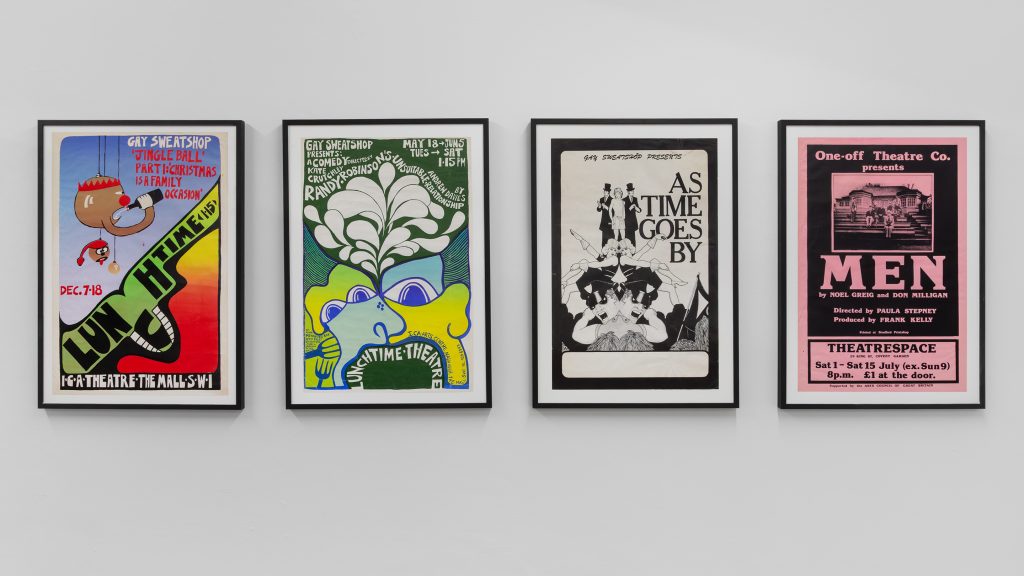
Image credit: Artwork from the exhibition.
The exhibition marks 50 years since Homosexual Acts, Britain’s first official gay theatre season. Why do you think this rediscovery feels so resonant today?
The attacks on the queer and trans communities now from the right (and the centre) both here, in the US and internationally make this a particularly key moment to remember that of course this isn’t the first time the community is in this position, and to draw inspiration and courage from the methods artists were using to fight back the last few times we were being silenced and oppressed. Many of the artists featured in the exhibition are still here, still making radical work, still disrupting. I think it’s a vital opportunity to learn from them as we weather the latest storm.
You’ve been working closely with curator Dr Susan Croft and the Unfinished Histories archive. What have you discovered through that collaboration – about the material, or perhaps about your own artistic lineage?
I suppose in some ways, it just underlines the impermanence of the alternative theatre sector, especially as so much of it was made by marginalised communities. Because so few of these performances were recorded, photographed, written down or published, most of them disappear into the ether, just surviving in memory and in these pieces of paper – flyers, posters, scripts found under beds. Unfinished Histories is trying to insist on the importance of these performances for culture now, by painstakingly collecting and exhibiting these items. As a queer female mid-career artist, it’s humbling to see all these queer artists who have gone before, people like Parker & Klein, Hard Corps, and Split Britches, some of whom are in the public (or at least the queer performance) cultural consciousness, and some of whom much less so. It’s so easy to be forgotten. I think it makes me double down on the feeling that the experience of making and the relationships you make in collaboration are really all that it is certain and important, and to celebrate and appreciate those times even more.
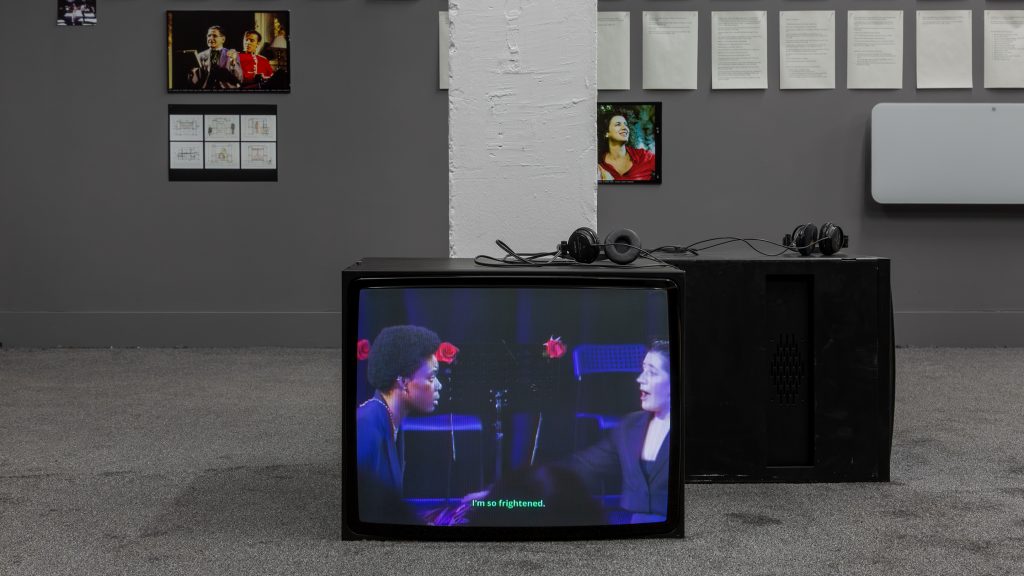
Image credit: Artwork from the exhibition.
Is there a particular story, artefact, or artist from Radical Rediscovery that struck a chord with you – something that felt unexpectedly personal or moving to encounter?
When you move round the exhibition you start charting the work of particular artists and where they are today. Writers like Jackie Kay and Bernadine Evaristo wrote plays and were performing in the 80s, and there are amazing photos of them, and flyers for their work. There’s a programme too for an early Joelle Taylor piece, which she was commissioned to make for Apples & Snakes (the performance poetry organisation), and she’s spoken recently about those earlier commissions leading directly to her recent work ‘C+nto’. My first ever job in this world was at Apples & Snakes, I just went knocking on doors (literally) at BAC so see if anyone had any work, and that was where I was exposed to artists like Joelle, and Stacy Makishi and Curious, people who were more in live art. Without that job I wouldn’t have gone on to make work the way I do. It was so good, and slightly uncanny to be reminded of my way into this. The exhibition is full of flyers and posters from Ovalhouse (now Brixton House) because so much of the experimental queer work was happening there. That’s when it catches up with my own work – I started working with nat tarrab as Mars.tarrab at ovalhouse in 2011 when Rebecca Atkinson-Lord and Rachel Briscoe gave us money and space to make, and with Greg Wohead in ‘Gaping Hole’ we were the last show in the building before it got demolished. So I basically clip on to the latter part of that history.
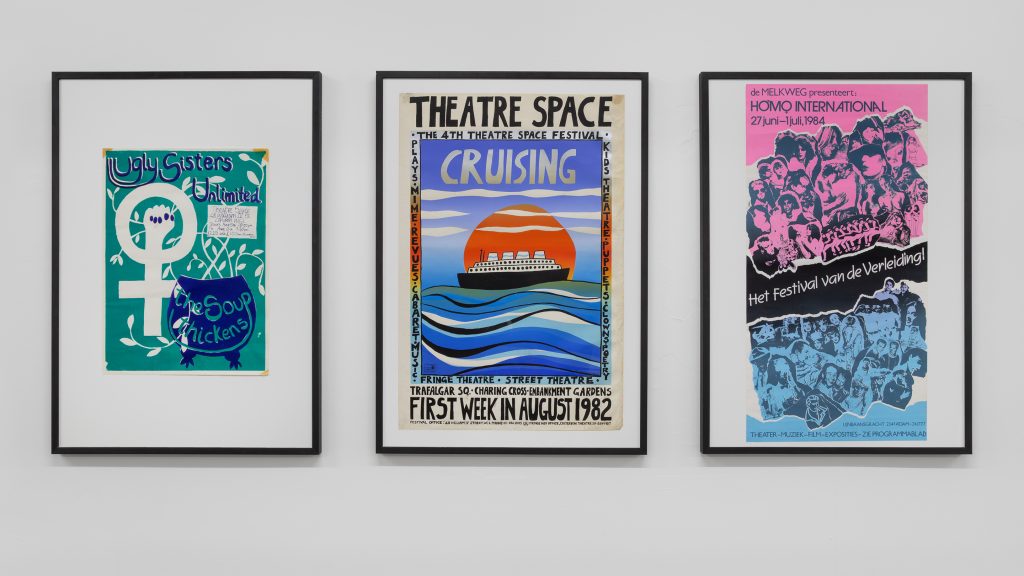
Image credit: Artwork from the exhibition.
The project not only revisits history but commissions new works inspired by those early radical voices. How do you see today’s queer performance communities building on – or reimagining – that legacy?
There is a lot of reminiscence and acknowledgement from artists who were working in the 70s-80s about the access to money that was available through the dole and the GLA (before Thatcher stopped it), and about squatting, and how that all contributed to conditions that made it possible to make radical work. None of that is available to younger artists – I think younger queer artists are so f*cked financially that they are abandoning establishment routes to getting work on altogether, because the time it takes is not rewarding. They are going their own ways, not trying to appeal to what gatekeepers want, performing wherever they can. That drive to stop pushing on doors that aren’t opening, and to spend energy creating by whatever means necessary feels like a necessary reimagining of the legacy of the earlier period, except this time, without the cash, and therefore even more imaginatively.
The themes that the new works are examining are all inspired by works from the archive – hidden female relationships, lesbian camp, working class artists in cities, intergenerational relationships, and the artists are using their own formal means of attack to bring a contemporary view to these issues. These issues are still clearly relevant. I also feel a desire in these works and the ways they are being made to rebuild intergenerational relationships between queer artists, and to tackle the changing nature of language, attitudes to race, class, gender that have moved since the earlier period, in conversation with people who were working 40, 50 years ago.
From the Almost Free Theatre to today’s London Performance Studios, spaces have always been central to queer theatre. What do you think makes a venue or creative space truly radical in 2025?
Trust in experimentation. More and more venues are so financially pressured that the move is towards less risk taking and more anticipation of what they think audiences want (safe, clear, straight-forward work that is easily marketed). I think they risk doing audiences a disservice and denying them stranger, more underground, more truly life, gut and brain-changing experiences. For a venue to be truly radical in 2025 I think they need to put money and trust in unknown artists just because they have a good idea, and in older artists who are making work that is more expensive because they’ve grown in scale and output. I also think we are seeing a return to punkier, scrappier, DIY artist-organised venues because the financial situation across the sector is so dire.
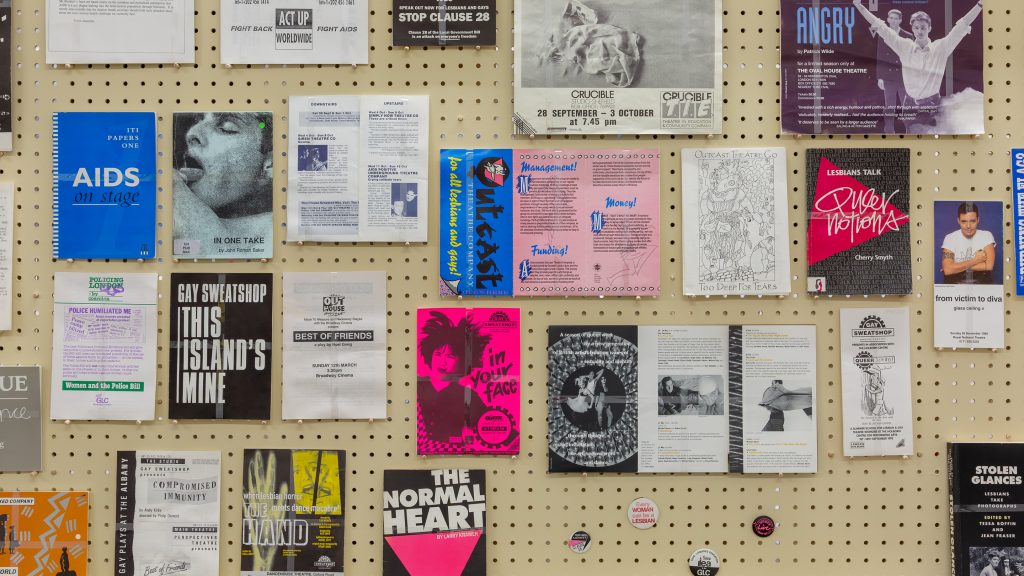
Image credit: Artwork from the exhibition.
Reflecting on your own values and work, which London venues, spaces or collectives excite you most right now – where do you feel that spark of experimentation, care or cultural courage?
On a larger scale in terms of work being presented – the Southbank Centre is bringing international queer work way more than they used to. While most of this work is from established artists it’s still vital for UK artists to see and have access to, in order to see what other countries are supporting and dream bigger ourselves, outside of a conservative UK cultural climate. I think it shows cultural courage to insist on UK stages for this work.
When I’m thinking about care, the producing collective ‘The Uncultured’ are doing (and have always done) unparalleled work in helping artists navigate the meshuggas that is going on at the Arts Council, and always work with real care to make establishment systems legible to artists.
Raze collective has been working for a decade to provide platforms, information and community to queer artists, and to rally for queer work in the wider performance sector.
And finally – what are you excited about for 2026? That could be your own creative projects, new collaborations, or wider shifts you hope to see in the performance world.
In the performance world I’m excited about intergenerational queer artistic collaborations, and for myself a slow return to making for stage again after a necessary break, and experiments in new forms. It’s hard to be hopeful in the performance sector at the moment – I think a return to remembering that it’s the people we make with and the queer familial relationships we form which are the most important and radical thing, in whatever ways we end up making the work. That’s an exciting and necessary reminder.
Find Rachel at rachelmars.org
Radical Rediscovery: Homosexual Acts and Beyond
Curated by Dr Susan Croft
Until Sunday 14 December
London Performance Studios
Penarth Street,
London SE15 1TR
londonperformancestudios.com
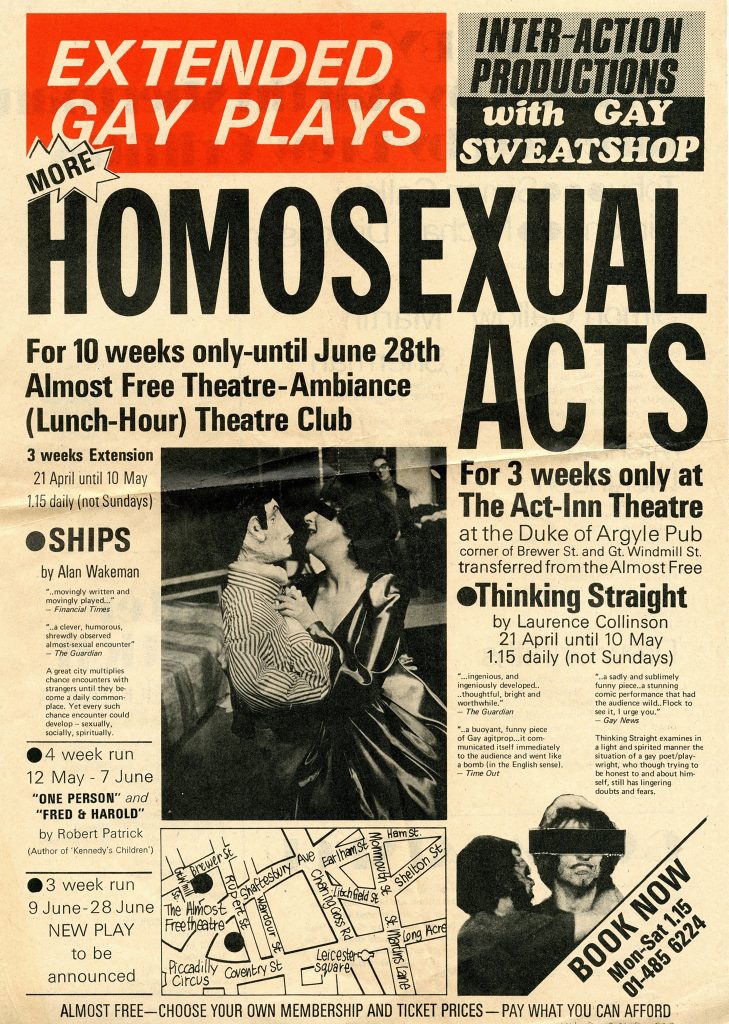
Image credit: Artwork from the exhibition.
